Author interview: Busy Birney digs deep for truth in the North and tackles Saipan next
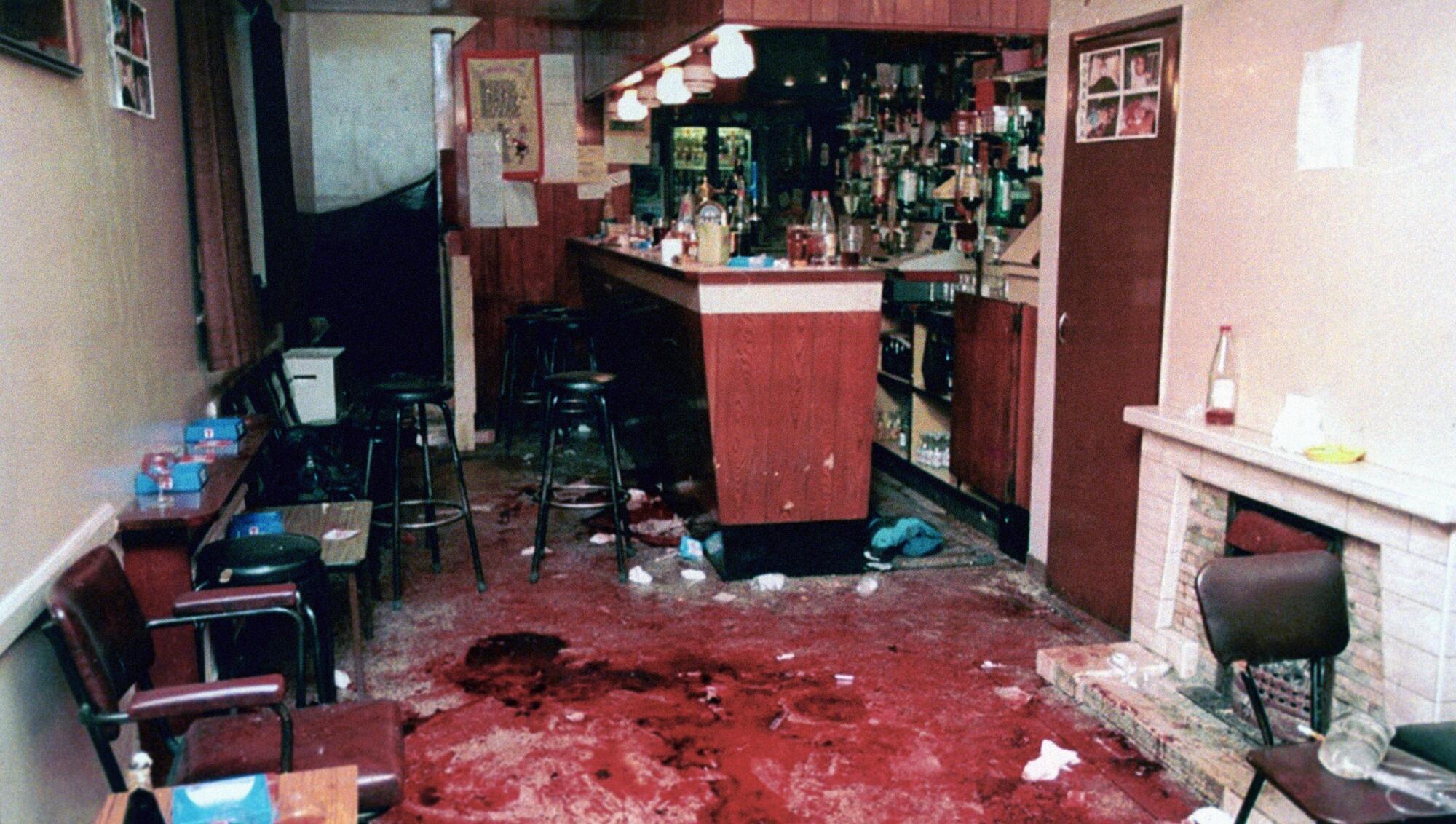
No one was ever arrested in relation to a pub massacre in Loughinisland, Co Down, only the journalists who investigated those responsible
Author interview: Busy Birney digs deep for truth in the North and tackles Saipan next

The scene inside O’Tooles Pub, Loughinisland, Co Down, on June 19, 1994, following the shooting incident in which six Catholic men were shot dead as they watched Ireland’s opening World Cup Match against Italy. Picture: PA

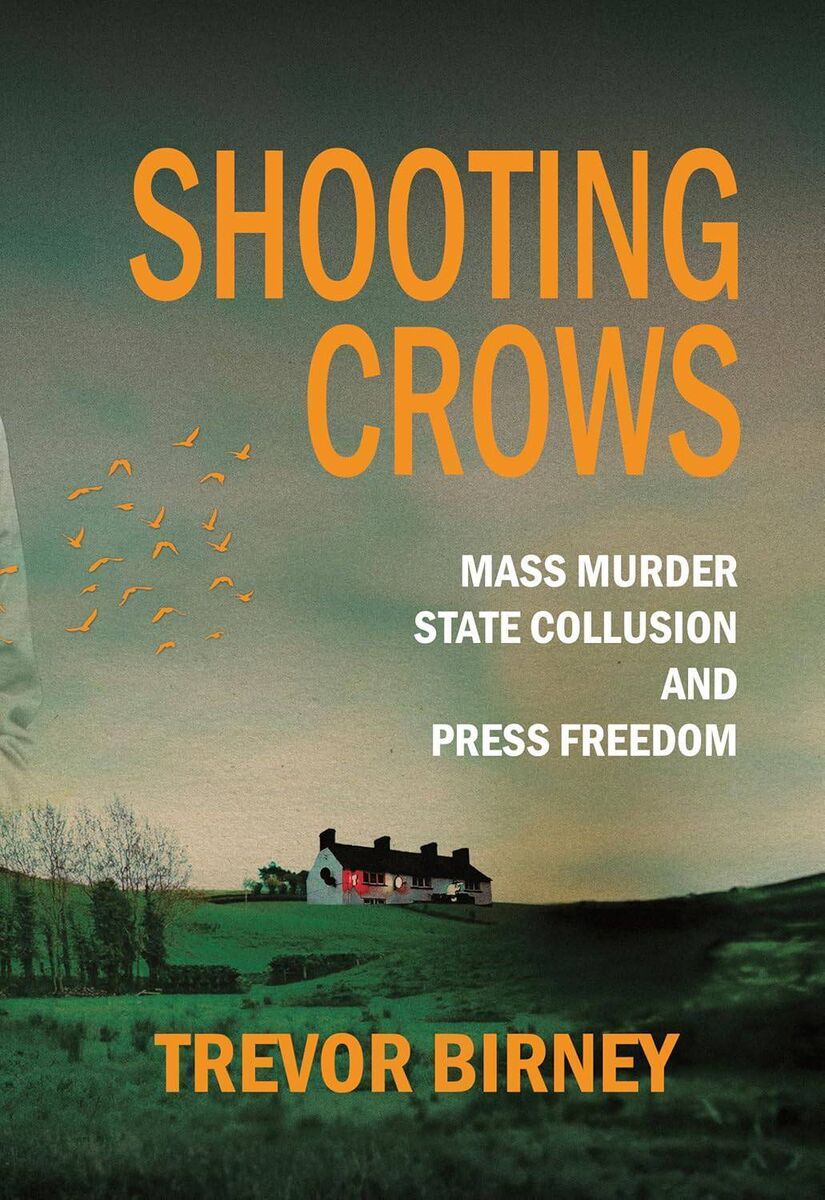
  • Shooting Crows: Mass Murder, State Collusion and Press Freedom 
  • Trevor Birney 
  • Merrion Press, pb €19.99

The evening of June 18, 1994, when Ray Houghton’s goal against Italy secured a famous World Cup victory for Ireland, was a historic moment of happiness and celebration for the nation. 

However, it is a date remembered by many for a different reason, marking one of the worst massacres in the history of the conflict in Northern Ireland. 

As a group of people sat watching the match in The Heights Bar in Loughinisland, Co Down, a Loyalist gunman walked in and opened fire, leaving six men dead and five injured.

The attack was greeted by widespread shock and revulsion but while the rest of the world moved on, journalists Trevor Birney and Barry McCaffrey continued to dig deeper into the circumstances and aftermath of the shooting. 

They have spent a great deal of their careers investigating allegations of collusion between the British army, the RUC, and the UVF terrorists behind the attack.

Their determination to uncover the truth has come at great personal cost, including police investigation and surveillance. 

[After I spoke with Birney, in a landmark judgment, the investigatory powers tribunal in London ruled that the surveillance operation authorised by the PSNI was unlawful and awarded damages of ÂŁ4,000 each to Birney and McCaffrey.]

The Loughinisland murders were the subject of the groundbreaking documentary No Stone Unturned, directed by renowned US filmmaker Alex Gibney, and produced by Birney, which was released in 2017. 

Based on leaked documents, it stated that RUC officers knew the identities of the Loughinisland killers.

However, no-one was ever apprehended and rather it was Birney and McCaffrey who were later arrested by the PSNI over the leaked documents.

Birney, who is based in Belfast, has now written a book, Shooting Crows, which explores the Loughinisland massacre and the impact of their investigations. 

The book begins with the events of August 31, 2018, when Birney and McCaffrey were arrested (the case was later dismissed).

While writing the book was a way for Birney to process the traumatic events that followed, he says that uppermost in his mind were the families of the murdered men, who are still seeking answers, three decades on.

“The book is a testament to them, to their determination and tenacity. I felt it was important to document how Loughinisland emerged.

“It didn’t just come out of nowhere in 1994, there is a huge back story. There was also a back story to our arrest.

“I wanted to put that all together in one document that would explain everything that happened.”
While the search for the truth of what happened at Loughinisland continues, Birney says that many families who lost loved ones in the conflict have reconciled themselves to the fact that justice is slipping away.

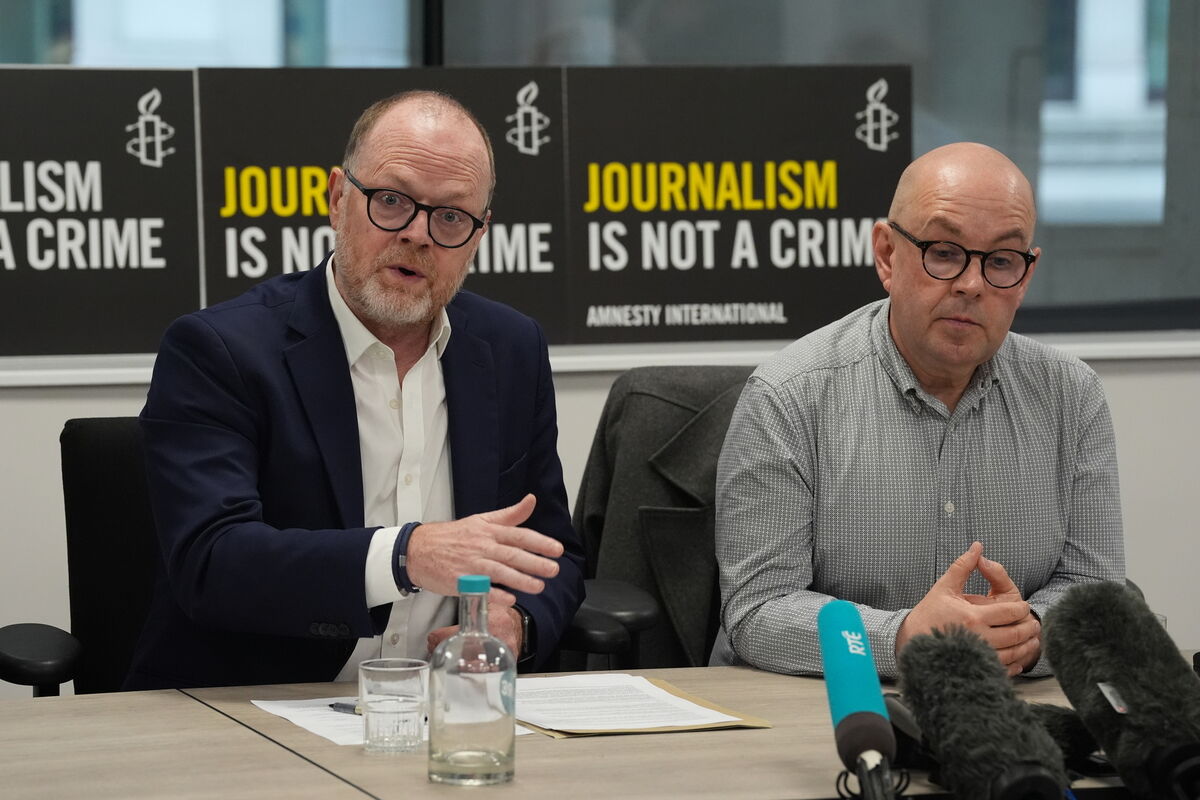
Journalists Trevor Birney and Barry McCaffrey have spent a great deal of their careers investigating allegations of collusion between the British army, the RUC, and the UVF terrorists behind the attack in Loughlinisland. They were arrested by the PSNI over leaked documents.

“Unfortunately so many families in the North are still looking for the truth — they have given up on justice. But the truth about what happened to their loved ones is so elusive.

“There are still questions to be asked about hundreds of deaths from all backgrounds.

“Families have had to take difficult, challenging and expensive legal cases to try to get to the bottom of how and why their loved ones died.”

Birney was raised in a Protestant household in Enniskillen, Co Fermanagh, and began working at the local paper the Impartial Reporter at the tender age of 17. 

He went on to work for UTV before getting into television production. His company Fine Point Films was behind the compelling 2022 RTÉ documentary series Quinn Country, which chronicled the life and times of Fermanagh businessman Seán Quinn.

Earlier this year, he produced another RTÉ documentary on GAA club chairman Seán Brown, who was abducted and killed by Loyalist paramilitaries as he locked the gates at Bellaghy Wolfe Tones Club in Co Derry in May 1997. No one has ever been charged with the murder.

However, in a truth is stranger than fiction twist, on the same day that the tribunal ruled on the surveillance of Birney, a judge in Northern Ireland ordered the British government to hold a public inquiry into Brown’s death.

“That family is still dealing with the impact of the murder of a man who gave up so much to his community, who stood up for right against wrong,” says Birney.

And you can still see on the faces of those people in Bellaghy and in south Derry the impact the murder had, the shock and horror. 

It would be easy to feel hopeless and disheartened in the face of such tragedy and inaction but Birney is determined to keep telling such stories, despite the obvious risks.

“There is always an option of swimming in the shallow end in terms of the North. I understand why the media doesn’t want to invest the time, effort and cost in dealing with legacy issues but you can’t really appreciate the future if you don’t understand the past.

“There are people alive that can still tell these stories and it is incumbent on us as journalists to try to do as much as we can to make it understandable and accessible for contemporary audiences.”
He cites the recent Disney Plus drama Say Nothing, an adaptation of Patrick Radden Keefe’s acclaimed book of the same name, which is centred on the abduction and murder of Jean McConville.

“Disney have obviously taken a decision that this is an important and compelling story that demands nine hours of our time,” he says.

Birney has also been involved in another fascinating, and happier, story coming out of the North — that of the Belfast Irish-language rappers Kneecap. 

He is a producer on Kneecap (the movie), which has received rave reviews and captured the imagination of audiences around the world. 

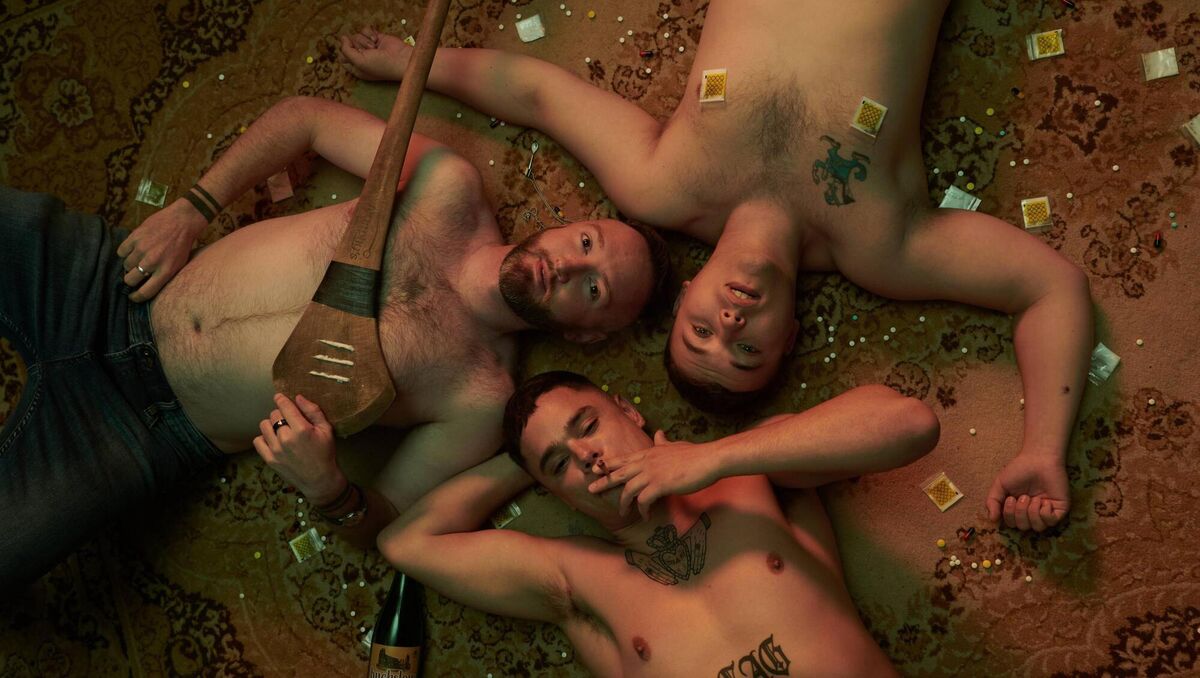
Trevor Birnet is a producer on 'Kneecap' (the movie) — named on the shortlist for Best International Feature Film at the Oscars. 

This week, it was named on the shortlist for Best International Feature Film at the Oscars — the final five contenders will be announced in January.

“The band has also been shortlisted in the Best Original Song category. The incredible reaction has taken Birney by surprise.

“To be talking about Oscars is totally and utterly surreal. The film has changed my life.

“There was a picture on social media recently of people queueing around the block in Mumbai in India to see it.

“This is a film in the Irish language — who would have thought that was possible when people were talking about Irish being a dead language and no one wanting to learn it or engage with it.

“New audiences are coming to it all the time. It has been a white-knuckle ride and it’s still not over. God knows where it will be end,” he laughs.
Hopefully with an Oscar, I suggest. “In January, we find out if we are nominated. As Alex Ferguson would say, it’s squeaky bum time,” says Birney.

This provides the perfect segue into another film project Birney has in production at the moment — Saipan, about the sensational events surrounding Roy Keane’s walkout during Ireland’s 2002 World Cup campaign. 

It stars Steve Coogan as former Irish manager Mick McCarthy and Glanmire actor Éanna Hardwicke as Keane.

“Once I read the script, I knew it was something we wanted to be part of,” he says. “It is a film that everyone will want to see.”

He says Coogan and Hardwicke are “phenomenal” and of the latter, he adds: “Having spent several weeks with him, he scared the living bejaysus out of me when he started to inhabit his character.”

Birney wears many hats as a journalist, author, and producer. But it boils down to one motivating factor.

“It’s not by design, it seems that I have over-complicated my life but it’s all about trying to tell a story.” 

For the North especially, the story will always be a complicated one.

“It isn’t a simple straightforward story to tell. We live in a world where history is told by the victors. But there were no victors out of the conflict, only losers, right across the political spectrum.

“We are still dealing with that loss, which will be felt in many homes this Christmas, the empty chairs in the photographs because of people who are no longer with us.”

x

More in this section

Scene & Heard

Newsletter

Music, film art, culture, books and more from Munster and beyond.......curated weekly by the Irish Examiner Arts Editor.

Cookie Policy Privacy Policy Brand Safety FAQ Help Contact Us Terms and Conditions

© Examiner Echo Group Limited