Film reviews: Conclave is a gripping drama that examines the conscience of the papacy
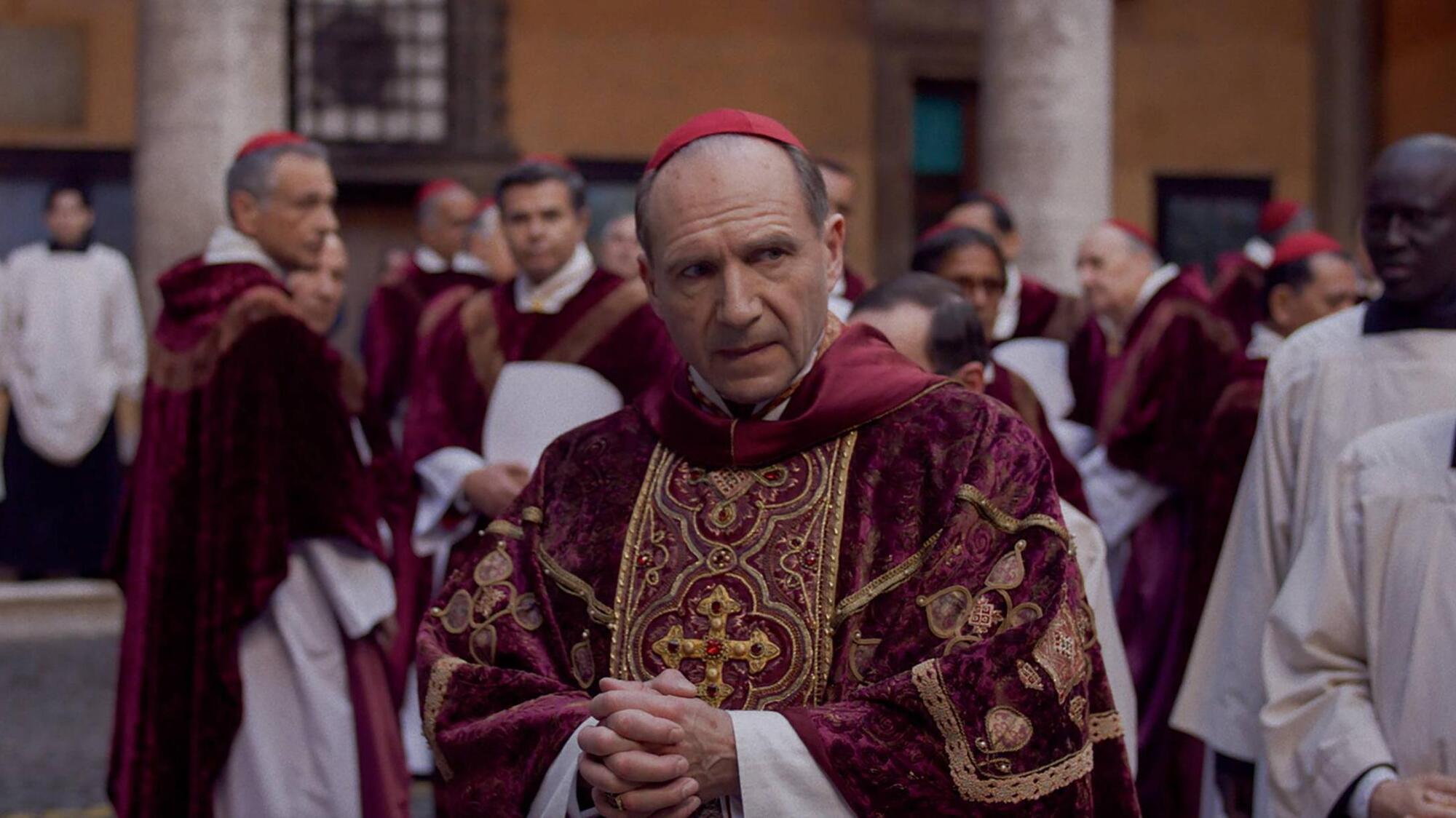
Ralph Fiennes stars as Cardinal Lawrence in director Edward Berger's Conclave.
- Conclave
- ★★★★☆
- In cinemas
“No sane man would want the papacy,” declares Cardinal Bellini (Stanley Tucci) as Conclave (12A) opens, and we must allow the cardinal his extravagance, as Bellini is just one of many cardinals swept up in the mad dash to become the next pontiff when their beloved pope dies.
Orchestrated by Bellini’s close friend and confidante Cardinal-Dean Lawrence (Ralph Fiennes), the College of Cardinals assembles to vote for the man best equipped to take the church forward – or preferably, in the case of the socially conservative Cardinal Adeyemi (Lucian Msamati) and the arch-reactionary Cardinal Tedesco (Sergio Castellitto), backwards.
But while we can take the genteel in-fighting and politicking for granted, the script – which is adapted by Peter Straughan from Robert Harris’s novel, and directed by Edward Berger – also tosses in quite a few unexpected dilemmas: Lawrence, who is himself a candidate for the papacy, quickly discovers that one of the favourites for the position, Cardinal Tremblay (John Lithgow), was dismissed by the pope for gross misconduct only hours before the latter’s death, but claims to know nothing of the matter.
And that’s before the mysterious Cardinal Benitez (Carlos Diehz) turns up, claiming to be an Archbishop of Kabul secretly appointed by the late pontiff.
Is it any wonder that Lawrence is experiencing a crisis of faith?
A gripping drama that verges on a detective story as Lawrence investigates the true moral worth of the leading candidates, Conclave features a superb cast that also includes Brían F. O’Byrne as Lawrence’s go-between Bishop O’Malley, and Isabella Rossellini as arguably the most cynical nun ever to appear on a big screen.
Meanwhile, the setting reflects the gravity of the occasion, and the film may well win the Oscar for Best Production Design – the full-scale replica of the Sistine Chapel is a joy to behold – as the designers recreate the luxurious panoply of the Vatican in all its pomp.
Looming over it all, however, is Ralph Fiennes’ terrific performance as Cardinal Lawrence, a man of intelligence and wit torn apart by faith and doubt as he realises the depth of his colleagues’ perfidy, all the while nobly refusing to allow the cup pass from his lips.
- Moana 2
- ★★★★☆
- In cinemas
Moana 2 (G) finds a slightly older Moana (voiced by Auli’i Cravalho) embarking on an epic quest to discover a mythical island destroyed by the villainous god Nalo.

Determined to unite the Pacific’s sea peoples, and despite the pleadings of her impossibly cute younger sister Simea (Khaleesi Lambert-Tsuda), Moana sets off for the great beyond, aided and abetted by Loto (Rose Matefeo), Moni (Hualālai Chung) and Tala (Rachel House), the spirit of Moana’s late grandmother. Oh, and the demi-god Maui (Dwayne Johnson) lends a hand too, in his inimitably self-aggrandizing way.
Initially conceived as a streaming series sequel for Disney+, Moana 2 is jam-packed with incident and a handful of very fine songs, and also delivers a visual treat as Moana goes skimming across the turquoise Pacific via a number of lush jungle islands and some brutal but beautifully rendered storms.
- Perennial Light
- ★★★★☆
- In cinemas
Filmed in Cork and set in a small Irish coastal town, Colin Hickey’s Perennial Light (PG) is a non-linear meditation on grief (and perhaps even guilt) as a young fisherman comes to terms with his best friend’s sudden death.
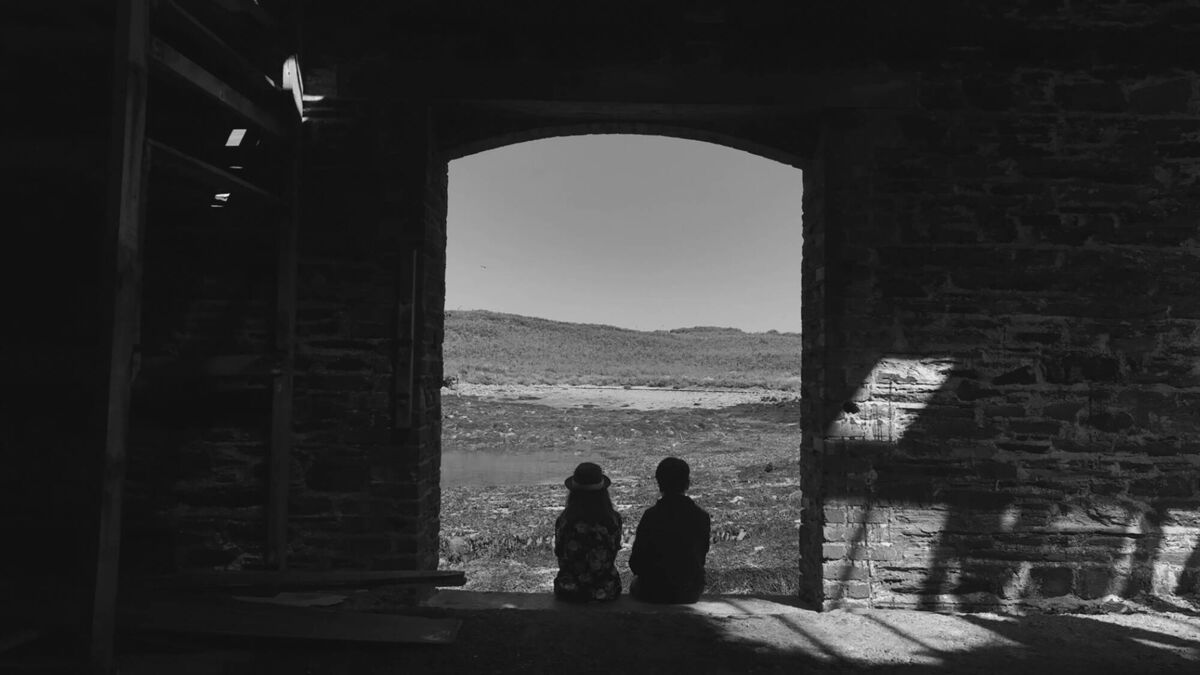
The narrative is anything but straightforward: the characters are not named, and nor do they speak; instead we get a hypnotic blend of black-and-white imagery and crudely charming hand-drawn animation.
The story proceeds by way of a kind of visual stream-of-consciousness, emphasising the interplay between the human and the natural world and frequently employing static overhead shots that oblige the viewer to recalibrate how we perceive the familiar.
The downbeat mood and monochromatic shades should lend themselves to a bleak worldview; in fact, the overall effect of the film’s uncanny beauty is that of an optimistic embrace of life.