Fin DAC: 'I focus on female portraiture — because that's where I see the beauty'
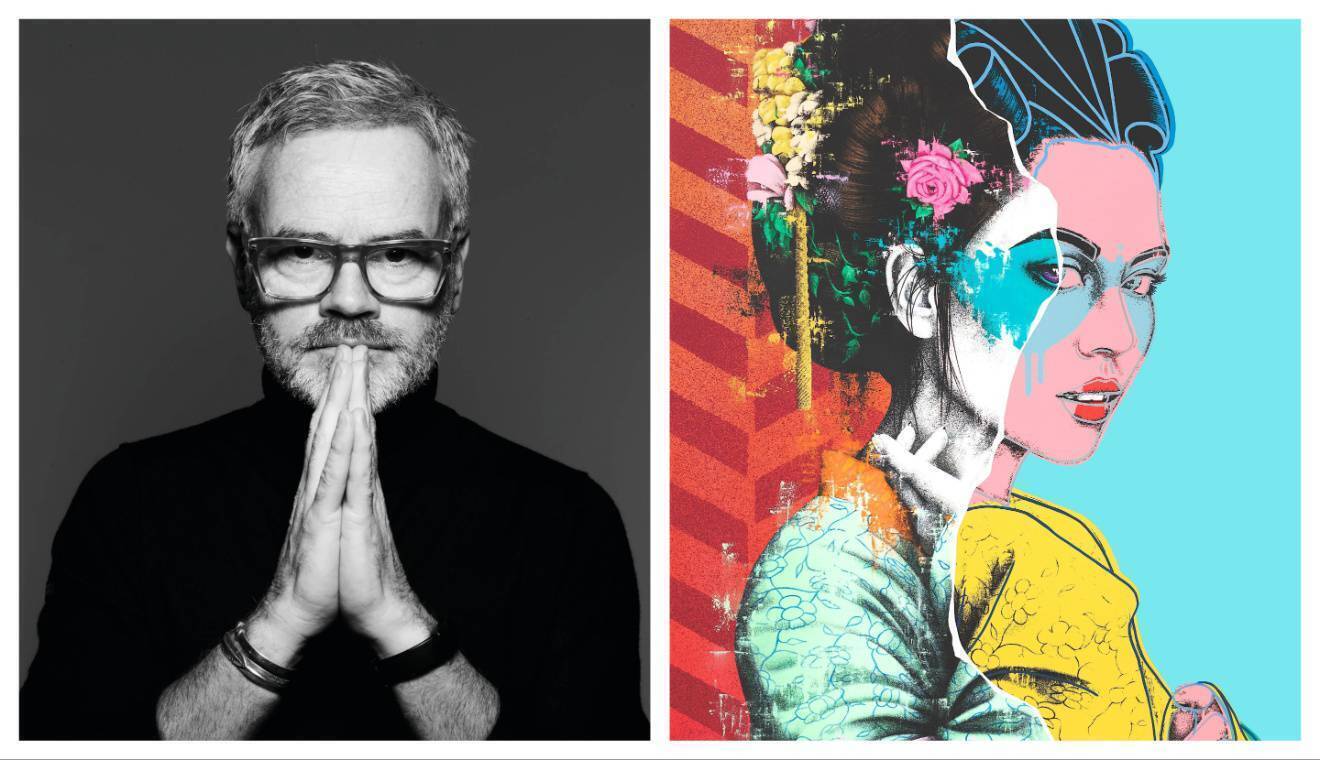
Fin DAC: As an artist, my work is copied all the time and used for, like, Asian restaurants in all parts of the world without permission. I don’t want anybody looking at me and thinking that I’m profiting from those artists.
What do St Charles’ Hospital in London’s Ladbroke Grove, a 200 foot tall wall in Guadalajara, western Mexico, and the Gibson Hotel in Dublin all have in common?
The answer is that they have all served as a canvas for Fin DAC, the Cork-born street artist and muralist who has been slowly but surely ascending towards the upper echelons of the art world for the past decade.
So prominent has he become that he was even dubbed ‘the Irish Banksy’ by one UK tabloid, a title he scoffs at.
The next Banksy or not, Fin DAC has undeniably been making serious waves of late.
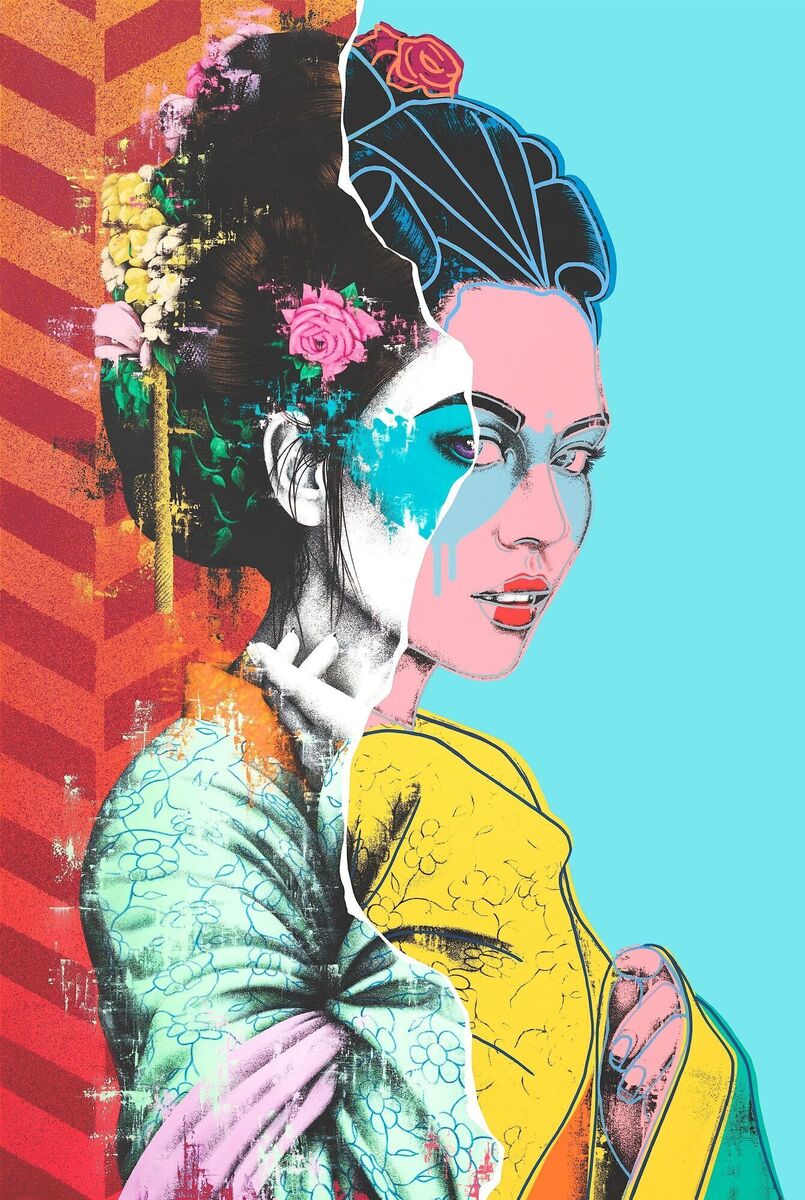
Known for his signature style which blends influences from Japanese manga with more fine art, painterly flourishes, his popularity has steadily grown over the last ten years, with the likes of actor Idris Elba and rapper Goldie now amongst his collectors.
A recent work of his went for a sweet £50,800 (over €60,000) at auction house Sotheby’s, and he has been commissioned to paint murals in locations all across the globe, from Cambodia to San Francisco, Tahiti to Mexico, where, in Guadalajara, you can find his mammoth depiction of the late Frida Kahlo adorned onto the side of a building in the city centre.
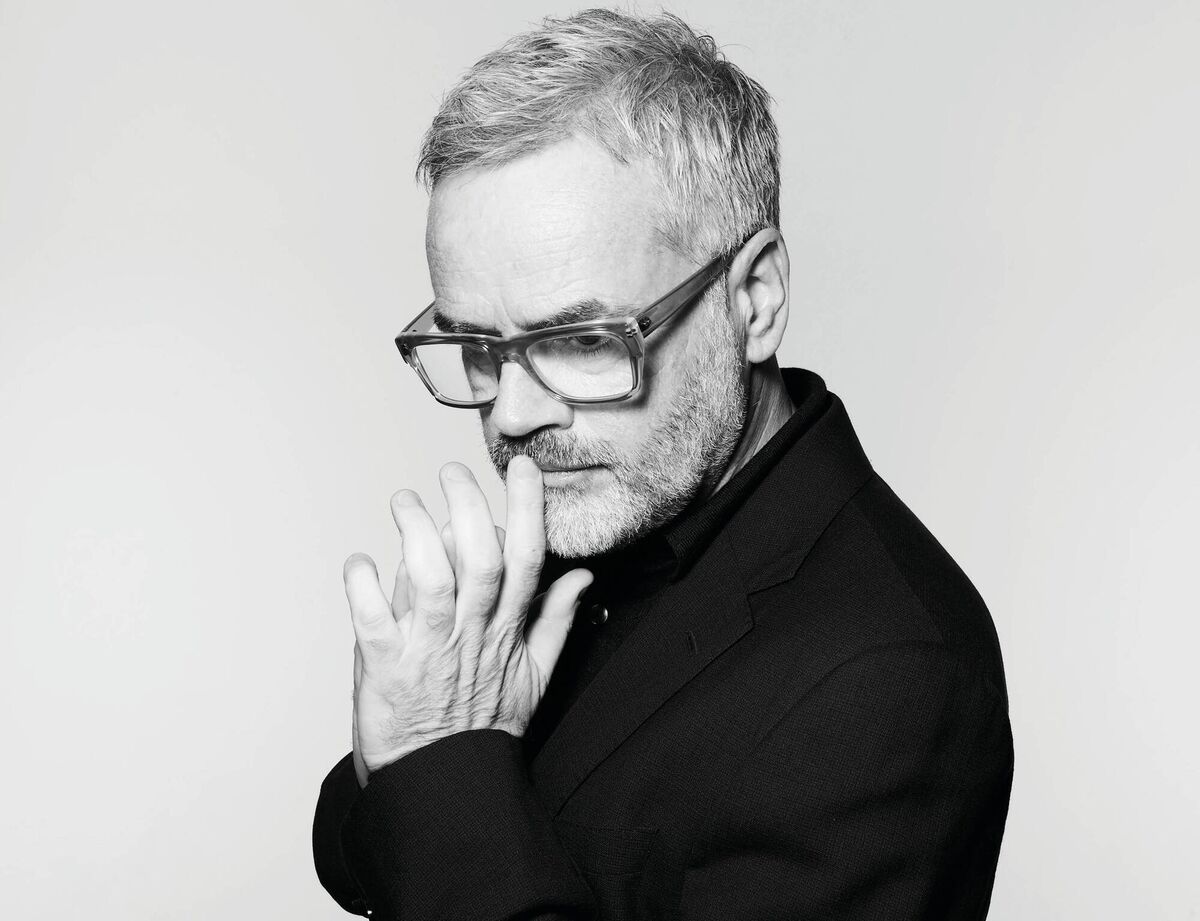
Fin DAC, real name Finbarr Notte (inset), is talking to me from his bright, airy studio situated behind a blank, unassuming shop front just south of Victoria Park in London’s East End, where he has lived and worked for the last two years.
Now 57, he has spent his life traversing between the UK’s capital and Cork, where he was born and lived with his grandmother in Togher until he was two years old, whilst his parents worked to establish themselves across the sea, away from the unfavourable judgement they faced at home as a result of bearing children out of wedlock.
They eventually returned to fetch him, bringing him back to London where they lived in what was once voted the country’s worst council estate in Elephant & Castle, before retreating home again when he was ten.
“Cork was a real culture shock to me,” he recalls of their return.
“We had Cockney accents, that wasn’t really accepted, even my teachers would give me grief.
“I felt like I was more connected to English culture than I was to Irish culture, though I was wrong. All the things that I disliked in Ireland, you get them here too, of course, but I think in England it’s a lot easier to just disappear from all that because there’s many millions more people here.”
Though he now once again resides in London, he returns to Ireland at least once a year, typically on his late mother’s birthday to celebrate her life with his father and siblings.
When we catch up, Fin is preparing for his first solo show in three years, in St Martin’s Lane underground crypt gallery, located beneath Trafalgar Square.
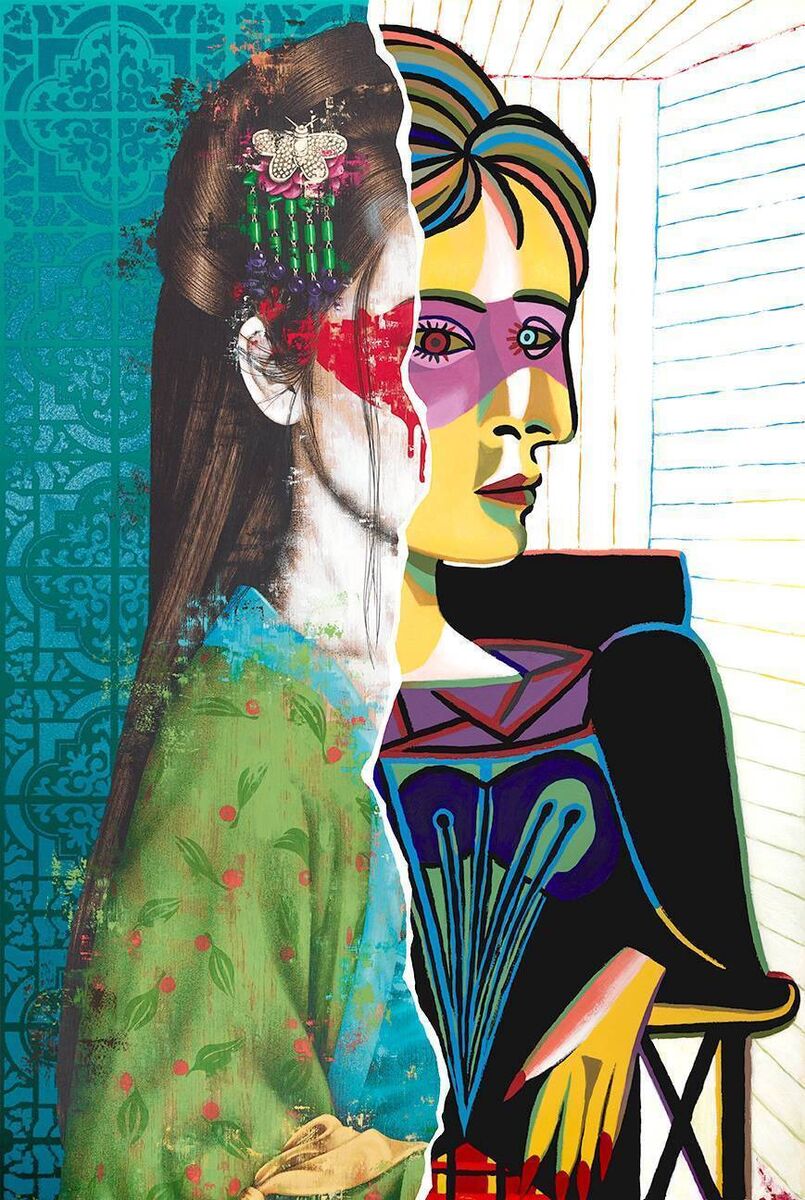
Entitled HomEage, the show features a series of works on paper which sees the artist paying homage to the artists who inspire and influence his work.
The portraits are presented in a split screen style, with one half showing Fin DAC’s punctilious recreation of a work by one of these artists, the other half boasting his interpretation of the image with his own individual touches applied.
Artists whose work DAC paid homage to included Aubrey Beardsley, Jean-Michel Basquiat, Pablo Picasso and Andy Warhol.
Unlike his last solo show, 2021’s Afterglow/Undertow, which saw total sales north of half a million pounds, the works in HomEage were available only to view, not to purchase.
This seemed to, at least in part, stem from a desire to ensure the lines between homage and imitation were clearly defined.
“As an artist, my work is copied all the time and used for, like, Asian restaurants in all parts of the world without permission. I don’t want anybody looking at me and thinking that I’m profiting from those artists.”
The project was born out of boredom when the artist found himself locked down in California during the early stages of the covid pandemic.
“It started as a time-wasting exercise that allowed me expand my creativity,” he explains. He went on to say that the show is a celebration of not just these pivotal artists in his life, but also of their muses. Most of the portraits in the show feature a female subject, and indeed this is also a recurring motif in Fin DAC’s own practice.
“A lot of these historical artists had, let’s say, questionable relationships with their muses,” he says.
“I don’t have that relationship with any of my muses. I respect them. I respect their autonomy. I’m not sexually desirous of them.
“I do focus on only female portraiture because that’s where I see the beauty in the world,” he says. “But there’s no innuendo, no coquettishness.
Whilst the original works are not up for grabs for collectors, the show is accompanied by a limited edition book of the same name, available for £75 (€89) on its own or £175 (€208) with a print included.
Once the book has sold out however, it is expected to go for as much as £800 (€951) on the secondary market, a testament to how the perception of work by urban artists is changing as collectors begin to see the value of it as not just décor, but as a legitimate investment opportunity.
And when faced with the reality that the east wall of a hospital in Ladbroke Grove is not likely to be up for sale anytime soon, canny buyers are quick to nab collectors items such as these to try and get a slice of the pie.
“I don’t care about that. I have never put money at the forefront of everything, even in my early career, when I wasn’t necessarily earning a lot from my artwork,” he says.
All the same, 60k at Sotheby’s isn’t half bad, I suggest to him. Enough to perk the ears of even the most humble of folk.
“Yeah, but I didn’t get any of that,” he laughs.
Whilst, indeed, he doesn’t set the starting bid at a private auction house, conversely, as the artist’s popularity has snowballed over the last decade, so have his prices.
These days an original Fin DAC work on wood will set you back somewhere in the realm of £37,000 according to an art dealer at West Contemporary gallery which represents the artist.
When you consider some of these eye-watering figures, it’s a far cry from the artist who, as a then-fledgling muralist, in 2014 told The Irish Times that he wasn’t interested in struggling for the sake of his art.
“I didn’t have any romantic notions of the starving-artist thing,” he was quoted at the time. “If I was going to do it, I was going to do it properly.”
Certainly, he has made good on that promise to himself. Nevertheless, he maintains that he is not motivated by financial gain.
“My focus is still not money,” he insists. “I think in those early days I had a naive approach of, I’m not earning money from this but somehow the reward is going to come to me, whether or not it’s monetary is irrelevant.”
Similarly, the idea that someone might view his work as an investment displeases him.
“Do I want someone to buy my work and put it in a safe deposit or a locker? No, I want someone to buy my art and for it to be seen,” he tells me.
“Unfortunately, you don’t have control over that. But by the same token, when you paint a wall, you have no control over what happens to that either, it could be removed in three months, it could stay for years.”
Whatever his feelings on capitalism, it’s safe to say the horse has bolted for Fin DAC as his ascent shows no signs of slowing down. It might be time to come to terms with the ludicrosity of the contemporary art scene.
“I mean, £800 for a book, come on, that’s sacrilegious,” he laments with a chuckle. “It’s a book!”