‘Rory would be so humbled by it all’: Dónal Gallagher on 1974 tour documentary
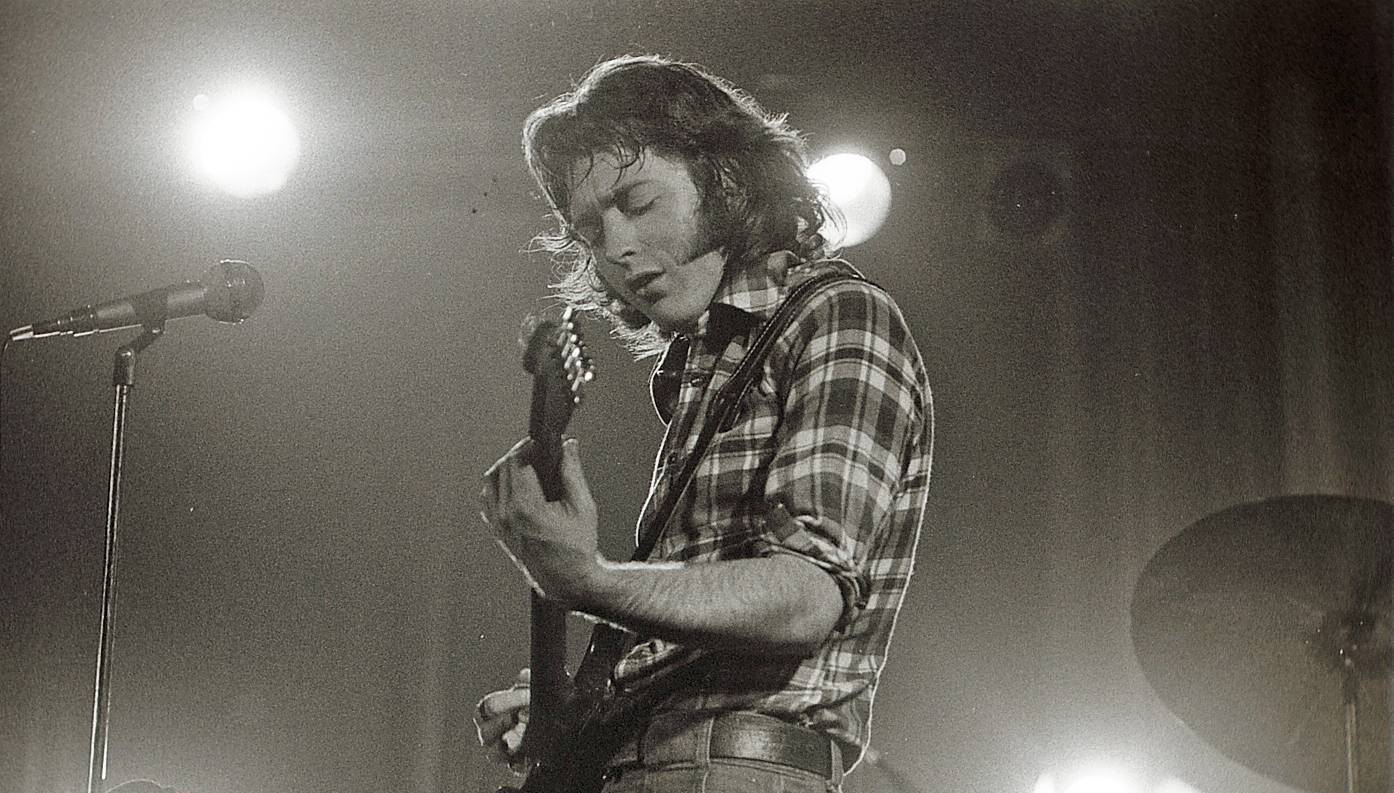
As Rory Gallagher’s 1974 tour documentary is set to be screened in Cork 50 years on, Marjorie Brennan chats to his brother Dónal
‘Rory would be so humbled by it all’: Dónal Gallagher on 1974 tour documentary

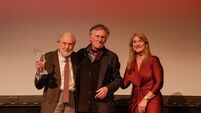
‘Rory Gallagher: Irish Tour ’74’, with Q&A featuring Dónal Gallagher, will screen at the Everyman on November 14. Picture: Eric Luke

Rory Gallagher was no stranger to the Capitol cinema in Cork. A huge movie buff, the legendary guitarist was a regular at the city’s many cinemas from childhood onwards and would often take in a film when he was on a break from his hectic touring schedule. So, when he attended the premiere of his tour documentary Rory Gallagher: Irish Tour ’74 at the Capitol in June 1974, it was a fitting homecoming. 

Now, 50 years on, Cork International Film Festival is remembering one of Cork’s most famous and beloved citizens with a screening of the rock film, made by groundbreaking filmmaker Tony Palmer and ranked as one of the finest examples of the genre.


It comes at a time when there has been a huge outpouring of affection for Gallagher in the wake of the sale of his Fender Stratocaster, one of the most famous guitars in the world. The guitar was bought for a hammer price of £700,000 (€841,000) by Live Nation Gaiety Ltd, founded by promoter and Cork native Denis Desmond, with plans to donate it to the National Museum of Ireland and at some point display it in Cork. The film festival screening will be followed by a Q&A with Dónal Gallagher, Rory’s brother and manager.

He says that film was a big influence on Rory’s work.

Dónal Gallagher: Picture: Ger Bonus

“I’ve been going back to Rory’s diaries and when he went to the cinema, whatever film it was, he would do a little review,” said Dónal. 

“Rory adored Cork City and the cinemas, he would go to the Ritz for the continental films — I would say ‘I’m not going’ because they were all subtitled. I remember when he saw Alain Delon in Purple Noon, which is based on The Talented Mr Ripley novel. That had a big effect on him. And then, of course, there were umpteen films that we both saw. They were also an inspiration for his songwriting, which is a part of Rory’s work that’s always overlooked. Rory loved writing almost cinematic soundscapes, like Out On The Western Plain.”

When we meet to chat in Cork, Dónal is still coming around from the nerve-fraying auction experience but happy with the end result.

“It was a high-wire act on a guitar string but it looks like the best possible result — it’s got a home in Cork, and in the meantime, it’ll reside at the National Museum of Ireland.”

Dónal says “you could feel the spirit of Rory” at the auction.

“The guitar in itself is its own little star and has its own uniqueness. Rory wanted a guitar just like Buddy Holly, it’s almost like a rock and roll beam that keeps shining bright and, please God, it inspires other young players.”

One senses that Rory is constantly alive in Dónal’s memory and the work he does to preserve his legacy — he says it doesn’t feel like 50 years since the Irish Tour ’74 documentary was made, which features footage from Rory’s concerts in Belfast, Dublin, and Cork.

Rory Gallagher's 1961 Fender Stratocaster 'got a home in Cork'

“I was so close to it. I think what Tony Palmer captured amazingly well is Rory’s thought process between him and his instrument, and the synergy between him and the members of the band, Lou Martin, Rod De’Ath, and Gerry McAvoy.”

He says that when it was screened, it was a harbinger of an increasing confidence in Irish musicians and what they could achieve. “It hits so many peaks, but it was well-timed. It shows Ireland getting self-confidence — I think Rory represented that to a lot of people, particularly in Cork, that it was attainable, that if you get out there and do it, you can be confident and equal with anybody.”

The making of the documentary was fraught for many reasons, not least that the Belfast concerts in Ulster Hall were filmed just after a series of bombings in the city. Dónal says he was unaware that Palmer and his crew were going to film the concerts until the last minute and that initially they were all disconcerted by the presence of the cameras — a novelty that is hard to understand from the vantage point of the 2020s when everyone has a camera in their pocket. 

“You just didn’t know how to behave in front of the cameras, our crew was kind of shy and inhibited. I was going, ‘well, I can’t go in the dressing room because they’re filming’. And they were like, ‘no, that’s what we want you to do’.”

Rory was determined to play in Belfast at a time when many musicians avoided it because of the political situation. Having spent some time in Derry as a child, and later basing himself in Belfast, which had a thriving jazz and blues scene, he had a strong attachment to the place and its people.

The making of the documentary was fraught for many reasons

“In Derry, we lived in a kind of a cul de sac with a row of houses and we played football up and down the street. Everybody was in and out of each other’s houses. So when everything started happening in the North, these were the youngsters who were being lifted and locked up. It would have been so easy just to say, ‘well, we can’t go there, it’s too much trouble’. But it was Rory’s way of making a statement, saying ‘you’re not forgotten’.”

Dónal recalls being in some threatening situations but he says that Rory’s music bridged the political divide.

“I remember one of the early gigs in Belfast, the people running the club were largely of a Unionist persuasion. Rory was doing two sets and he went out for a break and got attacked. Rory was a great guy to handle himself — no better boy. He got a belt and came back in. I remember the guys who were doing security were fans — they went out after the guys, cornered them, and told them ‘this man is untouchable’.”

Dónal says he believes that Rory would be gratified by the fact that 50 years on, he is still loved and remembered in the city he loved.

“It would probably mean more to him than anything, because this was Rory’s core or centre, coming back to Cork, or playing here. The love and devotion was extraordinary.”

Rory Gallagher on stage in Dublin in the 1970s. Picture: Eric Luke

Rory also continues to influence a host of guitar legends, from Brian May to Johnny Marr of The Smiths, who regularly visited Dónal to play the Fender Strat. He says such continuing appreciation has helped to keep Rory’s music relevant.

“I always had this terrible horror that Rory would be forgotten about, I took nothing for granted. I knew what he deserved or should have had, but he kind of never did. He was always undercutting himself or understating himself. So it’s great when guys like Johnny Marr talk about what Rory meant to them.”

Another musician who cites Rory as an influence is the virtuoso blues guitarist Joe Bonamassa, who will play a series of tribute concerts in Cork next summer featuring Rory’s music to mark the 30th anniversary of his death. His continuing popularity can be seen in the addition of a third concert after the first two quickly sold out. Dónal says Bonamassa’s admiration for Rory highlights the continuing importance of the documentary and other live footage of Rory’s performances.

“I did an interview with Joe Bonamassa in Dublin, and I asked him when had he seen Rory play. And he said, I never saw Rory play live but I watched every bit of footage. I also see it with the younger fans, and the number of kids that I’m introduced to and their dads say he is called Rory because of your brother. It’s extraordinary. Rory would be just so humbled by it all.”

  • ‘Rory Gallagher: Irish Tour ’74’, with Q&A featuring Dónal Gallagher, will screen at the Everyman on November 14

More in this section

Scene & Heard

Newsletter

Music, film art, culture, books and more from Munster and beyond.......curated weekly by the Irish Examiner Arts Editor.

Cookie Policy Privacy Policy Brand Safety FAQ Help Contact Us Terms and Conditions

© Examiner Echo Group Limited