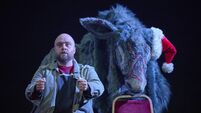
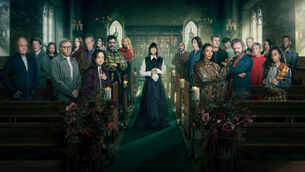
Meet the people behind Ireland's thriving cartoon industry
With lists of awards and accolades –including Oscar nominations – under their belt, Esther McCarthy meets the people behind our thriving cartoon industry
Meet the people behind Ireland's thriving cartoon industry

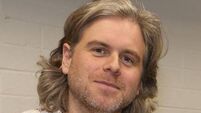
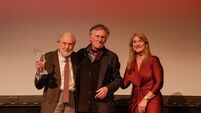
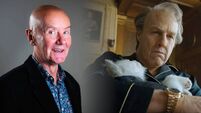
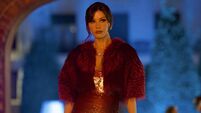
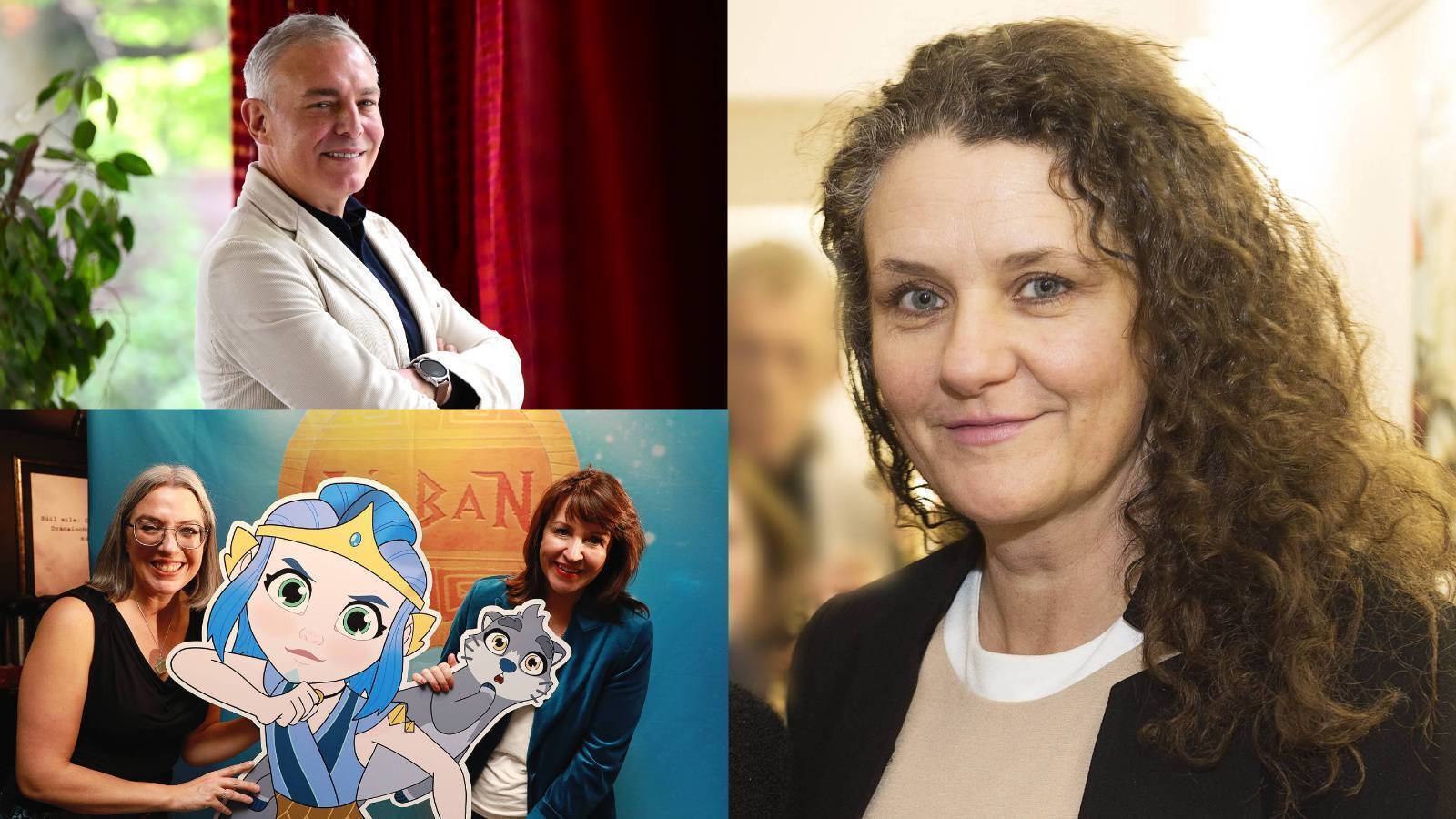
Clockwise from top left: John Rice of JAM Media; Moe Honan of Moetion Films; and Lí Ban co-creators Máire Zept and Gráinne McGuinness

As part of this year’s vast programme at Cork International Film Festival, the adventures of an animated reindeer will help kick off the festive season for family audiences.


The Magic Reindeer: Saving Santa’s Sleigh is the latest movie in a series charting the capers of Niko, a young reindeer, as he endeavours to join Santa’s Flying Forces.

Following its premiere at Cork, the Irish co-produced film will be released in cinemas here and globally. It marks the latest success story for Ireland’s animation nation as it continues to make an impact on storytelling around the world.

“We made the first Niko film way back in 2008,” says Moe Honan, CEO of Galway animation studio Moetion Films, which co-produced the movie with partners in Finland, Germany, and Denmark.

“Some people will have grown up now that remember it from their childhood. We made a second one in 2012 and we’ve decided to make this third film and form a trilogy.

“We had the incredible Eimear Noone do our score. Eimear is renowned worldwide for her amazing composing and conducting and orchestrating. She and her husband Craig (composer Craig Stuart Garfinkle) have done a beautiful, big score for us for this very scenic film.”

Moe Honan, CEO of Galway animation studio Moetion Films

As they treat Cork audiences to a festive tale in advance of its wider cinema release on November 22, Moetion Films marks the latest success story in an Irish animation industry which is now known and respected throughout the world.

Not only are Irish studios exporting stories globally — they’re doing so at the highest levels creatively. The four-times Oscar-nominated Cartoon Saloon, the Kilkenny-based studio behind hits including Wolfwalkers and My Father’s Dragon, celebrates its 25th anniversary this year and is regarded as one of the biggest creative powerhouses in its field.

Brown Bag is another studio that has gone on to enjoy huge international success courtesy of the Oscar-nominated Give Up Yer Aul Sins as well as numerous TV series including Doc McStuffins and Vampirina.

Many studios here work with some of the biggest names in global broadcasting including Netflix, Disney, Nickelodeon, and Cbeebies.

Such achievements have fostered a ‘can-do’ attitude among emerging animators and other Irish animation studios, which in recent decades has grown a talented, confident, and resilient creative workforce.

The Irish creative industry is well-placed to weather a current global downturn in demand for storytelling following years of phenomenal growth.

“The animation sector has faced some significant challenges in the last few years as the production boom associated with the covid pandemic has dissipated,” says Ronan McCabe, CEO of Animation Ireland, the association for many leading Irish studios.

“Studios are actively seeking new opportunities and co-production partners and recent engagement has included a delegation of Irish studios attending Animation Stuttgart where Ireland was the country of focus. Despite the current market difficulties, Irish studios are adapting to the new situation and are ready to expand when the market recovers.”

 John Rice, one of the co-founders and CEO of JAM Media. Picture: Moya Nolan
John Rice, one of the co-founders and CEO of JAM Media. Picture: Moya Nolan

Many working in animation in Ireland credit some of its global success back to the work of Ballyfermot Senior College in Dublin, which became one of the most highly regarded colleges in animation.

Sullivan Bluth Studios, established here in the 1980s by top US animator Don Bluth, also made its impact felt on current and future generations of Irish animators before it closed its doors in the mid-1990s.

“Sullivan Bluth had sown seeds in Ireland,” says Moe Honan. “They made people aware of the fact that: ‘Oh this is something that we could do. This is something we could be good at’.

“Like with all these things, of course, economic factors arose in which they made a business decision to move out of town, but they left something behind them.

“They left a taste for something, and I think a quest in people’s minds to develop something that they hadn’t maybe thought of previously that could really be a serious industry.

“Some of the people involved in those projects started their own small companies, which are now highly successful big companies.

“I think because of that, we’ve always learned how to reach out and network. We’re a community that has travelled to the markets and found the business.

“We’re quite a tight knit community,” adds Honan. “We’re very collegiate, which is a strength of ours. We help each other, and we talk to each other a lot, and we want to see others succeed as well. It’s all boats rising for us in that sense, we will share information or recommend each other.”

One of the wave of earlier Irish animators who helped establish an indigenous industry here is John Rice. An Abbeydorney, Co Kerry man —he also runs the Animation Dingle Festival — he is one of the co-founders and CEO of JAM Media.

The company has established itself as one of the leading creators of animated and live-action storytelling for children and pre-schoolers, with high-
profile shows including Jessy & Nessy and Becca’s Bunch. Upcoming shows include BeddyByes, with the goal of taking young children on a playful but soothing journey towards bedtime. “It somewhat counter-intuitively is a show where we want to send the audience to sleep,” he quips.

Jessy & Nessy by JAM Media

Rice agrees that studios including Sullivan Bluth helped foster talent here.

“I think Sullivan Bluth left a legacy of feature quality animation talent in the country. That’s still there — we’ve got ex-Bluthers working with us. Screen Ireland has been very supportive of the sector. RTÉ has gotten much better in recent years. And then tax credits certainly make us able to compete.” But he believes there is another reason why animation is so much a part of Irish storytelling passions and our DNA.

“I think it’s kind of a vocation for a lot of people, animation. There’s something ... it’s like a magic trick that you can convince somebody that something that you’ve moved around over a timeline has got a soul.

“It’s that suspension of disbelief and convincing an audience that something that is inanimate is real, and I think that’s why I got into it myself. It’s tremendously rewarding when you can do that.

“There are so many different aspects to the (animation) arts as well. There are the animators, but then there’s the background, the art direction, the compositing, the lighting, the texturing. There are so many artistic departments in an animated TV or film. And when you have a collective of people in a country or a studio doing it, it just seems to get better.”

As Ireland’s animation industry continues to evolve, another threshold has been crossed. Last month, Lí Ban — the first Celtic-inspired Irish- language anime — arrived on Cúla4, the dedicated children’s channel operated by TG4. The series — which is also airing on S4C in Wales — is being distributed internationally by animation giants Aardman. Paper Owl Films’ fast-paced series focuses on old and nearly forgotten Celtic stories which have been brought to life in an anime style produced in the Irish language.

Máire Zept and Gráinne McGuinness of Lí Ban

Lí Ban was co-created by Gráinne McGuinness and Máire Zepf, who also wrote the series. They are excited at the prospect of bringing the stories — many of which were shared orally and are in danger of being forgotten — with audiences.

“Everybody knows the stories of The Children of Lir and Fionn MacCumhaill, but our writer went into the library and researched all these old stories and we’re bringing them back in a modern way for a modern audience,” says McGuinness. “We will be adapting them for a new audience — hence the animation take on what used to be passed down orally.”

It marks the latest success for Paper Owl, whose previous projects include Pablo, featuring the adventures of a boy who is on the autism spectrum, which has travelled all over the world.

“I think there’s a real passion to create meaningful content and sustainable jobs in the industry,” says McGuinness.

“We have got to believe in the importance of children’s content. I heard a beautiful quote recently from (author and former Play School presenter) Floella Benjamin, which was: ‘Childhood lasts a lifetime.’

“I grew up in Donegal in the 1980s, and I never saw myself on screen. You certainly never saw children speaking Irish on screen, or autistic children. I think representation on screen is really important, and it’s the public service broadcasters that champion that and have a remit for that.”

x

More in this section

Scene & Heard

Newsletter

Music, film art, culture, books and more from Munster and beyond.......curated weekly by the Irish Examiner Arts Editor.

Cookie Policy Privacy Policy Brand Safety FAQ Help Contact Us Terms and Conditions

© Examiner Echo Group Limited