Unladylike: Measuring up the history of Ladies' Gaelic Football, 50 years on from the LGFA
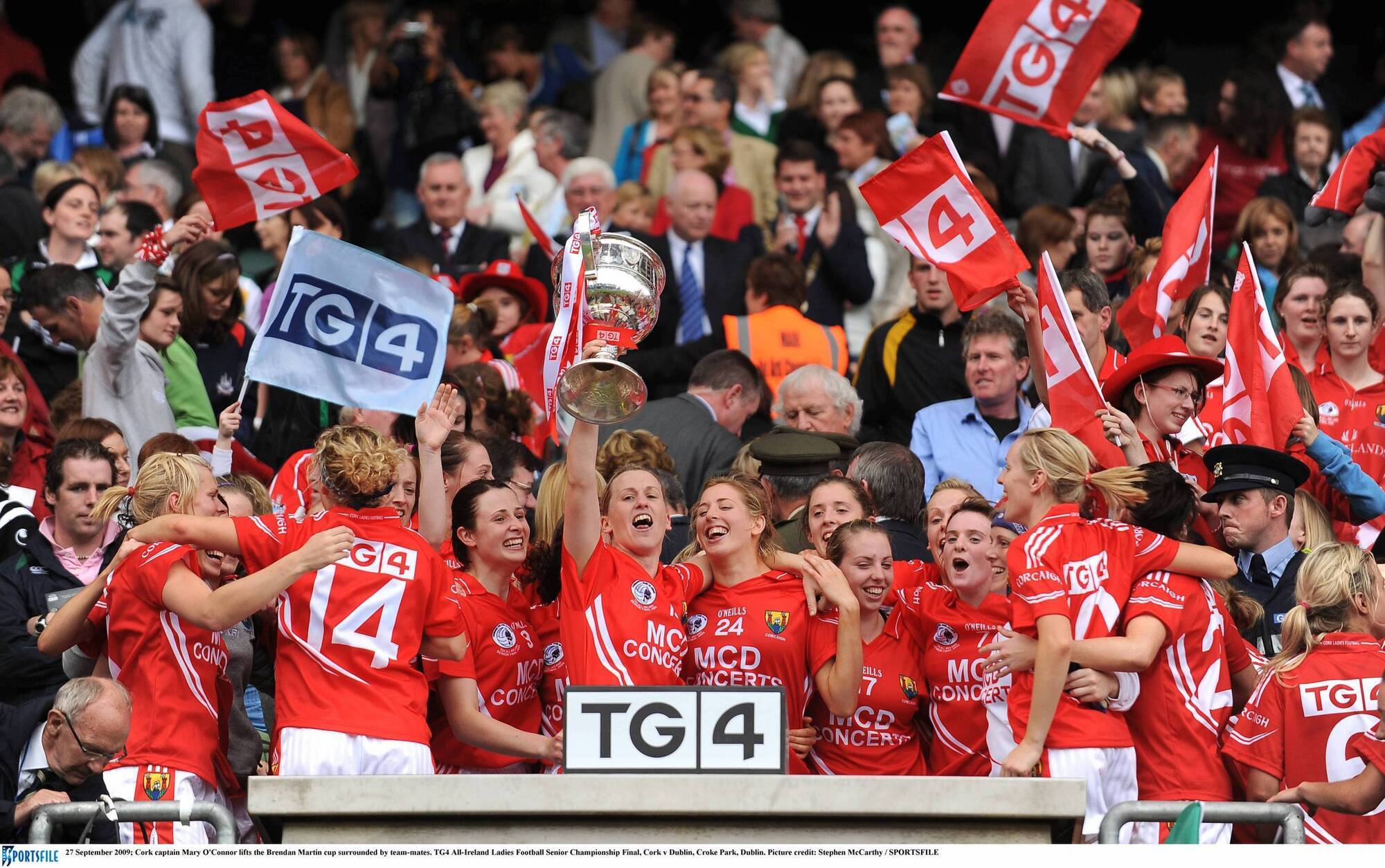
27 September 2009; Cork captain Mary O'Connor lifts the Brendan Martin cup surrounded by team-mates. TG4 All-Ireland Ladies Football Senior Championship Final, Cork v Dublin, Croke Park, Dublin. Picture credit: Stephen McCarthy / SPORTSFILE
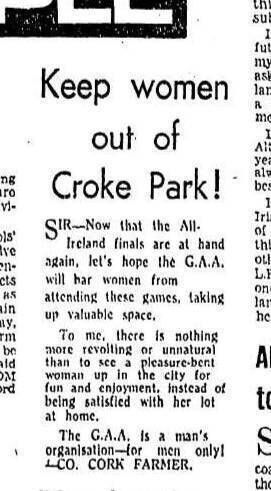

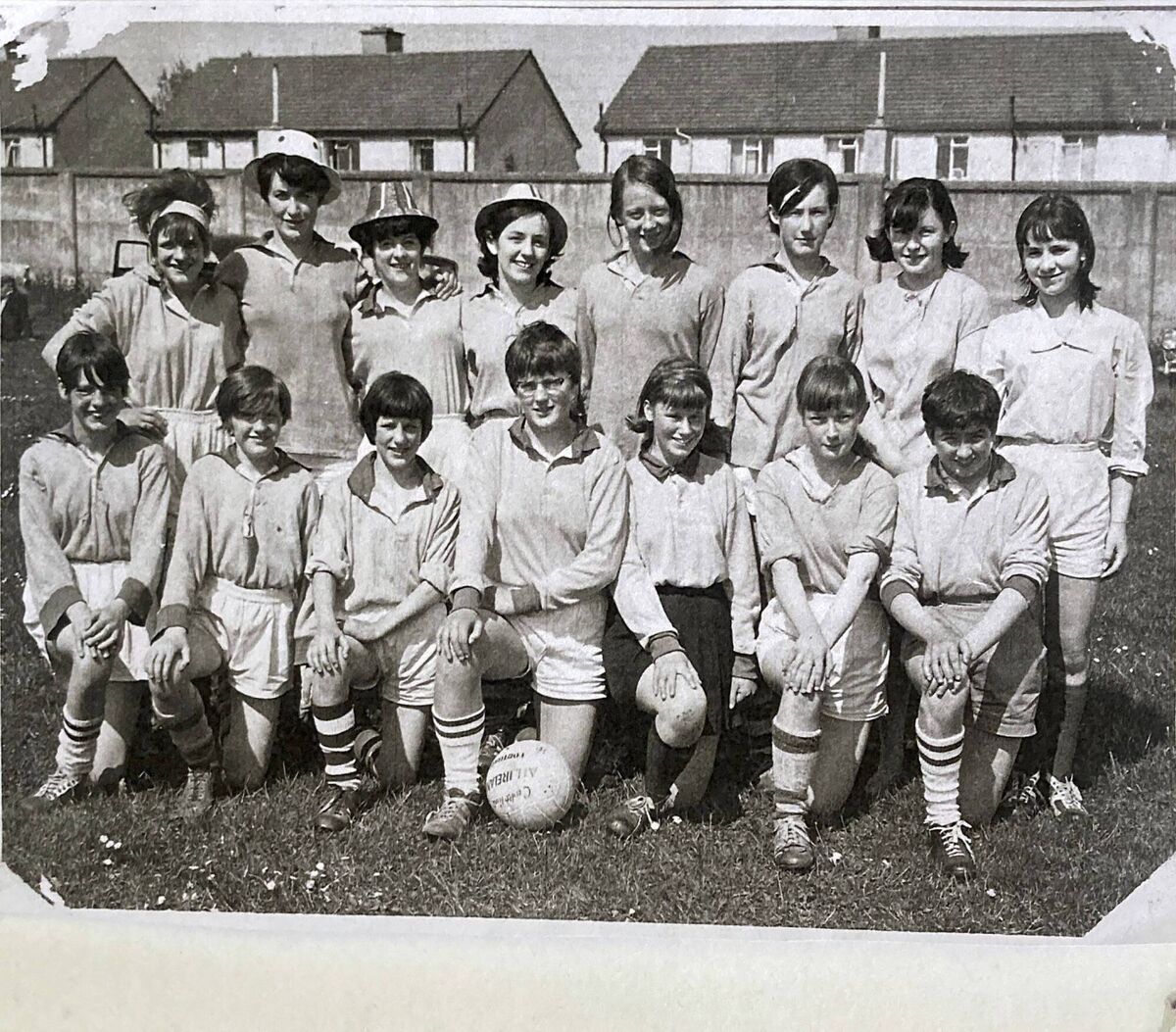
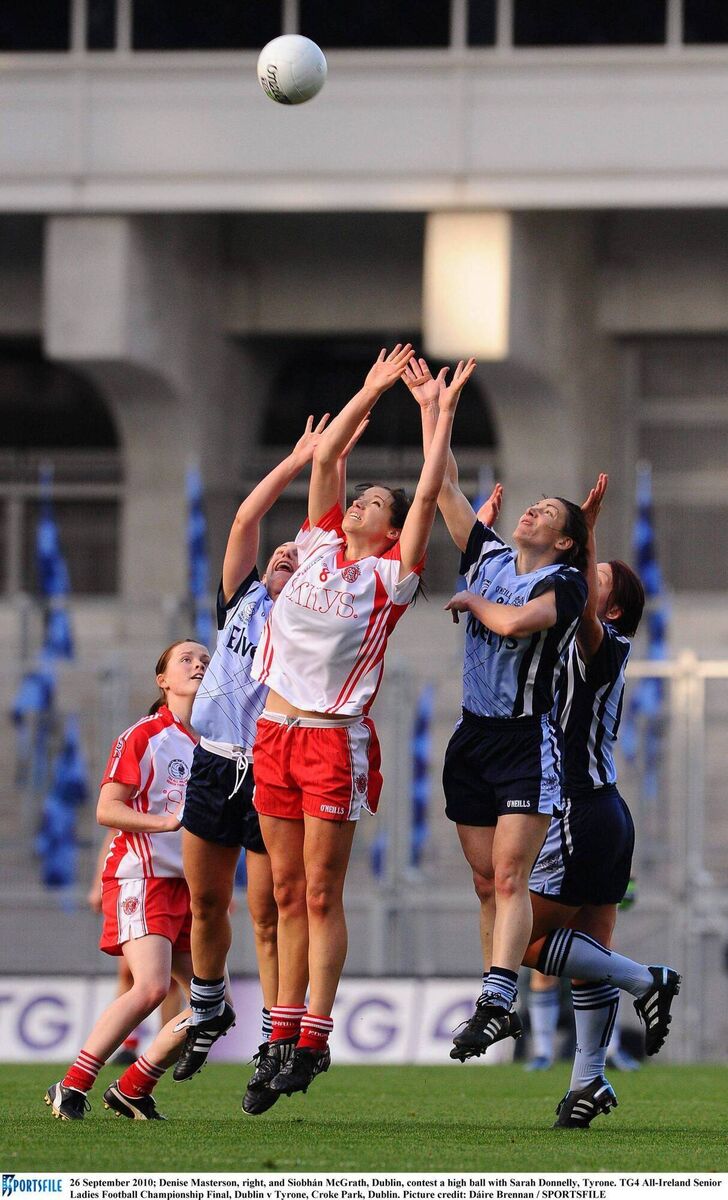
Even when they were persuaded that the first two of these arguments were nonsensical, the GAA’s initial rationale for giving the LGFA their approval was telling.
- ‘Unladylike: A History of Ladies Gaelic Football’ by Hayley Kilgallon is published by New Island Books and available in bookshops from September 12.

Ladies Gaelic Football celebrated its 50th birthday this summer and, with almost 200,000 registered members, live championship TV coverage and a host of major sponsors, is now regarded as the most successful women’s team sport in Ireland.
But can it sustain its current growth and what pinch-points might it face next?
Hayley Kilgallon’s written history makes no reference to the professional Australian Rules Women’s League, which started in 2017.
It has created the possibility of ‘play for pay’, will include 33 of Ireland’s top gaelic footballers in the coming months and there are fears about its potential to strip the domestic game of its best talent in future.
The Irish and Australian seasons, initially, did not clash, allowing players to juggle both and the AFLW now runs from late August to November.
But it is accepted that the AFLW season will expand further which may increasingly force Irish players to choose between it and their inter-county commitments.
“I haven't considered it too much because it (AFLW) is not part of the LGFA history and I can't speak to the impact it is having, I don’t have the stats and figures,” Kilgallon says.
“I can see the appeal in going to Australia because the opportunities for women to be professional sports people are so rare.
“But I also think there might be a trend right now in the sheer amount of young Irish people currently in Australia. So many of my friends and family are out there, especially after Covid.
“It’s a great opportunity to go out there and play sport for a few years, especially if you can get a career break, but I think the next few years might tell whether it (AFLW) will have a longer term impact on ladies Gaelic football.” She believes the LGFA’s planned integration into a new organisation that will encompass all three gaelic sports’ associations is far more noteworthy.
“It is a really important moment for ladies Gaelic football and will really tell, or could change, the course of the association.
“I'm positive about integration. I think it can be a huge benefit for all the three associations. Coming closer together, pooling resources and working together can only be a good thing.
“When they say they want integration done by 2027 I imagine that means having a pathway set out by then, not having it all completed. It will probably be done in a very phased approach.
“I can understand the LGFA’s previous reservations about it. It has happened in other countries where larger men's sporting associations take over female sporting associations and they (women) experience a dip in progress.
“I think the LGFA is right to be cautious going into it, particularly when they have built what they already have - something that is so strong and successful already, with such a strong identity of its own.”