Book review: Tribulations of men a Greek myth

In Pat Barker’s salty retelling, Homeric grandees like Odysseus, Paris, and Achilles are dismissed in passing as venal brutes
Pat Barker’s target in these books is war, a male obsession for which females tend to pay dearly.File picture: David Levenson/Getty Images

Pat Barker’s target in these books is war, a male obsession for which females tend to pay dearly.File picture: David Levenson/Getty Images

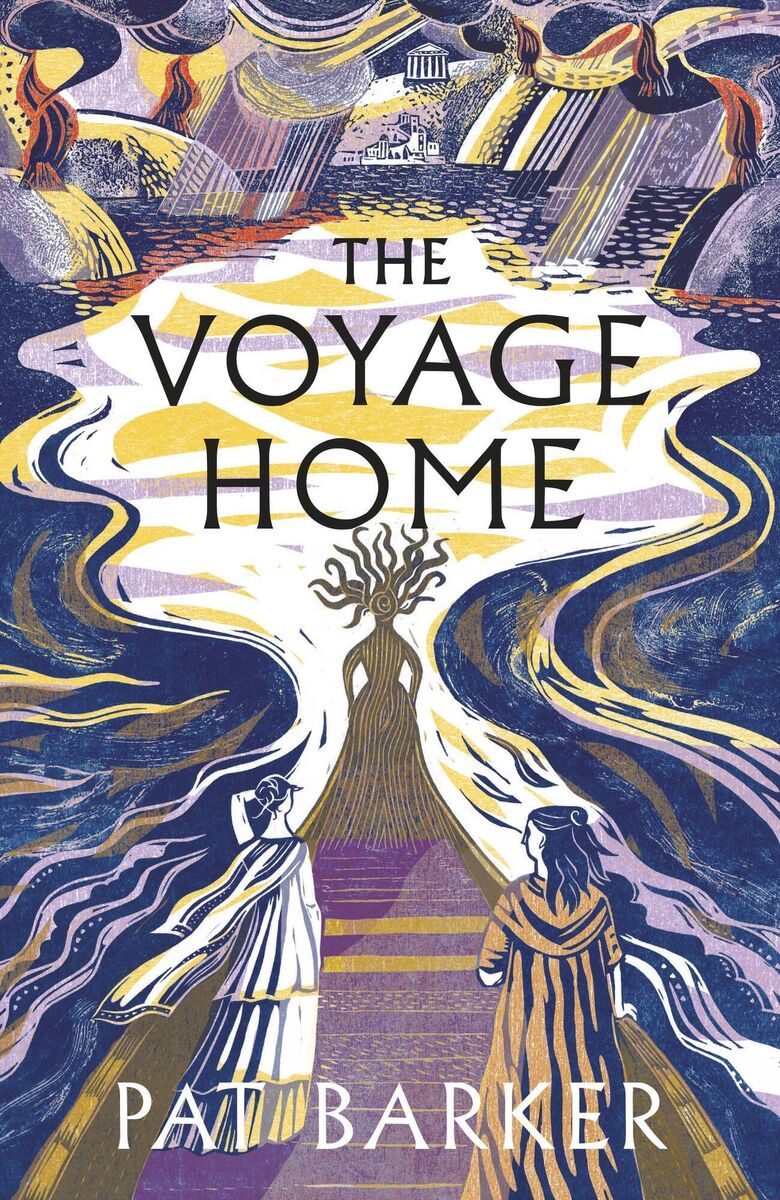
  • The Voyage Home 
  • Pat Barker 
  • Hamish Hamilton $17.99 

In The Voyage Home, Pat Barker continues her robust takedown of Greek mythology’s sacred cows. 

Her earlier novels 'Silence of the Girls' and 'The Women of Troy' retold the Trojan Wars from the perspective of females forced to endure the consequences.
After Spartan beauty Helen absconded with the Trojan prince Paris, Helen’s outraged brother-in-law Agamemnon set sail for Troy and besieged the walled city for a decade.

As our story begins Troy has fallen, “fucking pulverised” as Agamemnon poetically puts it, and a dreadful massacre of women, children has ensued. 

A genocide is underway, and as Agamemnon and his murderous hordes prepare to return by sea to Mycenae, they bring with them the spoils of war — silver, gold, stolen weaponry, and women.

Among them is Cassandra, daughter of the slain Trojan king Priam, whom Agamemnon has taken as a trophy wife and concubine. With her goes Ritsa, a healer and countrywoman reluctantly forced to act as Cassandra’s servant.

The two women’s testy relationship is the most absorbing in the book, and during a rough voyage to Mycenae, Ritsa, our main narrator, watches Cassandra’s vain attempts to please the mercurial Agamemnon, who seems exhausted and already struggling to keep up with his growing legendary status.

As they near the Greek mainland, complications emerge. Cassandra is pregnant, an inconvenient truth that may or may not help her cause. 

She also considers herself a seer, and is convinced by visions that she is doomed to die violently alongside Agamemnon. 

Meanwhile, in Mycenae, a furious Queen Clytemnestra awaits: a decade before, Agamemnon sacrificed their eldest daughter Iphigenia to the gods to ensure a blessing for his Trojan campaign. Now it’s payback time.

The passages at sea are the novel’s most evocative. As Ritsa, a rock of sense, and the possibly demented Cassandra take stock of their new circumstance, they are flung about in bad weather aboard a creaking tub crammed with hostile Greeks. 

While Cassandra tries to please her bovine husband, Ritsa is afflicted by flashbacks of the Trojan massacre, as rampaging Greek soldiers raped women and threw them off the battlements, flung babies in the air and skewered them on spears.

If the women have post-traumatic stress disorder, maybe Agamemnon does too, because beneath the imperial veneer, the warrior king is beginning to lose his grip on reality.

In Pat Barker’s salty retelling, Homeric grandees like Odysseus, Paris, and Achilles are dismissed in passing as venal brutes. 

There are no heroes here, except perhaps for Clytemnestra, who bides her time with superhumandiscipline as she awaits her chance to avenge her daughter’s death. 

Her palace is haunted by the ghosts of young children killed by Agamemnon’s father in horrific fashion, and the Mycenaens’ victory begins to seem more like a curse.

The stories of the Grecian wars are usually told in high heroic language, with attendant human suffering reduced to a detail, but in Barker’s Greece the misery takes centre stage. 

Ritsa, Cassandra, Clytemnestra and all the other women move through a world charged with sexual violence, and squalor.

Barker frames her story like a Hollywood horror. And the language she uses bluntly undercuts any outbreak of grandeur: Agamemnon’s boat is a ‘clapped-out cargo ship’; a post-coital Cassandra feels the tyrant’s ‘fuck-sweat clammy on her skin’; and rough sea is ‘bone broth coming to the boil’.

Barker’s target in these books is war, a male obsession for which females tend to pay dearly. As this entertaining but relentless novel makes clear, no matter what the era some things never change. Human beings are not very nice.

BOOKS & MORE

Check out our Books Hub where you will find the latest news, reviews, features, opinions and analysis on all things books from the Irish Examiner's team of specialist writers, columnists and contributors.


More in this section

Scene & Heard

Newsletter

From music and film to books and visual art, explore the best of culture in Munster and beyond. Selected by our Arts Editor and delivered weekly.

Cookie Policy Privacy Policy Brand Safety FAQ Help Contact Us Terms and Conditions

© Examiner Echo Group Limited