Book review: The life of poet James Clarence Mangan
In 'Finding Mangan' Bridget Hourican has addressed the decline of interest in Mangan and the leading role he played in germinating the seeds of our future nationalism in the darkest days of the 19th century
Book review: The life of poet James Clarence Mangan

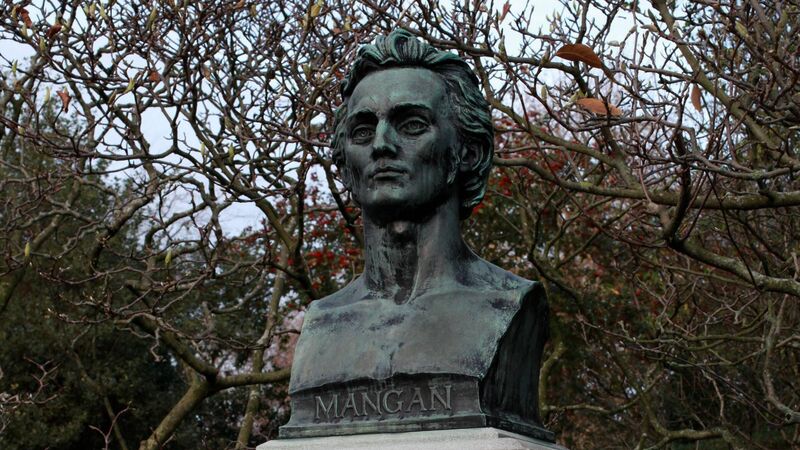
A bust of poet James Clarence Mangan (1803 to 1849) in St Stephen’s Green, Dublin. Picture: Getty

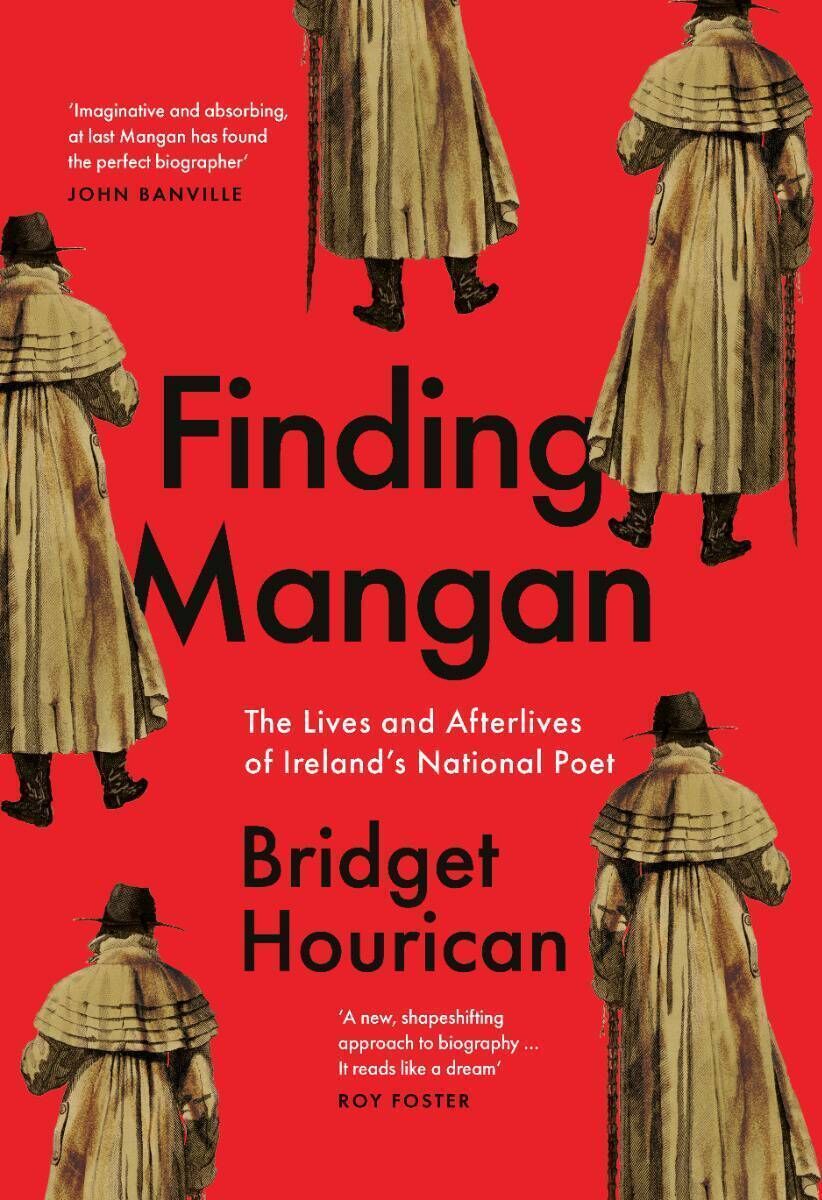
  • Finding Mangan
  • Bridget Hourican 
  • Gill Press, €22.99

Between 1800 and 1850, Dublin was in a dark place. The Act of Union which dissolved the Irish parliament led to a steep decline in the status of Dublin as a major city of the British empire. 

Further decline followed the economic crash after the Napoleonic Wars and the Famine came after 1845 with its consequential influx into Dublin of thousands of starving, diseased peasants who were driven off their lands by absentee landlords.
In the century before the Act of Union, Ireland produced many fine writers, poets and musicians such as Swift, Moore, and Ó Raifteirí. 

Post-1850, the green shoots of the Irish Literary Revival began to emerge; it would therefore be wrong to call the first half of the 19th century fallow; a period of germination would be a better description.

The life of poet James Clarence Mangan spans this period. His parents ran a grocery on Fishamble Street in the Dublin Liberties where he was born in 1803, not far from where Robert Emmet, the last revolutionary of his generation, was hanged and within earshot of where Handel’s Messiah was first played.

Not much is known about Mangan. What is known is from the first part of his memoir; the second part has been lost. 

We know that he was baptised and that he was taken out of school at 15 to be apprenticed as a scrivener in a law firm. He became a translator, a writer and a poet. 

His work eventually earned him the grand title of Ireland’s national poet. When he died in 1849 however, he was a penniless alcoholic and an opium addict.

Bridget Hourican has chosen Mangan as the subject of her new book, Finding Mangan. In the book she explains her introduction to Mangan did not come in any conventional academic way.

It arose from a chance meeting with Shane MacGowan, during a bank holiday weekend lock-in at McGruder’s Pub in the Liberties in 2008. 

MacGowan was carrying a collection of Irish poetry. When asked, he chose to read Mangan’s ‘A Vision of Connaught in the Thirteenth Century’. Bridget Hourican was smitten.

What follows for Hourigan was 15 years of learning and trying to understand James Mangan, not an easy task.

He was rarely if ever met in the light of day. He lived in the shadows of a dowdy and disease-ridden Dublin City. 

He had his silent period, producing no poetry, for almost five years (1826 to 1831) and then reappeared with the middle name Clarence. 

There are no female companions (although there is some speculation here) and no hints of scandal. There are no pictures or drawings of him.

Even his appearance, his head hidden under a large hat and his body draped by a cloak, has a ghostly quality. He is often at his best working as a translator of other people’s work.

Yet in these works you will only find his shadow, never his substance.

He became a regular contributor of poetry to The Nation newspaper after it was founded in 1842 but ‘My Dark Rosaleen” is Mangan’s best known work. 

This poem, and others from the last three years of his life have kept him in the public consciousness for over a century. 

The centenary of his death in 1949 was marked by the issuing of a postage stamp in his honour. But when he was dropped from the Leaving Certificate curriculum in the 1970s his image faded. In the book, Hourican suspects, and explores a conspiracy here.

Hourican copes magnificently with all of the challenges that the character of Mangan presents. 

She rightly admits that the genre to which this book belongs “is not detective/true crime but ghost story”. 

While James Clarence Mangan will remain a mysterious figure, in Finding Mangan, Bridget Hourican has addressed the decline of interest in Mangan and the leading role he played in germinating the seeds of our future nationalism in the darkest days of the 19th century.

BOOKS & MORE

Check out our Books Hub where you will find the latest news, reviews, features, opinions and analysis on all things books from the Irish Examiner's team of specialist writers, columnists and contributors.


More in this section

Scene & Heard

Newsletter

Music, film art, culture, books and more from Munster and beyond.......curated weekly by the Irish Examiner Arts Editor.

Cookie Policy Privacy Policy Brand Safety FAQ Help Contact Us Terms and Conditions

© Examiner Echo Group Limited