Book review: Raising a glass to a vanishing tradition
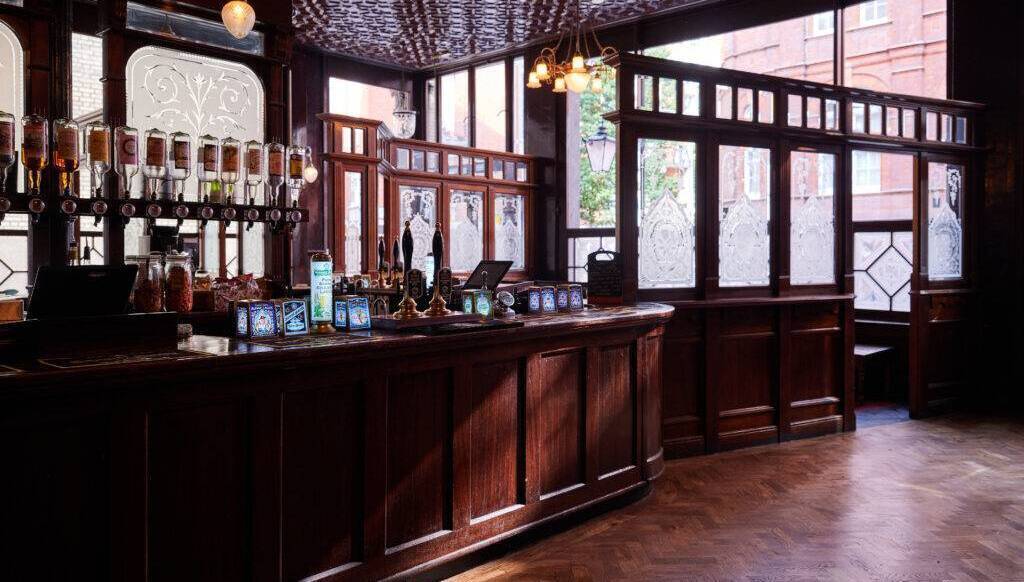
Maurice Gorham's brief, impressionistic, sketches of London pub life overflow with vivid depictions of a largely vanished city
Book review: Raising a glass to a vanishing tradition

Maurice Gorham's recently-reissued 1948 book, 'Back to the Local', inspired reviewer Michael Duggan to take a field trip to pubs mentioned in it including The Windsor Castle on Francis St. Picture: Ben Broomfield 

  • Back to the Local 
  • Maurice Gorham
  • Faber

In the 1950s, Maurice Gorham, a Londoner born in 1902 to a father from County Galway and a Lancastrian mother, was Director of Broadcasting at Radio Éireann. But in the 1930s and 1940s, he was a BBC man and, when it came to the pubs of London, an expert-through-experience.

His 1948 book, Back to the Local, now reissued by Faber, is a love letter to the pub, as it was in those days, a golden age already nearing its end: “For those of us who feel sad whenever a pub vanishes,” Gorham observes, “this is a sad life. Progress, reconstruction, town-planning, war, all have one thing in common: the pubs go down before them like poppies under a scythe". 

Even the “barmaids of tradition” were in decline, “the confidential barmaids to whom customers whispered over the bar, the haughty barmaids who could freeze the insubordinate with a look, the dominating barmaids who could quell a riot with a word, the tolerant barmaids who listen unmoved to talk of the most doubtful description and turn in a flash into highly virtuous barmaids who would order the loose talker outside.” 

His brief, impressionistic, idiosyncratic sketches of pub life, accompanied by Edward Ardizzone’s simple, distinctive and very affecting drawings, overflow with vivid depictions of a largely vanished or vanishing city: a pub behind a theatre where you could see “the chorus-boys all made up for the second house, struggling to the bar through the press of broad-backed draymen from Watney’s brewery at the end of the road”; a pub not far from Seven Dials where you could find car thieves who stopped talking when you went in; a pub where “the deaf-and-dumb congregate, and you suddenly become aware of a pool of silence in the chatter of the bar”.

Back to the Local by Maurice Gorham WEEKEND BOOKS

Among the punters, Gorham celebrates the “tranquillising influence of the regulars”, while ticking off the drunks who were usually “a menace to the internal peace of the pub”. 

He fondly depicts the elderly women of the wine houses, who “sit in the shadow of the great portly casks, exchanging grievances and making alternate trips to the bar, until the grievances grow less formidable, the world becomes less grey, and the prosperous days before they lost their husbands seem less far away”. 

Among these women, you could see drink used as “an escape from tribulation” and learn “how to get just a shade tiddly without losing your self-respect”.

Through Back to the Local, we can also revisit the fine gradations in purpose, atmosphere and clientele that defined the saloon lounge, the saloon bar, and the public bar, and acquaint ourselves with aspects of pub life now consigned to oblivion, such as the jug-and-bottle bar where people could bring their own vessels to transport the beer away.

For Gorham, the licensed trade’s sweet spot was probably the small Victorian pub, replete with mahogany and etched glass. It was all downhill from there. He never gives up, though, on the pleasure of visiting the local, a pleasure that is “not perhaps lofty but it is very profound”.

There is a chapter on the famous Irish houses, the king of which was Mooney’s on the Strand, where you could be sure of Guinness on draught and Irish whiskey. The barmen came from Dublin, “all experts in the art of getting the correct creamy head on a well-filled pint”.

Living on the outskirts of London as I do, this book was an invitation to carry out some field work. 

I took a trip up to Victoria to visit a few of the pubs named by Gorham to see how they were faring under modern conditions. It wasn’t looking good until I got to The Windsor Castle on Francis Street, mentioned six times in Back to the Local. 

The Fox and Anchor near Smithfield market in London – one of the traditional early morning pubs frequented by market workers after finishing their shifts.

Maurice Gorham would, I feel, have breathed a sigh of relief on entering, the fixtures and fittings still redolent of the pubs he loved. I had the cavernous rear parlour to myself, with conversation and occasional laughter echoing through from the main bar: The slightly distant sound of unhurried human conversation is a lovely thing.

I had indeed come back to the local, thanks to a beautiful, understated gem of a book.

BOOKS & MORE

Check out our Books Hub where you will find the latest news, reviews, features, opinions and analysis on all things books from the Irish Examiner's team of specialist writers, columnists and contributors.
More in this section

Scene & Heard

Newsletter

Music, film art, culture, books and more from Munster and beyond.......curated weekly by the Irish Examiner Arts Editor.

Cookie Policy Privacy Policy Brand Safety FAQ Help Contact Us Terms and Conditions

© Examiner Echo Group Limited