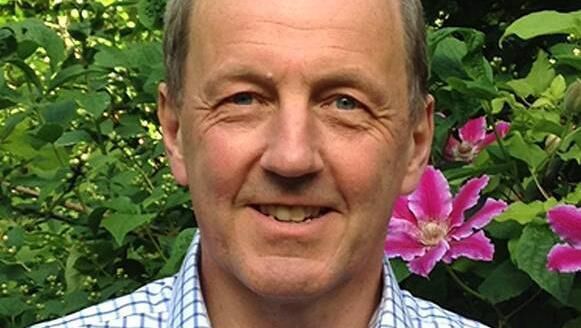
Author interview: The battle to beat emissions and reach net zero can indeed be won
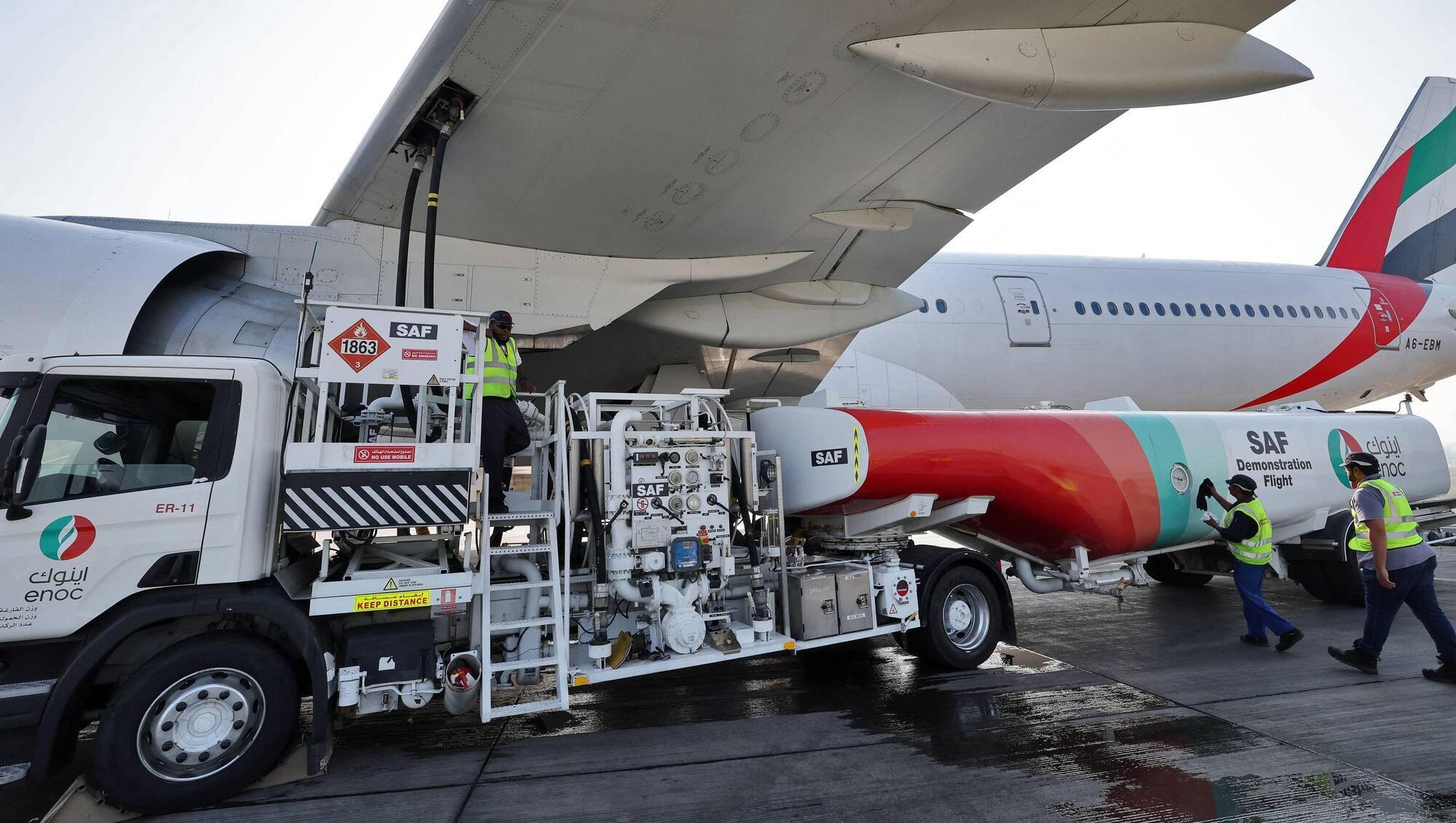
Reaching net zero will require switching energy use from fossil fuels to electricity, which will come from renewable sources, like solar panels and wind turbines
Author interview: The battle to beat emissions and reach net zero can indeed be won

Ground crews prepare an Emirates aircraft, powering one of its engines with a 100% sustainable aviation fuel for a demonstration flight at the Dubai International Airport last year.  Picture: Getty

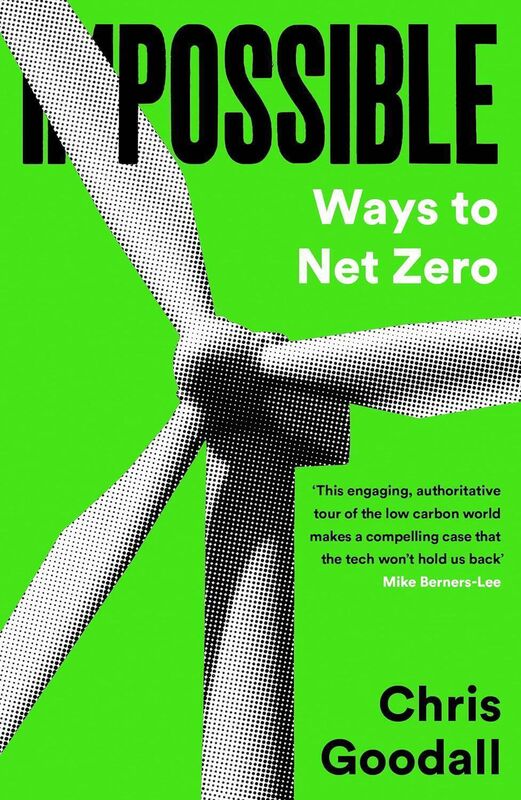
  • Possible: Ways to Net Zero 
  • Chris Goodall 
  • Profile, € 12.99

The world currently consumes about 300m tonnes of aviation fuel a year, almost all from fossil sources. Total aviation emissions are just under 1bn tonnes. 

This percentage will rise as air travel increases. Which begs the question: Can the aviation industry reduce its responsibility for climate change? There are a few options available.

The industry could switch to electricity provided by batteries, to hydrogen fuel cells, or, to sustainable aviation fuel, made from biomass sources. 

CLIMATE & SUSTAINABILITY HUB

In theory, sustainable aviation fuel materials can include municipal waste, wood chips or alcohols made from agricultural products, such as maize. 

In practice though, most of today’s sustainable aviation fuel is manufactured from processed fats and vegetable oils, which are relatively easy to turn into fuel.

Last December, Ryanair CEO Michael O’Leary gave an interview in The Guardian speaking about the latter option. O’Leary said that “unless governments around the world get in behind the production and sourcing of sustainable aviation fuels — and they’re only going to come from, ultimately, the oil majors — I don’t see where we will get the supply in the volumes we need.”

Chris Goodall agrees: “In that interview, Michael O’ Leary was pretty much getting it right.”

The entrepreneur and climate tech consultant/climate change expert, explains from his home in Oxford, England: “We will not get the massive supply of sustainable aviation fuel that the world needs, quickly enough, without much more legislative signalling from governments.”

Goodall says over the long term, aviation fuel needs to come from genuinely sustainable non-biological sources. 

This is known as synthetic fuel, a low carbon substitute that is chemically very similar to aviation kerosene.

“It can be made from green hydrogen made by electrolysis and carbon dioxide initially captured from industry and from waste disposal plants, and then, in time, directly from the atmosphere,” Goodall explains.

“There is no biological material involved.”

Goodall frequently mentions the phrase net zero. It refers to achieving an overall balance between greenhouse gas emissions produced and greenhouse gas emissions taken out of the atmosphere. Many companies are aiming to achieve net zero by 2050. 

It will require switching energy use from fossil fuels to electricity, which will come from renewable sources, like solar panels and wind turbines. 

Hydro-electric power, geothermal energy, and nuclear power will also play a role.

Theory is all well and good. Practical realities are another matter though. This is the topic of Goodall’s latest book, Possible: Ways to Net Zero

The main argument is straightforward: The route to 80% decarbonisation is relatively easy, the final 20% is going to be more problematic and complex though.

Chris Goodall: 'We will not get the massive supply of sustainable aviation fuel that the world needs, quickly enough, without much more legislative signalling from governments.'

“Those remaining difficult parts of the transition are what much of this book is about,” he says. 

“We can get to a to a zero-carbon world before 2050, if we want to. But it’s going to be very painful for the current generation, because it’s going to be very costly and disruptive.”

The book begins with some good news. Wind, solar, and hydro-electricity are now cheaper in most parts of the world than power generated by fossil fuels, Goodall explains. 

Those cost advantages are very likely to continue and expand over time, too. In the coming years.

“Solar will provide the function in most countries of providing the bulk of electricity and electric power and it’s going to be led by China,” says Goodall. 

“Every single sector of the energy transition [possibly with the exception of direct air caption of carbon dioxide] is now dominated by China.

“That includes the transport sector, where China is leading the energy transition.”

Presently, it dominates the global sales figures for vehicles powered by electricity, including cars, trucks, and urban buses.

“Still, renewable energy from wind and solar [excluding hydro-electric power] is only responsible for about 12% of world electricity production. 

“Fossil fuels, meanwhile, still provide over four-fifths of the world’s total energy requirements.”
The demand for electric cars, however, is bringing down the demand for petrol and diesel. At least in the world’s wealthiest nations. 

But oil — needed to make plastic in those electric vehicles — is increasing. In 2040, it might be almost three times as much as in 2022.

Goodall says that while most of us might want to switch away from using plastic, particularly packaging, the alternatives often have higher carbon footprints. 

It’s usually better to recycle plastic rather than switch to another material, he believes.

“We need to accept that plastic will continue to be an important part of global society,” Goodall explains. 

But we need to make sure that that plastic is 100% recyclable.

Today, that is not the case. The world currently produces about 400m tonnes of plastics a year and some forecasts see this doubling. That creates an enormous carbon problem, and a litter problem.

“We can turn away from using a lot of oil and gas to make the plastic and turn to electrification instead to make it, that is going to play such an important role in the transition,” says Goodall.

The global food supply is another worry. Approximately one quarter of global emissions arise from it.

“Net zero will be an almost impossible objective unless meat and dairy production is cut sharply,” Goodall explains. 

But that isn’t happening. Meat production has risen five-fold, globally, over the last six decades. 

This makes it more difficult to prevent the deforestation of the Amazon, which is still being cleared for cattle and for soy to feed them.

“Globally, the number of people eating meat is going up. This is because developing countries are getting richer,” says Goodall. 

“But in most developed countries we are seeing a decline in the amount of meat being eaten. So once countries have reached a certain level of prosperity, a fall in meat consumption seems to follow.”

Goodall mentions food that has the appearance, texture, and taste of conventional meats, but which only uses plant constituents, such as soy and coconut oil. 

He cites some manufacturers that have produced such products. Among them are Californian based vegan alternative, Impossible Foods, who have succeeded in getting their products such as meat-substitute burgers and sausages carried by some of the main supermarket chains around the world.

“This is an effective meat substitute, the problem is that they too have carbon footprints that are about half of that of proper meat, so it doesn’t solve the problem entirely,” he explains.

The rest of Goodall’s book points to several ways it is possible to reduce atmospheric CO2, using processes that mimic or supplement natural routes. 

Reforestation is one method. This involves taking CO2 from the air and holding it in above-ground plant matter, such as trees. Restoring depleted animal life that aids carbon sequestration in oceans and on land is another.

Carbon taxes present certain challenges. But Goodall claims they are the cheapest and most efficient way of moving an economy away from high carbon fuels. 

The knock-on effect of a carbon-free world will bring drastic changes, with two positive outcomes.

First, it will reduce our costs of living. Energy prices in an all-electric world will fluctuate less and be much cheaper. 

Savings will also come from lower transport costs and better insulated homes, which will use heat pumps instead of gas and oil. Second, it will make us happier. 

Still, there is always the problem of politics.

“Climate change policies have become part of the political polarisation we are seeing in many countries,” says Goodall.

“It’s not the case everywhere. In France, for example, climate change is generally not a subject of great political dispute across the political spectrum.

“But in the anglosphere, in the UK, the US and Australia especially, the populist right no longer sees climate change action as being within the range of policies it wishes to support. 

“The increasing polarisation of [mainstream politics] is a major obstacle to the [much needed] aggressive action that needs to be taken on climate change in the coming years.”


More in this section

Scene & Heard

Newsletter

Music, film art, culture, books and more from Munster and beyond.......curated weekly by the Irish Examiner Arts Editor.

Cookie Policy Privacy Policy Brand Safety FAQ Help Contact Us Terms and Conditions

© Examiner Echo Group Limited