Willie Clancy Summer School: Clare music event has come a long long way
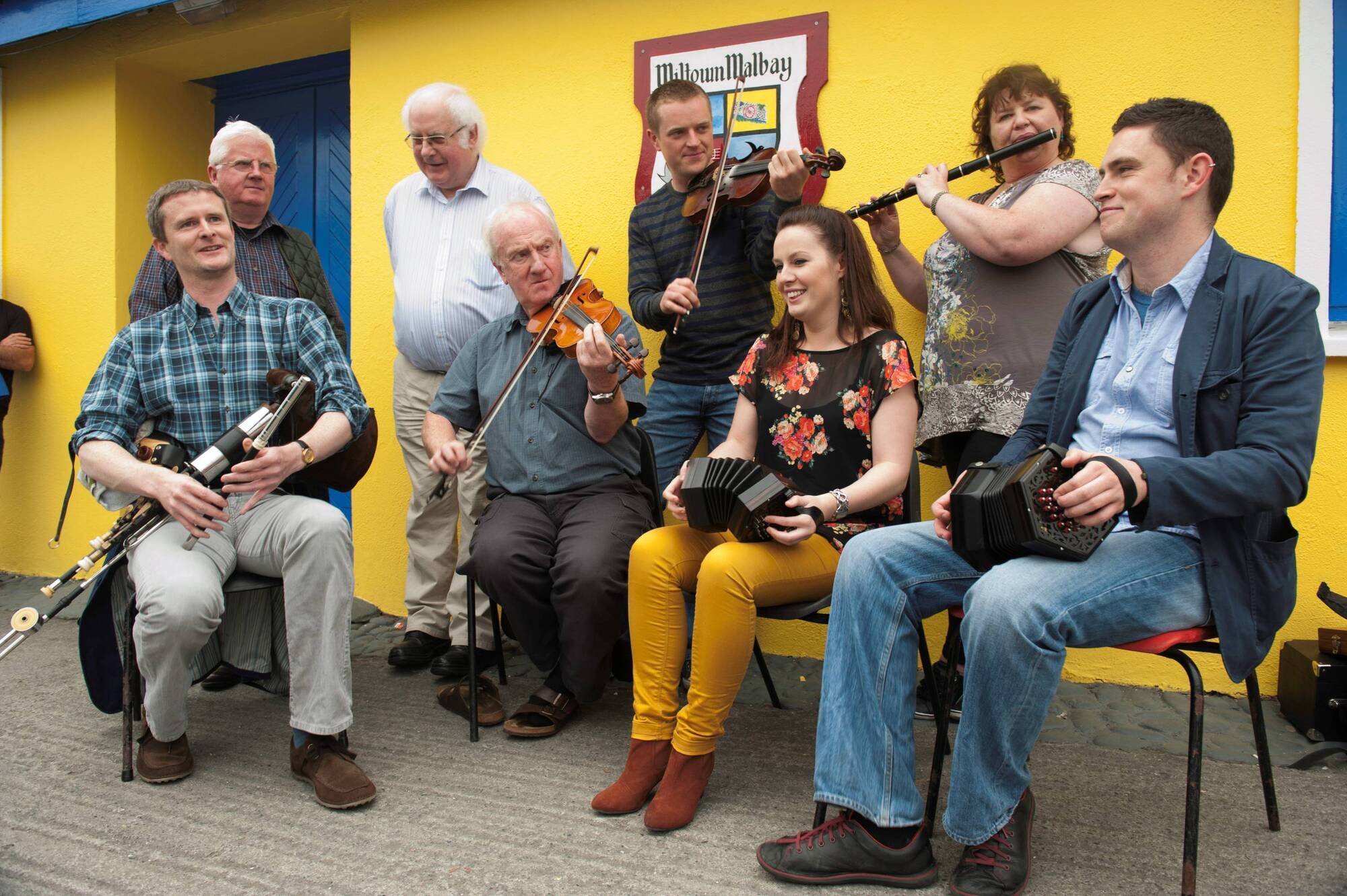
Séamus Ó Rócháin, Eamon McGivney, Harry Hughes, John Kelly, Niall Byrne, Edel Fox, Neansaí Ní Choisdealbha, and Jack Talty at Scoil Samhraidh Willie Clancy 2012. Picture: Tony Kearns
“Flutes and fiddles everywhere; if it’s music you want, you should go to Clare.”
Though the folk festival celebrated in Christy Moore’s song is long gone, there will be flutes and fiddles, not to mention concertinas, accordions, whistles, uilleann pipes, and harps absolutely everywhere next week at a gathering of a different hue not 20 miles from Lisdoonvarna.
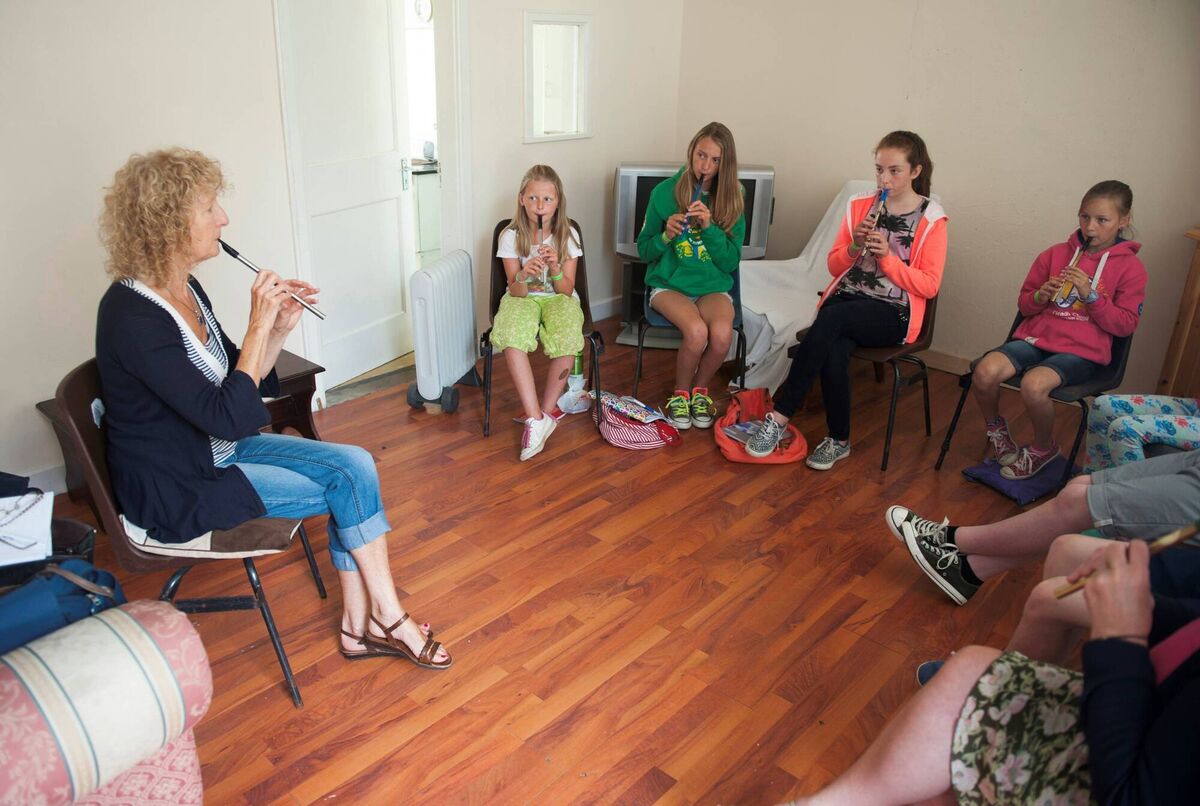
So popular has Miltown Malbay’s Scoil Samhraidh Willie Clancy become since it was first held in 1973, that the fiddle classes alone at Ireland’s biggest traditional music summer school will this year require a total of 36 tutors, with another 28 teaching uilleann pipes students, and 20 more the various concertina classes.
As thousands of musicians, singers, and dancers from Japan, Russia, America, and all corners of the world converge on a town whose resident population barely exceeds 900, one of the myriad tasks for organisers is to ensure its continued growth does not endanger the traditional ethos of the summer school.
‘Willie Week’, as it is affectionately known, commemorates the piper who initiated the summer school. Just months after Clancy’s sudden death, aged 54, the plan was brought to fruition by Kerry-born schoolteacher Muiris Ó Rócháin, Comhaltas Ceoltóirí Éireann timire ceoil Séamus Mac Mathúna, and musicians including Martin Talty, Paddy Joe McMahon, and Junior Crehan, subsequently joined by Éamon McGivney and administrator Harry Hughes.
In half a century the gathering has “got bigger, but it hasn’t changed”, says piper Séamus Ó Rócháin, who continues his late father’s work on the organising committee.
“The idea is not to change it really. It’s changed in as much as it’s got bigger, but we keep the instruments traditional; all the concerts and recitals are still unaccompanied; and you’re still carefully picking teachers and tutors, people who might have learned themselves from the older musicians, to keep that link there, to keep the same flavour to it.”
Originally conceived in association with Comhaltas as part of an initiative to found four summer schools across the country, by its second year Scoil Samhraidh Willie Clancy had become an independent entity.
“It was do-able enough at the time because it was kind of small,” says Ó Rócháin. “There were only 80 pupils in the first one. There were three schools that were given for free in town, where you could host your classes, and there wasn’t much demand on accommodation.”
Concerts in Liberty Hall, with the Bothy Band among the acts, helped fund the school in its early years, though costs were relatively low and teachers generous with their time.
“It was unique, so people wanted to come and they were happy just to be put up and looked after and have the week there. There was a revival at the time and there weren’t any other summer schools,” says Ó Rócháin. “Now there’s a summer school nearly every weekend somewhere in the country.”
Among those schools, however, Scoil Samhraidh Willie Clancy has remained at the forefront, growing “organically” with the addition of classes for instruments including banjo and harmonica, its attendances flourishing since the set dancing revival of the 1980s.
Its non-competitive ethos, with teaching remaining firmly at its heart, endears it to all ages and proficiencies, but in addition to the array of classes, lectures, Irish language groups, singing workshops, and recitals, what keeps Irish and international crowds coming year after year is the chance to make and renew acquaintances with kindred spirits at sessions and céilís, or simply enjoy the craic.
This year’s gathering marks the 50th anniversary of the involvement of Na Píobairí Uilleann in the summer school with a lecture on Clare and Dublin piping traditions.
A tribute in music, song, and dance will be paid to Clare’s Tulla Céilí Band, which has retained its association with Miltown since performing at the first summer school.
Fellow stalwarts Cór Chúil Aodha continue the strong Cork connections with the event, which this year also features a lecture exploring the legacy of travelling singer Margaret Barry.
Performances and lectures have long reflected the international reach of Irish music and of the summer school itself, and included on next week’s programme are presentations on the musical connections between Ireland and Québec, Irish traditional music in early 20th century New York, links with Appalachian music, and performances from Québecois and Ukrainian traditions.
It is undoubtedly a long, long way from here to there, but there’s the Burren and the Cliffs of Moher, the Tulla and the Kilfenora; Willie Clancy and Noel Hill… If it’s music you want, you should certainly go to Clare.
- The Willie Clancy Summer School runs in Miltown Malbay, Co Clare, from Saturday, July 6 to Sunday July 14. See: scoilsamhraidhwillieclancy.com