Mel Mercier: Mícheál Ó Súilleabháin was very reflective, but also bold as brass
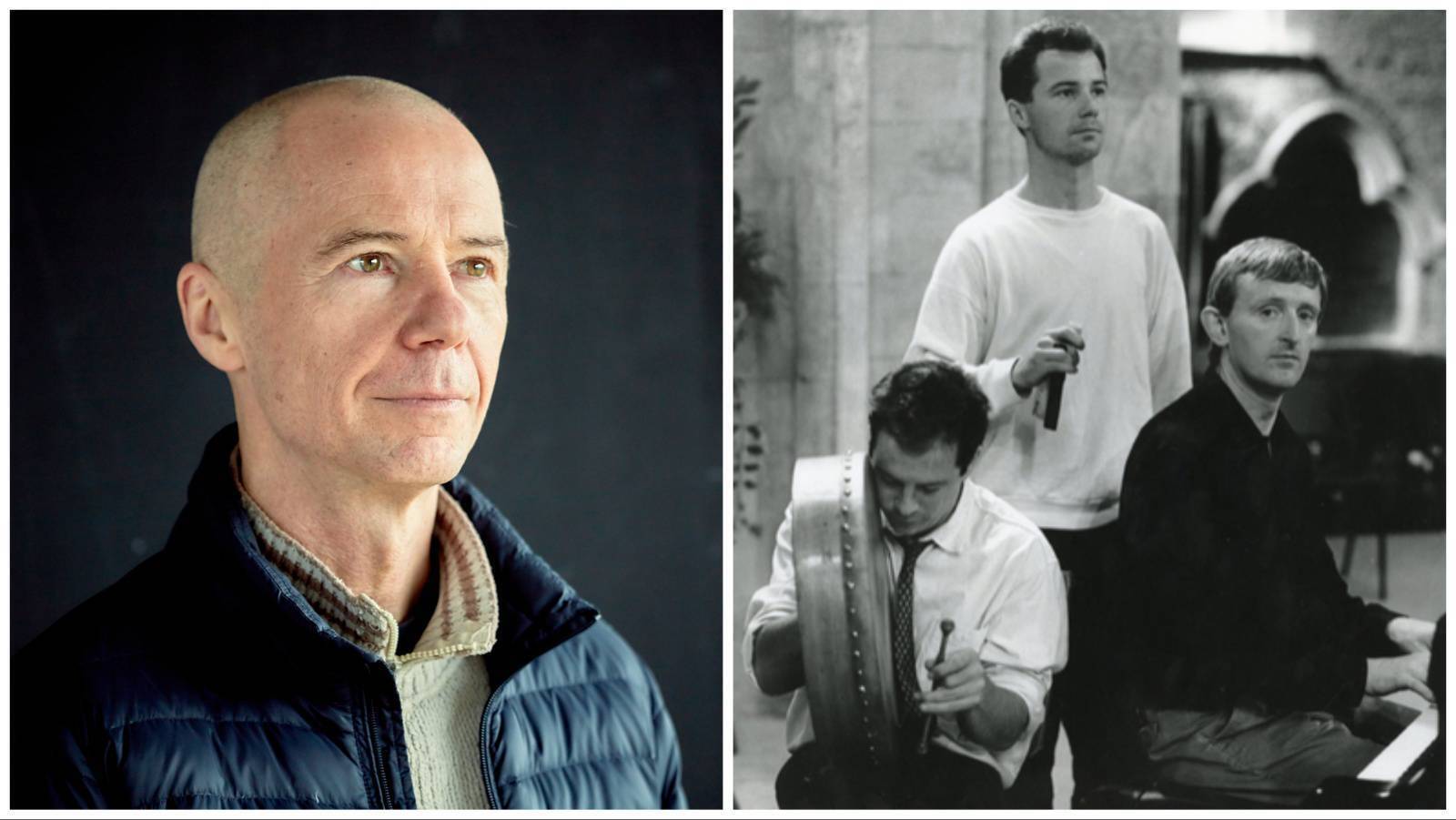
Left: Mel Mercier. Right: Colm Murphy, Mel Mercier, Mícheál Ó Súilleabháin (Publicity photograph for The Dolphin’s Way album c.1987)
Mel Mercier’s time with Mícheál Ó Súilleabháin goes back to around 1974. He was about 14 years old at the time. Ó Súilleabháin, who was 10 years older and starting out on a singular career as a composer, teacher and broadcaster, was working on some signature music for the RTÉ radio programme, . He needed some bodhrán on it, so Peadar Mercier, who was playing bodhrán for The Chieftains at the time, recommended his precocious son, Mel. So began a friendship and a working relationship that endured until Ó Súilleabháin passed away, aged 67, in 2018.
“Mícheál was great fun,” says Mercier. “He was serious. He was a scholar. He gathered an extraordinary collection of poetry books throughout his life. He was very reflective, but he was also bold as brass. He had extraordinary energy. He’d come into a room like a whirlwind. It was always great to be in his company. He didn't take himself too seriously. He wasn't pompous. He was a great conversationalist. He had a kind of magnetism and a huge heart. You’d feel the warmth off him. He was always delighted to see you.
“I spent 45 years, on and off, in his company. The thing I treasure most are the times when I sat in the well of his grand piano when we were playing our duets together, me on the rhythm bones or the bodhrán. I was inside the sound that he was making.
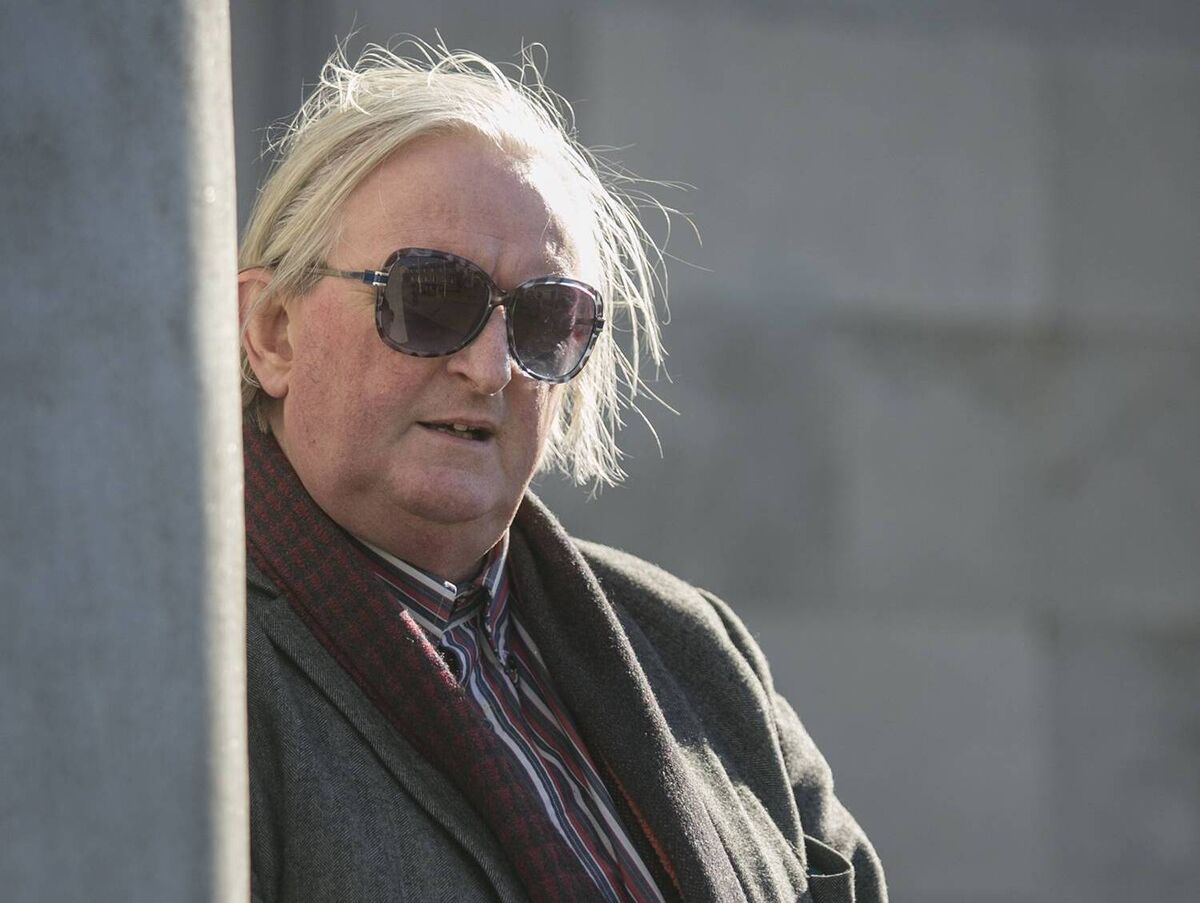
“Even during concerts, the lovely thing was that Mícheál was playful. He might move from a beautiful performance of some music of O’Carolan, for example, and play that with the reverence and dignity it deserved. Then he'd whip out the ukulele – and I'd stand up – and we'd do something called 'The Goon Bones Set', which he put together. And we made a piece together, a co-composition, called 'Must Be More Crispy'. That's what I loved.”
Ó Súilleabháin grew up in Clonmel, Co Tipperary. This year’s Clonmel Junction Arts Festival will celebrate his musical legacy with a programme that includes a concert curated by Mercier of highlights from Mícheál Ó Súilleabháin’s Cork Community of Sound. Mercier was keen to shine a light on this era in Ó Súilleabháin’s career from his time on the University College Cork campus in the late 1980s, early 1990s. Mercier has enlisted several of their old cohorts, including Bobby Gardiner, Colm Murphy, Mary Mitchell-Ingoldsby, Niall Vallely and the re-formed Rectory Céilí Band.
“This concert goes back to that time,” says Mercier, “a period of great vitality in traditional music in the university setting, which spilled out beyond the university, out to the recording studio, Sulán Studios, in Baile Bhuirne, and out into the city – the weekly concerts and sessions in the Rock Bar on Gillabbey Street and later Cissie Young’s on Bandon Road were heaving. Mícheál was at the heart of this fantastic extracurricular musical life. He had that ability to be amongst students, but also to be separate.
“Some of the music we will play at Clonmel is from music Mícheál created for a circus show about Johnny Patterson, the nineteenth century Irish entertainer-clown, who wrote well-known songs like 'The Stone Outside Dan Murphy’s Door'. Mícheál pulled together this group of students called The Johnny Patterson Neo-Céilí and All-purpose Circus Band, and arranged all these songs. He worked very collaboratively with students. Some of the tunes that emerged might have been written by students themselves. The co-creation element meant students had ownership of it.
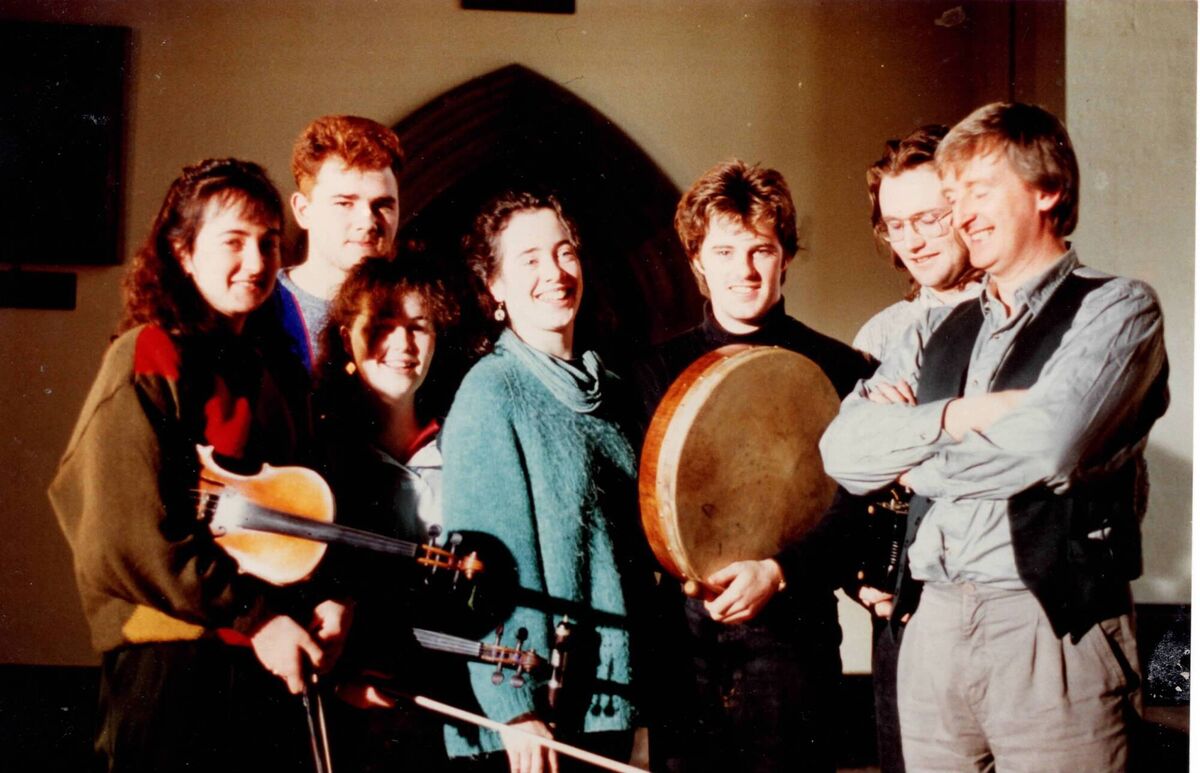
“I remember him making another piece called 'Eklego' – and we're going to play some of that as well in Clonmel – which included a lot of synthesizer stuff, cacophonous sounds using instruments, and tracks recorded and then played backwards, with the musicians eventually getting up and walking around to the audience and shaking their hands and saying, ‘Eklego, Eklego’. Bonkers stuff. It was a golden period.”
Súilleabháin first went to UCC in 1969 as a student where he studied under Aloys Fleischmann, one of his mentors along with Seán Ó Riada. Perhaps what defines Súilleabháin was his experimentalism and his fearlessness in straddling both classical and Irish traditional music, which didn’t always bring him favour. Mercier believes he was comfortable holding that tension.
“One of the things Mícheál articulated was the potential when you bring classical musicians and traditional musicians into the same space together – what might occur in the ‘in between’ places between the two. Mícheál, all throughout his life, was enchanted with that image of the ‘in between’, that space in between worlds, idir eatarthu. He was wedded to that idea of the sparks that might fly when you had traditional musicians and classical musicians together in that liminal space of possibility, neither one nor the other, the space of the unknown.”
- Clonmel Junction Arts Festival celebration of Mícheál Ó Súilleabháin includes performances by Fidelio Trio (The Friary, Friday, June 28) and Eklego, featuring Mícheál Ó Súilleabháin’s Cork Community of Sound, curated by Mel Mercier (The Friary, Saturday, June 29). See: www.junctionfestival.com.
John D. Kelly is an award-winning photographer who works for the newspaper. His career spans 40 years. An exhibition capturing the best of his work and the spirit of people in the Tipperary hinterland will be on display until the autumn. It’s curated by Kate Horgan.
Writer John MacKenna recalls his 30-year friendship with Leonard Cohen and reads from his memoir, ; Leonard Cohen's songs will be performed by Katie Jacques (vocals/ukulele) and Angela Keogh (cello/concertina).
The talented Tipperary playwright Áine Ryan serves up a dark comedy, , for this year’s festival. The play explores the love lives of three lonely women, Teresa, Benny and Maura, seeking connection in a remote townland.
Some 16 years after Dubliner Ronnie Drew passed away, his son, Phelim Drew, the actor and musician, returns to his father’s music for a night of Dubliners songs and anecdotes.
Claire Kilroy, who was shortlisted for this year’s prestigious Women’s Prize for Fiction in the UK, will talk about her latest novel, , a visceral story about a mother (Soldier) and her baby boy (Sailor), and “all I had lost and all I had gained”. She’s in conversation with Jackie Lynam.