Author interview: Environmentalist Lily Kingsolver
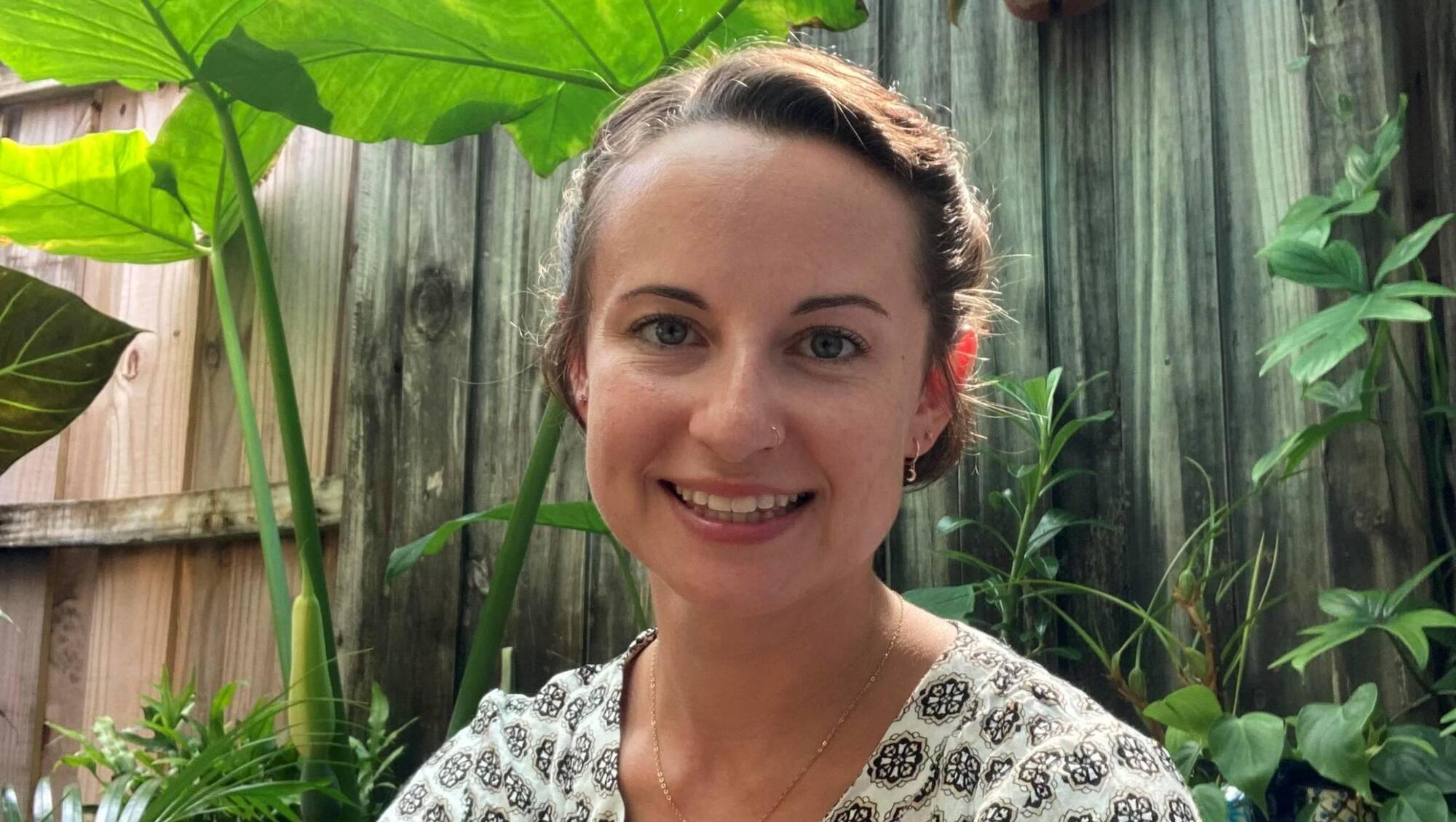
'Coyote’s Wild Home' is not only a beautifully illustrated story about coyotes it is also a teaching tool
Author interview: Environmentalist Lily Kingsolver

Environmentalist Lily Kingsolver co-authored ‘Coyote’s Wild Home’ with her mother, the Pulitzer Prize-winning author Barbara Kingsolver

  • Coyote’s Wild Home
  • Barbara Kingsolver and Lily Kingsolver
  • Illustrated by Paul Mirocha
  • The Gryphon Press, €16.41

When Gryphon Press asked Barbara Kingsolver to write a children’s book about coyotes, she was dubious.

The Pulitzer Prize-winning author of Demon Copperhead and The Poisonwood Bible receives countless requests and usually turns them down. 

However, she mentioned this one to her younger daughter, Lily, an environmentalist who works with children, and Lily persuaded her to accept.

When Barbara suggested that the two of them should write it together, Lily was thrilled: “I’ve been working with children for about eight years now and have ended up with a lot of opinions about children’s books.”

She also has strong opinions about how coyotes, and other predators, are represented. And she hates that all we hear are the scare stories.

“Most interactions humans have with predators are completely neutral,” Lily says, “and may even go unnoticed. Black bears, for example, are not especially aggressive or dangerous.”

They are omnivorous scavengers, but they would rather take on a bird feeder than another animal.

And she should know. Having been brought up in South-Western Virginia, Lily roamed free in the Appalachian mountains and forest. She’s even met a few bears.

“I’ve met several,” she says, “and every time that has happened, they were just as surprised to see me, as I was to see them.

“Once I surprised a bear while I was hiking at night, but I backed away slowly, and that was that.” 

She once came across an alligator: “I was kayaking, and I came around a river bend and surprised it. It growled at me, and I paddled away quickly.

“The more you learn about predators, the less scary they seem.” 

When Barbara told Gryphon Press about her plan for Lily to co-write the book, they liked it.

“It turns out the press is run by a mother-and-daughter team,” says Lily.

The stunningly beautiful, true-to-life illustrations in 'Coyotes Wild Home' are by Paul Mirocha

It is a brilliant collaboration. Coyote’s Wild Home is not just a beautifully written book with stunning illustrations and a heart-warming story, it’s also a teaching tool, showing the importance of nature, and of how these animals can co-exist with humans. 

It was written with six- to nine-year-olds in mind, but can be appreciated by all ages.

It’s a simple enough story. On the day that a coyote pup is taken on his first-ever hunt by his aunt, Diana, a young girl from the city, is taken into the woods by her grandfather, who is teaching her the rules of nature.

Their paths intersect, and although the coyotes are aware of the humans, they remain hidden, so that Diana is not aware of them.

Her grandfather teaches her to fish — but emphasises that she must only catch what she is able to consume.

They scavenge, too — and pick some blackberries, which, unbeknownst to them, the coyote pup, failing to catch any animals, has also consumed.

Before living in Virginia, Lily lived in the Sonoran Desert in Arizona.

Her father, Steve, is an environmentalist, and so she studied environmental science, before going on to the Florida Institute of Technology, where she gained a master’s degree in environmental and informal science education.

The illustrations in the book are  true to life and accurate.

Lily has worked as a naturalist and educator in state parks and zoos in both Southwest Virginia and Florida. She’s now living in Florida, working on a graduate degree and teaching children.

The illustrations in the book are not just stunningly beautiful, they are also true to life and accurate. I wondered how the duo came across such a wonderful illustrator in Paul Mirocha.

“He’s a friend of mom’s,” Lily says, agreeing that his illustrations are perfect. 

“We knew him from his work illustrating the fauna of the Sonoran Desert, and we knew he would bring the coyotes to life.” 

How, though, did the three of them collaborate, especially when Lily lives so far away.

“I sent them both co-ordinates of some of my favourite places, and Paul visited mom before he began on the project.

“They went to many of the places that are illustrated in the book, so quite a few of the scenes are based in real locations.”

Paul truly shared our vision. He was meticulous about ensuring all the species were correct and that the ecosystem felt right. 

They wrote the book through numerous Zoom and phone calls, and both mother and daughter enjoyed the collaboration enormously.

But it’s Lily who got the task of coming to Ireland, a country her mother adores, to talk about the writing of the book at the Listowel Writer’s Week and at the Seamus Heaney Home Place.

“I’m really excited,” she says on the eve of her trip. “I’ve visited Ireland once before and can’t wait to return.

“I’m a little nervous about the publicity, but I’m so excited to see more of the nature of Ireland. Ireland feels a lot like my Appalachian home.” 

There’s another reason that the book is set where Lily was brought up.

“Appalachia is a deeply misunderstood region,” she says. “It’s so rich culturally and environmentally, yet it’s historically conflicted and disenfranchised.

“There are limited resources, and because we are so far away from the urban centres where decisions are largely made, it’s under-represented.”

And all of this matters terribly, just now, while we’re fighting climate change.

“It’s an ecologically important area, and with climate change more endemic, Appalachian species are threatened.”

These last protected natural areas become more important all the time.

Lily shares her Florida home with her husband, their dog, and several reptiles, but she yearns to move nearer to her family.

“After I’m done with grad school, we plan to move back to Virginia to be closer to both our families. We miss our mountains and our mommies.”

Talking of mommies, was she aware, growing up, how famous her mother was?

“Well, she was an amazing role model and writing mentor, and it was great to have her proof reading my essays.” She laughs. 

“But she’s done a great job of maintaining a balanced family life, and more than anything, she’s just my mom.”

Having written this one book, might she follow her mother into the literary field?

“I will definitely continue writing,” she says. “I studied poetry pretty seriously in college, and I love writing. Mom is the novelist in the family, but if another opportunity came along, I’d love to keep writing children’s books.

“Working as a teacher in a nature pre-school has been a great way to put into practice what I’m learning and bring a lot of the concepts full circle. And the book will bring a larger audience.

“It’s important for kids to have an early positive experience of nature, and it is such an honour to be able to cultivate their experiences every day.”

In 10 years’ time Lily hopes to have moved back to the Appalachian nature she loves — and maybe have some chickens. 

And whether or not she does continue to write for children, she certainly intends to continue to teach them.

“I really hope to keep working on connecting kids with the environment, however that comes up — whether through writing or environmental education.”

More in this section

Scene & Heard

Newsletter

Music, film art, culture, books and more from Munster and beyond.......curated weekly by the Irish Examiner Arts Editor.

Cookie Policy Privacy Policy Brand Safety FAQ Help Contact Us Terms and Conditions

© Examiner Echo Group Limited