Book review: A beautiful depiction of a horrible crime
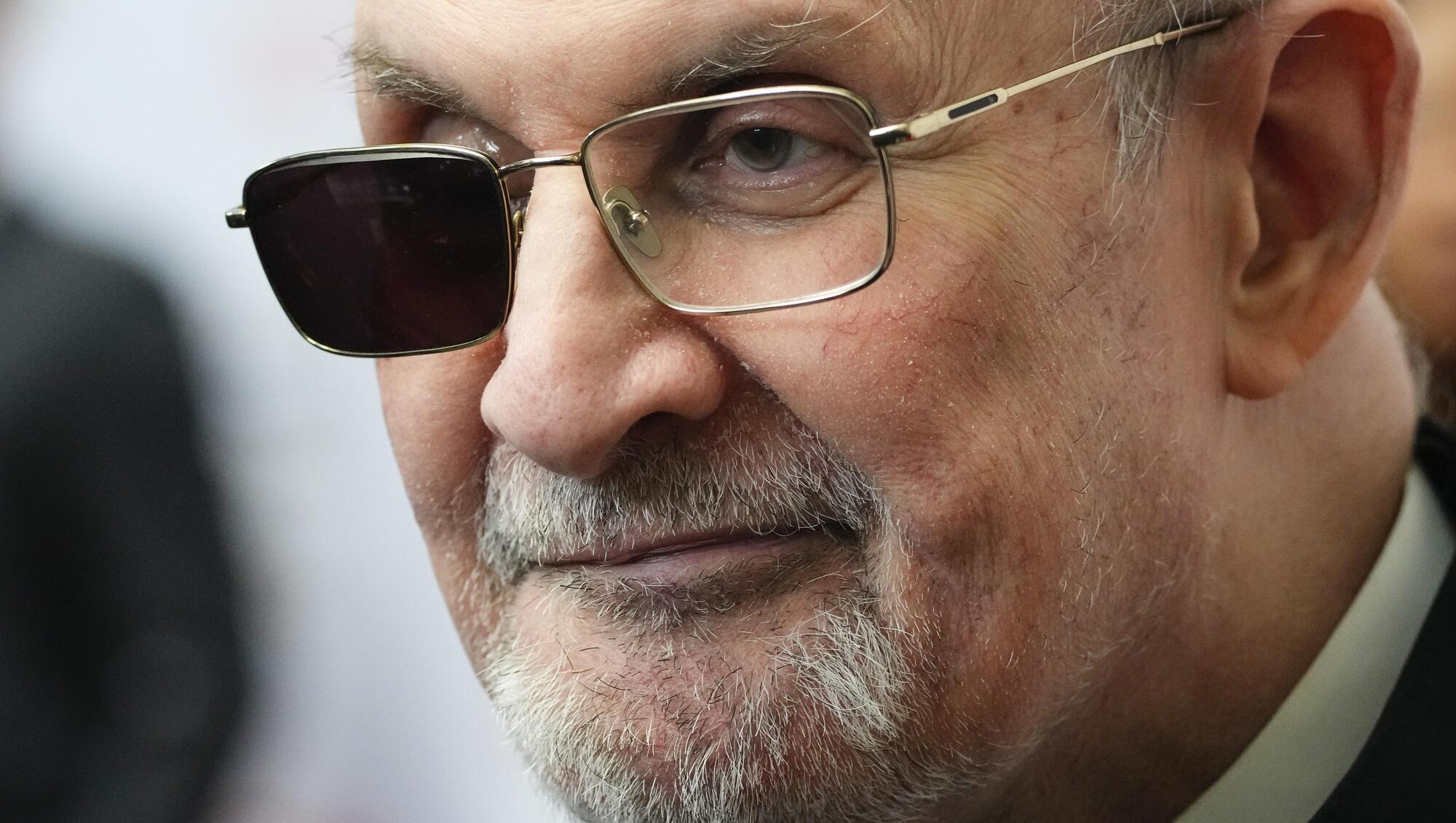
Salman Rushdie suffered multiple injuries in an attack by a man wielding a knife as he gave a talk in New York in August 2022. Picture: AP/Frank Franklin II
- Knife: Meditations After an Attempted Murder
- Salman Rushdie
- Jonathan Cape, €24.65
“At a quarter to eleven on August 12, 2022, on a sunny Friday morning in upstate New York, I was attacked and almost killed by a young man with a knife just after I came out on stage at the amphitheatre in Chautauqua to talk about the importance of keeping writers safe from harm.”
So begins , Salman Rushdie’s account of the year he spent recovering from this attack at the renowned adult education institute in upstate New York. I remember hearing the news in 2022, and fearing the 75-year-old novelist, who had survived the fatwa declared on him after the publication of some 30 years earlier, would not survive this onslaught.
All the tendons and most of the nerves in his left hand were severed, there were at least three stab wounds in his neck, slashes down the centre of his chest, other cuts on his chest, face, and thigh, and worst of all, a deep wound in the right eye which severed the optic nerve, and left it without sight.
Audience members, many also elderly, came to his rescue, and the assailant was overpowered. The attack had lasted only 27 seconds — the time it takes to recite the Lord’s Prayer or read aloud one of Shakespeare’s sonnets.
Rushdie was conscious throughout, lying in a pool of blood, and thought he was dying: “However, as the attentive reader will have guessed, I survived.”
This was thanks largely to a retired fireman who had his thumb on the biggest wound as Rushdie was stretchered out to a helicopter.

Another reason Rushdie survived was his younger wife, Rachel Eliza Griffiths, poet and photographer. This was his fifth attempt at marriage, and as his family commented, finally he found the right woman. Eliza, as he calls her, played a major role in his recovery. His praise for her companionship is fulsome as is his recognition of her talents.
He was also buoyed up by the worldwide outpouring of affection from well-wishers, including presidents Biden and Macron. Unlike the mixed reaction to the fatwa, this time affection for Rushdie was undiluted. A week after the stabbing, hundreds of friends and admirers, assembled by Colm McCann among others outside the New York Public Library in a tribute called “Standing with Salman”.
He describes having the ventilation tube removed as “like having an armadillo’s tail pulled out of your throat”. He claimed the scars on his chest resembled the New York subway map.
The straight reportage of the hospital experiences is replaced by a more essayistic approach as Rushdie works through the trauma with his therapist and examines his attitude to his 24-year-old attacker.
However, a lengthy imagined conversation with the A (for Assailant, would-be Assassin, etc) who had read only two pages of Rushdie’s work, is the least successful part of the book. Rushdie’s uses Coleridge’s description of Shakespeare’s Iago — “motiveless malignancy” to characterise him.
Rushdie feared his reputation as “the fatwa guy” would be replaced “the guy who got knifed”. This vivid account of his attack and recovery shows what a fine writer Rushdie is. His aim was to answer violence with art, and he has done that in great style.

BOOKS & MORE
Check out our Books Hub where you will find the latest news, reviews, features, opinions and analysis on all things books from the Irish Examiner's team of specialist writers, columnists and contributors.