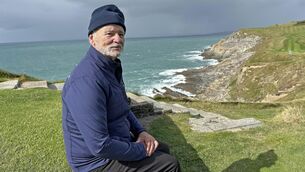
Poet laureate Simon Armitage on Taylor Swift, writing for the queen, and his favourite Cork band
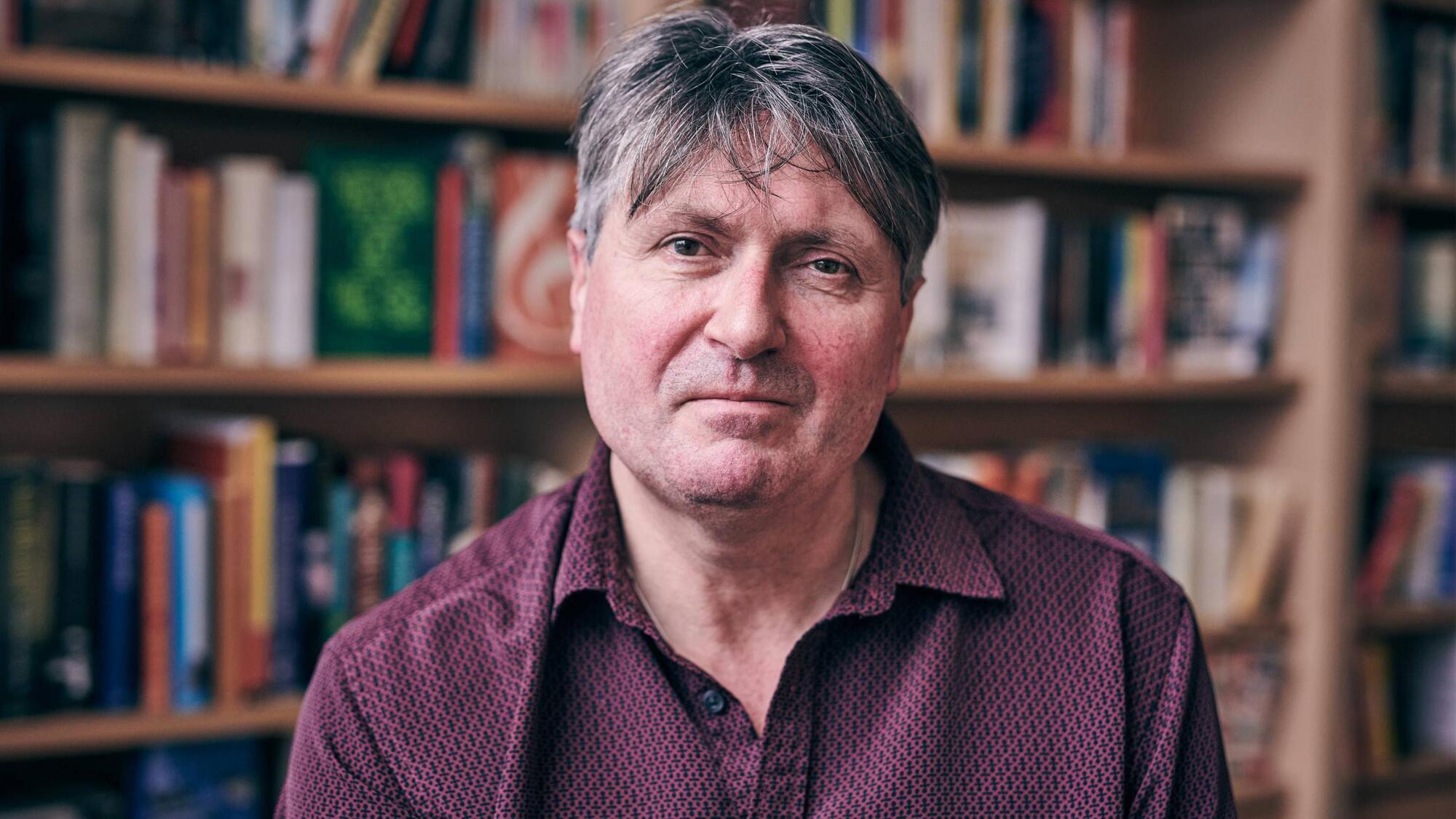
UK poet laureate Simon Armitage reads in Cork on Saturday. Picture: Paul Stuart
It is a measure of Simon Armitage’s dedication to his work — and indeed all aspects of his life — that he has given up time from a rare holiday to do an interview with the Irish Examiner on Zoom. There is a delicious irony in the fact that the name of the platform hosting our chat is also the title of his first collection of poetry. Yorkshire-born Armitage wrote Zoom! when he was employed as a probation officer and it was hailed as an instant classic on its release in 1989.
Thirty-five years on, Armitage, who will appear at the Cork International Poetry Festival on Saturday, has numerous collections under his belt and also holds the British title of poet laureate. Not to mention his other endeavours as a lecturer, broadcaster, DJ, band member, playwright and novelist. What does he think when he looks back at his first collection and the start of what would be such a creatively productive life and career?
“They’ve got all my old archives in Leeds University and once in a while, I go in and see some of those poems that were in Zoom! and written on probation office stationery. I suppose that’s when it feels like quite a while ago, thinking back to a real time of innocence for me, just writing those poems without any knowledge that they might ever be published. You know, just writing for fun.”
The late great Eavan Boland once wrote that poetry begins where the language starts, in the shadows and accidents of one person’s life. Where did poetry begin for Armitage?
“We all have our own creation myths. I’ve talked a lot about waking up to poetry when I was at school, through reading Ted Hughes — being a very distant kid at that time, not engaged in anything, and suddenly being confronted by these startling, small, intense packages of language and that realisation that something incredibly vivid was happening in my head. But if I go back further, I think it’s probably something to do with reading and staring at song lyrics printed on album covers — and hymns and prayers. Just noticing organised language, language with managed intervals, language that was ceremonialised through being arranged and structured rather than just poured in, as prose is, to fill up a page.”
Armitage’s love for music extends to performance — he fronts the band LYR (Land Yacht Regatta). Among his countless accolades, he also has an Ivor Novello songwriting award for lyrics he wrote for a Channel 4 documentary. With the recent release of The Tortured Poets Department by Taylor Swift, there has been renewed discussion of her talents as a lyricist and even as a poet. Armitage chuckles somewhat nervously when I ask him if he consider Swift’s work to be poetry.
“Yeah, don’t get me going on that,” he says. “I will talk more generally about the difference between lyrics and poetry rather than based on the legions of Swifties. The short answer is that all poetry can be used as song lyric. But by and large, song lyrics are not poems. And that’s because they come with all this other stuff called music — they come with a backbeat, they come with orchestration, they come with composition, they come with chord changes, they come with performance, they come with cowboy boots. But poetry has got to be its own score on the page.”
Armitage has said that part of his philosophy is to try and find the miraculous within the everyday, the ordinary and the domestic. Does he think poets’ brains are wired differently to see inspiration everywhere?
“It would be fun to make a case for poets being born and not made and to think that we have some special quality. I know people say a lot to me that I notice more than they do. If you give me a chance, I’ll probably say yeah, we’re the special ones, we’re the high priests. But in reality, I think it’s probably more mundane, it’s just about finding a way of writing things down and of course, you get really practiced at that. And you develop it almost as a way of life.”
Poems have never been more widely disseminated than in the digital age. While the internet has rewired our brains and shattered our attention spans, Armitage thinks poetry is more relevant than ever.
“When I started, I had a sense of it being slightly old-fashioned, and maybe out of touch, and I think I was trying to change that a little bit when I started writing, in the only way that I knew how. But in the age that we live in now, where we’re just bombarded with noise and colour, and shite, 24 hours a day, 360 degrees, when you get one person saying something that they've thought about, and that they really believe in and that they’ve revised and improved before they’ve sent it out there into the world — that becomes incredibly valuable.”
Armitage is now halfway through his stint as poet laureate, and has been conscious of using the influence and recognition that the position brings as much as he can.
“It’s a role that gets you into rooms with people, opens doors, it’s a chance to do put a little bit back. So, I’m trying to develop a National Poetry Centre in Leeds; I’ve established the Laurel Prize, an international award for eco and nature poetry that highlights the climate crisis; I do a big tour of libraries every spring. None of those things would have been financially viable without that title.”
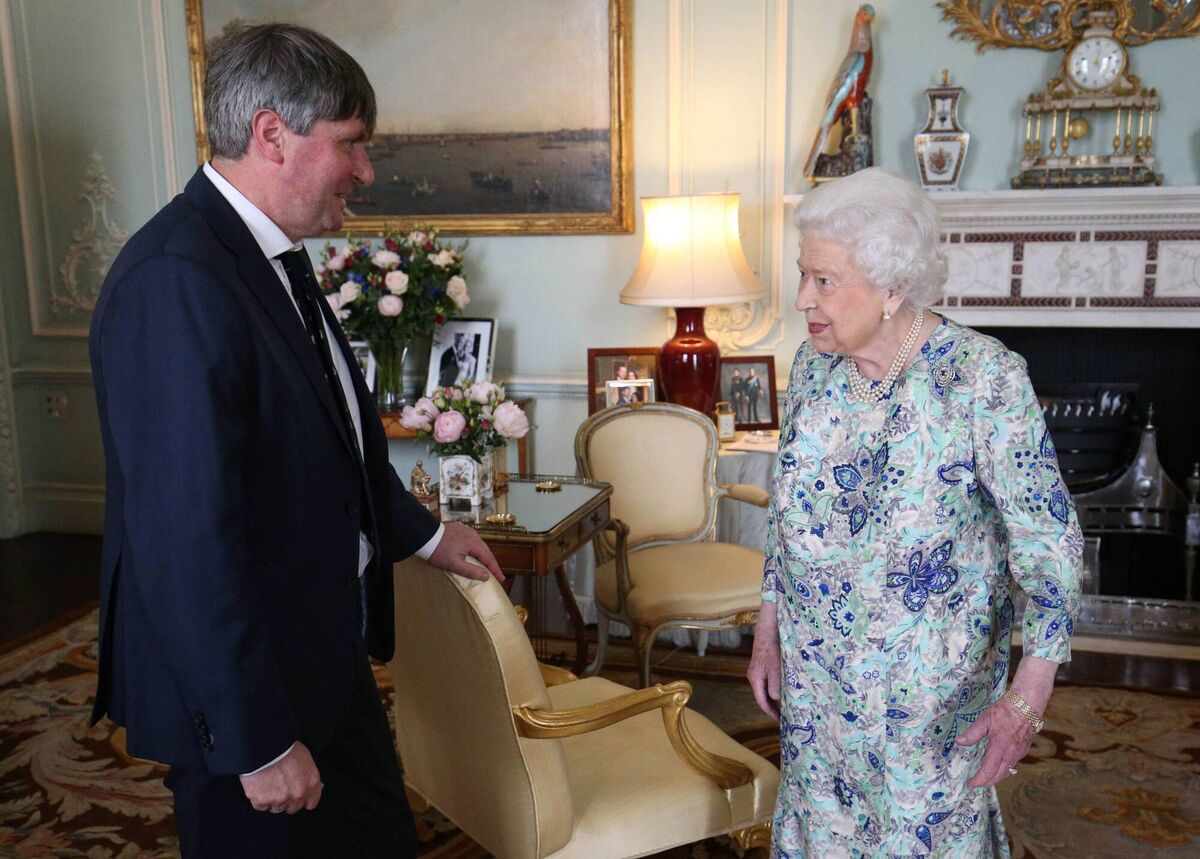
He also had the weighty responsibility of being the first poet laureate in more than 70 years to write a poem on the death of a monarch when Queen Elizabeth II died in 2022. The result, Floral Tribute, was a double acrostic (two verses of nine lines, the first letters of which spelt Elizabeth) and was warmly received.
He was in Durham for an event when he heard that the Queen was ailing and later that she had died. “I thought I probably need to go home and sharpen a pencil. I went back through my notebooks because I had some ideas; when I took the job, people in the palace did say to me there’s likely to be quite a few significant events in the next 10 years.”
He says coming up with the double acrostic form helped him to write the poem in what anyone would consider to be a highly pressurised situation.
“I mean, the idea is always the problem. And the solution is the point. So, there's always a way of doing these things, in a way that you're proud of, and in a way that's still new. And sometimes that’s harder than other times, but there’s always a way.”
Armitage has a particular reason why he's looking forward to his first trip to Cork.
“One of my all-time favourite bands are from Cork, Microdisney,” he says, adding that he enjoyed the recent BBC documentary on the band, which was fronted by Cork native, the late lamented Cathal Coughlan. “I recorded it and I watched it on my own because they’re not everybody’s cup of tea. I found it really joyful, especially showing those reunion gigs. I went back and listened to their first two albums again, they are amazing. I’m definitely going to have those albums playing on my headphones when I’m out and about in Cork.”
It may not be poetry, but it’s a sentiment that will be music to many Corkonians’ ears.
- Simon Armitage is at Cork Arts Theatre at 10pm on Saturday, May 18. See www.corkpoetryfest.net
For the long view of Irish poetry, it would be hard to beat John F. Deane and Aidan Mathews, Thurs, 8.30pm.
Cork native Victoria Kennefick, fresh from the success of Egg/Shell, is in conversation with Heather Treseler, Thurs, 10pm.
Poetry as Gaeilge is well represented at the festival; bí ann le Simon Ó Faoláin and Gabriel Rosenstock on Sat, 4.30pm.
Another big beast of contemporary poetry features on Saturday — Paul Muldoon (8.30pm) in conversation with Thomas McCarthy, followed by Simon Armitage talking to Matthew Geden (10pm). Well worth the late night.