Turning Heads exhibition brings Dutch masters to Ireland
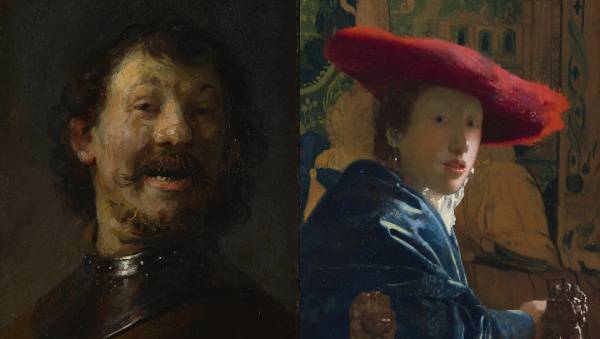
Turning Heads: Rubens, Rembrandt and Vermeer at the National Gallery of Ireland includes Rembrandt's 'The Laughing Man', and 'Girl with a Red Hat' by Johannes Vermeer.
The Dutch artist Rembrandt van Rijn led a colourful life. Despite his great success, he was often in debt or embroiled in scandal over his romantic entanglements. “Life etches itself onto our faces as we grow older,” he once wrote, “showing our violence, excesses or kindnesses.”
Over the 40-odd years of his career, Rembrandt produced nearly 100 self-portraits - including paintings, etchings and drawings - that are notable for the honesty with which he described his aging features. Among his many talents, he was a master of the ‘tronie’, a form of portraiture popularised by Dutch and Flemish artists in the 16th and 17th centuries. His work in the genre features prominently in the new exhibition Turning Heads: Rubens, Rembrandt and Vermeer at the National Gallery of Ireland.
“The tronie is an art historical term that is still used today,” says the National Gallery’s Dr Lizzie Marx, who co-curated Turning Heads with her colleague, Dr Brendan Rooney. “‘Tronie’ literally translates from the Old Dutch as ‘face’. It differs from conventional portraiture because the tronie doesn't show the subject's status, it doesn't have those elements that really speak to their identity. Instead it zooms in to focus on people’s faces. Tronies had great appeal in their day, and really took the market by storm.”

Turning Heads, which the National Gallery has organised in partnership with the Royal Museum of Fine Arts in Antwerp, Belgium, features 78 works in total. “Many are loans that were in the Royal Museum’s version of the exhibition at the end of 2023 and the beginning of this year,” says Marx. “But we also have a few other works on loan from private collections in North America and Europe, and many more from acclaimed public collections such as the Museum of Fine Arts in Boston and the Louvre in Paris.”
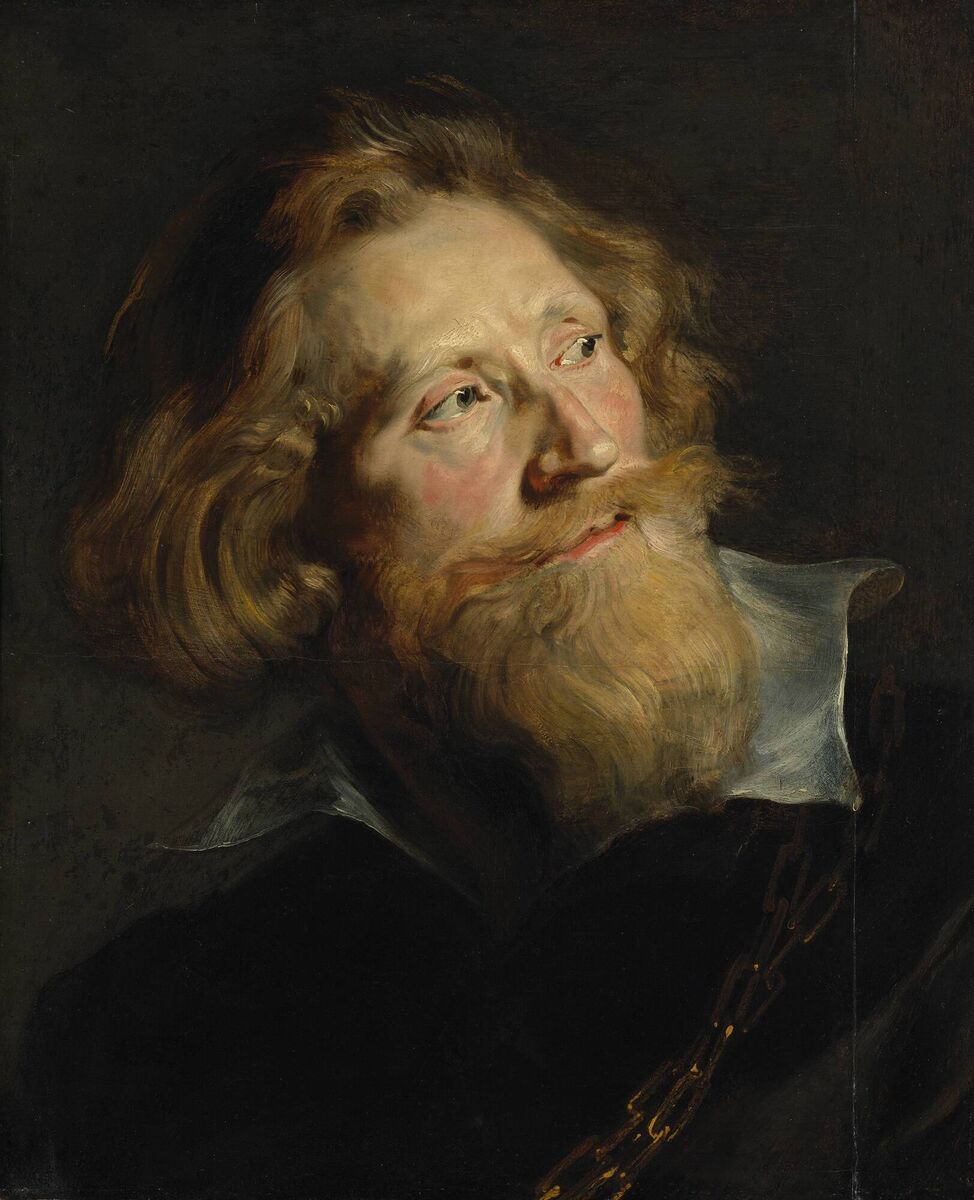
A work in the National Gallery’s own collection, Johannes Rubens’ Head of a Bearded Man, helped inspire the show. “Head of a Bearded Man was gifted to the National Gallery in 2016, around the time the Curator of Research and Collections at the Royal Museum, Dr Nico Van Hout, was putting together a catalogue of Rubens’ study heads. He became really interested in the painting. Then he realised how strong we are in our collection of tronies, and it seemed perfect that we would be a partner in this exhibition that the Royal Museum had already been planning for some time.”
Head of a Bearded Man is one of eight works by Rubens in the show. Meanwhile, Rembrandt is represented by six paintings and four etchings. Among his paintings are Interior With Figures from the National Gallery’s own collection; Jeremiah Lamenting the Destruction of Jerusalem, on loan from the Rijksmuseum in Amsterdam; and The Laughing Man, a 6 x 4.8” portrait on loan from the Mauritshuis in the Hague.
Rembrandt modelled for The Laughing Man himself, and seems to have delighted in revealing his crooked teeth. “We can tell almost immediately that The Laughing Man is Rembrandt’s work,” says Marx. “The way his face is structured is reminiscent of his self-portraits, but fundamentally the painting is a tronie because he's wearing this gorget, a sort of silver neckpiece. He’s playing a character, but ultimately he's using his own face in order to achieve that.
“The portrait has such a freshness and animation to it, which gives the impression that it's instantaneous. It feels like Rembrandt has captured the very moment he lets his smile break for the first time, when he would actually have taken at least a few hours to capture that expression.” There are famously only 34 paintings by Johannes Vermeer in existence, and one - The Girl with the Red Hat – not only features in Turning Heads but also in the National Gallery’s publicity for the show.
“The Girl with the Red Hat comes from the National Gallery of Art in Washington DC,” says Marx. “It’s the smallest painting recorded by Vermeer, and is one of their treasures.
“The tronie that most people are probably familiar with is another painting of Vermeer’s called Girl with a Pearl Earring, which of course inspired Tracy Chevalier’s wonderful bestseller and the hit film. In Girl with the Red Hat, the subject is actually wearing two pearl earrings. The painting is beautifully done; the girl’s hat is decorated entirely with scarlet feathers and is absolutely striking. It makes you think of the kind of exotic birds that would probably never have been seen in Delft, where Vermeer lived all his life. So it brings an element of intrigue to his tronie.”
The composition of The Girl with the Red Hat demonstrates Vermeer's interest in optics. The chair the girl is seated on has two lion's heads finials. The one on the left is finely painted so one can see the detail, while the other has just an abstract series of white flecks to show the light reflecting off it.
“So one is in focus while the other is not,” says Marx. “This suggests that Vermeer was using optical devices like the camera obscura, or just engaging with lenses to see how light was filtered and translated through these devices. To give a little bit more context, Vermeer was associated with Antonie van Leeuwenhoek, the inventor of the microscope. The cross-pollination between science and art is really interesting to investigate, however briefly, in this exhibition.”
As well as the great triumvirate of Rubens, Rembrandt and Vermeer, Turning Heads features work by Jan Lievens, Albrecht Durer, Anthony Van Dyck and many more.
“It's quite extraordinary to think that these works are between 400 and 500 years old,” says Marx. “We've set up the exhibition with dark walls and very deep dramatic spotlights on the tronies. They’re so realistic and vivid that it feels as if you’re having this face-to-face experience with people who existed several centuries ago. It's like you’re making a connection that transcends time.”
- Turning Heads runs at the National Gallery of Ireland, in Dublin, May 26. Further information: nationalgallery.ie