Kingsley Ben-Adir on playing Bob Marley: 'He’s like a superhero’
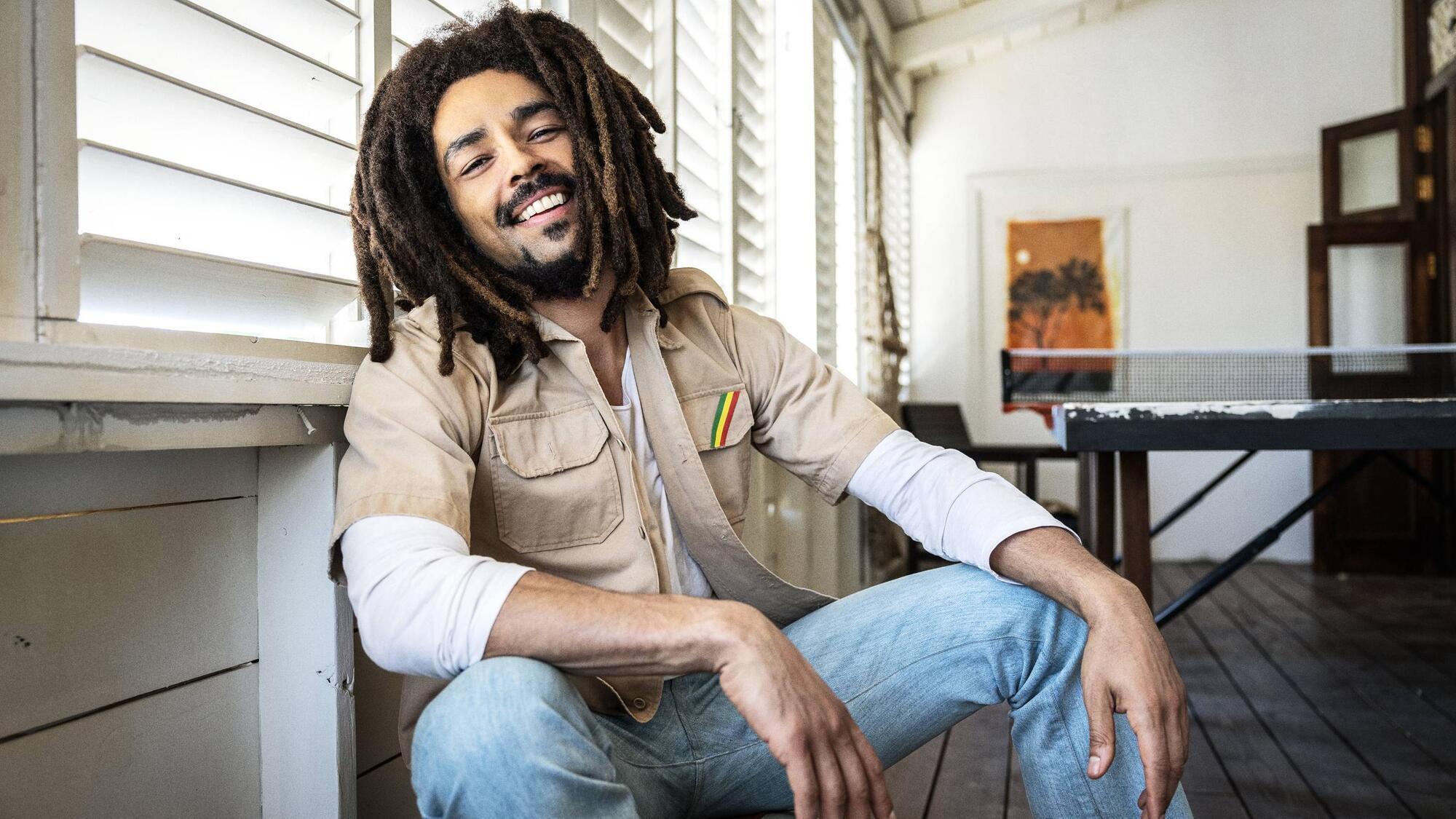
Kingsley Ben-Adir in Bob Marley: One Love, in cinemas from Wednesday.
When Kingsley Ben-Adir signed on to play reggae legend Bob Marley for biopic One Love, he admits he didn’t know much about the man behind the music.
Despite his premature death from cancer at the age of 36, Marley is celebrated as a pioneer of reggae, credited with increasing recognition of Jamaican music internationally, and continues to be a striking figure in popular culture – but many, like Ben-Adir, don’t know much about the man beyond the face plastered on T-shirts in Rastafari red, gold and green.
As the 37-year-old actor, known for roles in Vera, Peaky Blinders and One Night in Miami, says: “We just have an idea of him, we just have this image – he represents peace and love.”
Telling the story of the man behind the music was the goal for One Love director and co-writer Reinaldo Marcus Green, whose biopic tells the tale of Marley from his youth in Jamaica to his untimely death. “I think that’s what people want to see, something real,” says the 42-year-old director, whose 2021 film King Richard was nominated for a Best Picture Oscar.
“I only knew Bob Marley from the songs that I had heard as a kid, and the sort of mystical figure I see on the T-shirts and the buttons. It’s just like: ‘Who is that man? He’s like a superhero’.”
Getting to the essence of Marley was therefore key for Ben-Adir’s performance. As the film tells the story of Marley’s life, from the ins and outs of his career to his political activism, his Rastafari beliefs to his relationships and family, the actor had to dive deep under his skin.
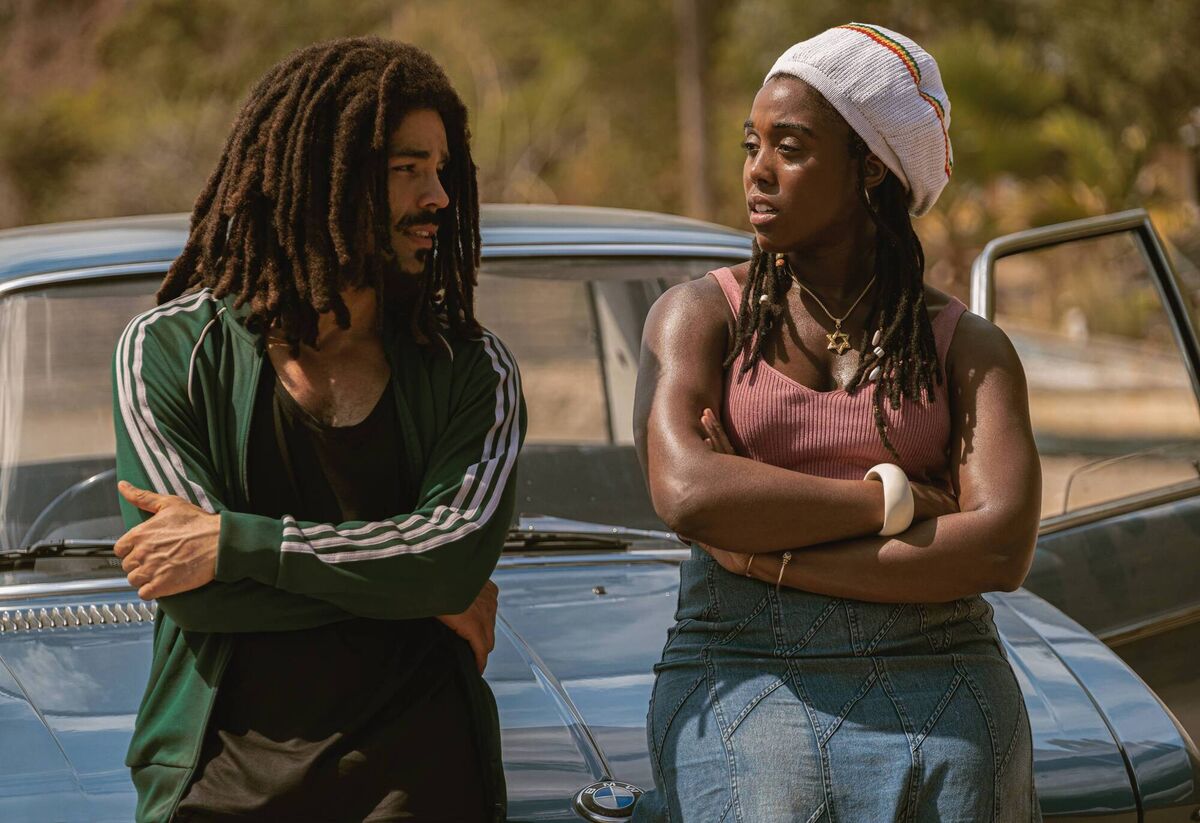
Luckily, he had Marley’s nearest and dearest on hand to help. His widow, Rita Marley, and two of his children, Ziggy and Cedella Marley, have executive producer credits on the project, and gave hands-on advice to the stars.
“You read all the books but then you go – that’s only gonna get you so far. So the process involved Bob’s friends, Bob’s family, and a lot of help. I can’t actually think of how there could have been any other way,” says the actor, who says he spent time with Ziggy and received audio files of Bob talking from Cedella.
“I auditioned, and I was with Ziggy a week or two after, so my process from the beginning was with them, and knowing that they were there every step of the way if I needed to ask something, I could just pick up the phone. I would just ask questions all the time, we were constantly trying to make sure that the authenticity of the moment, whatever moment we were shooting, was double, triple, quadruple checked.
“Sometimes we’d be like: ‘What would Bob think? If Bob read this scene, what would he say?’. That was an interesting conversation sometimes, and we had to change little bits and make sure that his voice was represented.”
Also critical to Marley’s story, Green says, was ensuring his wife Rita had a prominent role. Rita, who married Bob in 1966 and provided backing vocals for his work, is shown through Lashana Lynch’s performance in the film to be an influential presence in his life and his music.
Lynch, known for roles in the Marvel Cinematic Universe, The Woman King, and Matilda The Musical, says she was able to sit down with Rita “for hours on end”, soaking in her energy and life story as she prepared to play her.
“I read her book, which was brilliant to a point where I realised that I can have all the information that I can muster on my own but the main thing I need is to meet her. And I’m so glad she’s here, she’s accessible,” says the 36-year-old actress.
“I got in touch with Ziggy and Sharon and Cedella, her children, and met her for hours on end on a couple of occasions at her home, and just literally sat down on the floor, cross-legged, staring at her like this ethereal being, which she actually is, and just listened to her and soaked her up and tried to get as much of her energy and spirit as possible to make my version of her realistic and authentic.”
Lynch says that the most important thing for her was that Rita “was not going to be reduced to the mother and the wife, or even the band member” in the film.
“She is literally the anchor for Bob,” she says.
“She is part of his inspiration, his support, the one that reminds him of who he is when he’s straying away from himself. I was just determined to make her as three-dimensional as possible.”
Green agrees: “She’s the mother of some of his children, she was in the band, so she just had a unique perspective – and that perspective needs to be heard and needs to be understood. It only makes our story richer, it only makes Bob’s story richer, to understand what he was going through as a family, as a man, as a husband, as a father.”
It’s this holistic approach to telling the story of the short but brilliant life of Marley that shows the legacy he leaves behind, Lynch adds.
“When I watch a biopic I always want to learn something completely new about the person,” she says. “We know the legend, we know their music, we know they probably worked really hard, and they had a life, and that’s all generic stuff. But when you get to know just how much they had to overcome, what they had to push through, and who they were at their core… there’s so many different complicated layers of Bob that are really interesting to watch.
“And the way in which Kingsley has approached (Marley) – I mean, he’s just brilliant, absolutely brilliant. And that’s because he focused on the humanity of the man.
“It meant that if we have him at his core, everyone else can dance around him in a really authentic way, because they’re responding to him as a human, rather than him as a legend.”
- Bob Marley: One Love is in cinemas from Wednesday February 14