Book review: Injustices will leave you angry and sad as Gregory seeks to correct the record
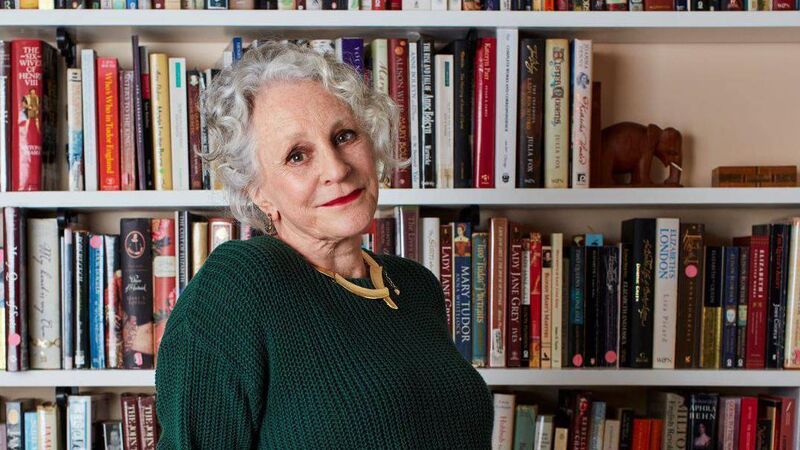
Philippa Gregory observes a tradition among male historians who are only interested in women as queens, tax-payers, and criminals in 'Normal Women: 900 Years of Making History' 
Book review: Injustices will leave you angry and sad as Gregory seeks to correct the record

Philippa Gregory has worked for 10 years on this authoritative account of women in history. Picture: courtesy of Philippa Gregory

  • Normal Women: 900 Years of Making History 
  • Philippa Gregory 
  • William Collins, £14.99 

Philippa Gregory, a best-selling historical novelist and an authority on women’s history, worked for 10 years on this authoritative account of women in history. 

Although aimed at the general reader, it comes with footnotes, a comprehensive index, and runs to 679 pages.

It covers English history from the Norman conquest of 1066 right up to 1994, a year marked by the ordination of the first 32 women priests by the Church of England. 

A total of 430 priests resigned from the Church of England rather than see a woman in their job. Gregory sees the long struggle to achieve this as the “last stand of patriarchy” after nine long centuries.

She realised the need for this book while writing her novel The Other Boleyn Girl, about Mary Boleyn, known to history only as the sister of the more famous Anne who married Henry VIII. 

Mary’s anonymity set the novelist thinking about all the other women who, in George Eliot’s words, “lived faithfully a hidden life, and rest in unvisited tombs”.

She observes a tradition among male historians, who are only interested in women as queens, tax-payers, and criminals. Winston Churchill’s A History of the English-Speaking Peoples contains 1,413 named men, and just 98 named women.

This, Gregory concludes “is a history of men, as viewed by men, as recorded by men”. His-story indeed. Her project is to rectify this situation, and she tackles it most energetically. 

There is enough material here to inspire dozens of PhD theses. Some injustices will make you angry and others will make you sad, while just occasionally the persistence, camaraderie, and bravery of women will raise a smile.

So what were the women doing? The answer is surprising, revealing an unbroken tradition of female protest from 1066 up to the present day. Women’s work, her research reveals, is not embroidery but the food riot and other acts of civil disobedience.

The Normans brought allowable male sexual violence to gentle Anglo-Saxon England — which has never left — and their laws denied women any legal status. 

Until marriage she lived under her father’s name, and on marriage everything she owned or earned became the property of her husband, including her children. 

No wonder many women opted for convent life, where everything was run by women, for women.

But Gregory shows how many women lived life to the full in spite of their lowly status. 

Much of her research consisted of trawling through court records to find “highwaywomen and beggars, shepherdesses and lead miners, ale wives and shipwrights”, making and losing fortunes, defending their homes in sieges, and leading their neighbours in protest.

Women were at the forefront of riots against the enclosure of common land, and in times of hunger raided mills where grain was stored, dividing it among the crowd. 

Others dressed as men to fight in armies and run away to sea, including Ireland’s pirate, Annie Bonny.

Numerous individual stories are told in nine chronological chapters. As we approach the present day, it is depressing to see so many long-standing wrongs not yet righted. 

As early as the 17th century, a chief justice observed in court that in a rape case, it is the victim, not the defendant, who is on trial.

Most depressing of all is a list, Counting Dead Women, for the year 2019 consisting of murder victims’ names, dates, and circumstances of death, that runs for ten full pages, and confirms the knowledge that most murdered women are killed by their husbands or partners, usually in their own homes. 

As the former State pathologist Marie Cassidy so memorably put it: “It’s the man in your bed, not the man under your bed, you should be worried about.”

x

More in this section

Scene & Heard

Newsletter

Music, film art, culture, books and more from Munster and beyond.......curated weekly by the Irish Examiner Arts Editor.

Cookie Policy Privacy Policy Brand Safety FAQ Help Contact Us Terms and Conditions

© Examiner Echo Group Limited