Ireland In 50 Albums, No 24: The Táin, by Horslips (1973)
Horslips second album The Táin dipped into Celtic mythology and also gave the band their classic hit 'Dearg Doom'
Ireland In 50 Albums, No 24: The Táin, by Horslips (1973)

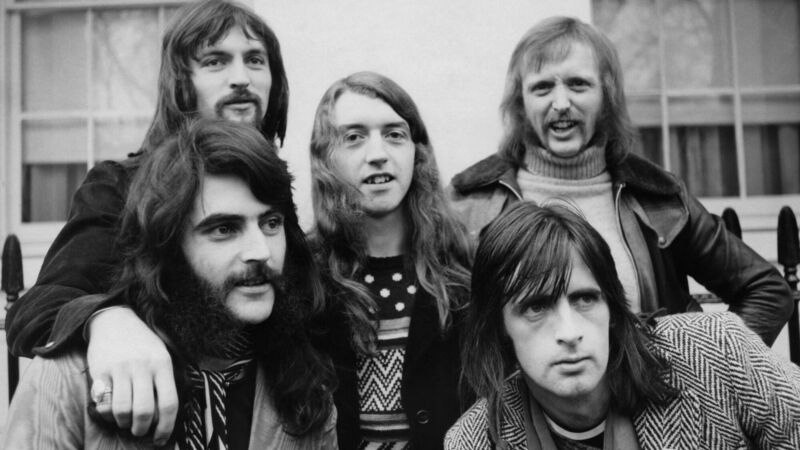
Irish rock band Horslips, 19th January 1974. From left to right, Jim Lockhart (behind), John Fean, Barry Devlin, frontman Charles O'Connor and Eamon Carr (behind). (Photo by Central Press/Hulton Archive/Getty Images)

Horslips were the High Kings of Ireland in the 1970s. They travelled the country’s roads gigging, from ballroom to ballroom, delighting Ireland’s youth generation. They toured around in an ostentatious white Range Rover, the only one in Ireland at the time. When word came that the band were passing through their locality, teenagers gathered at crossroads and waved as the band whizzed past in their white jeep.

One night, the band were en route to a gig in Navan. They sped past a speed checkpoint. It was raining so Barry Devlin, the band’s singer and bass player, who was driving, couldn’t stop quickly.


 He skidded to a halt and reversed back to the barrier. The Garda said to him: “You were going a bit fast there, weren’t you?” “Well, officer, I was late for a gig.” “Oh, you’re a band, are you?” “Yeah.” The Garda looked inside the jeep and asked, “What band are you?” “We’re the Horslips,” said Devlin with gusto.

The Garda looked at him for a second then shot back: “You may be the Horslips, but we’re the Fuzz. Watch it.”

 Horslips were formed in 1970. At the time, Devlin, Charles O’Connor and Eamon Carr worked in an advertising agency, Ark, in Dublin. They were goofing around, playing a rock band for a Harp lager television ad, miming the playing of their instruments, and loved it so much they thought it would be craic to form a proper band.

 Jim Lockhart had been roped in as a keyboard player for the shoot; incidentally, U2’s future manager, Paul McGuinness, was an extra in the ad. Later, Johnny Fean, a talented trad musician, joined, completing the line-up. They called themselves Four Poxmen of the Horslips, a spoonerism of Four Horsemen of the Apocalypse, shortened to Horslips.

In 1972, Horslips released their debut album, Happy to Meet – Sorry to Part. They were keen not to spend another two years making the follow-up record. Casting about for material, they recycled some atmospheric “doodling” they’d done as background music for an unstaged Irish language adaptation of The Táin, a famous legend from early Irish literature, a few years previously. They saw in The Táin, an epic tale based on An Táin Bó Cúailnge (The Cattle Raid of Cooley), the template for a concept album.

“At the end of ’72, concept albums were in vogue since, say, Sergeant Peppers, and Tommy by The Who,” says Eamon Carr. “The idea of fashioning a bunch of songs around a storyline like The Táin made sense. Kids in Ireland were familiar with Irish myths and legends. Most of us had gone through the Christian Brothers so we all knew about it. [O’Connor grew up in Middlesbrough, England.] The thing was to find a narrative arc that condensed a big myth like The Táin into two acts – a vinyl album with two sides, and to break it down into a set of songs.

The Táin by Horslips

“What's the story about? There was a row over a bull. ‘The champions and the Seven Sons have come to take away the Donn.’ To me, that was like something out of Homer. I had read somewhere that The Táin was Ireland’s equivalent of The Aeneid. Light bulbs went off. I had great fun with it.

 Thomas Kinsella’s version of The Táin was popular in Ireland at the time, but the strange thing was I got more of the flavour of it from Lady Gregory's version. It was more romantic and colourful.

“I wrote the liner notes where I had to explain the storyline so that someone who put on the record in, say, Scunthorpe could scan it, and get a flavour of what it was about. Because of the nature of the audience, there was no mention of the Persian expedition, Xenophon, Homer or that stuff. It was all Stan Lee and Marvel Comics! I never told the band because you didn’t want people thinking you had ideas above your station.” 

The band recorded the album in 1973 in two studios, one called Escape in Kent. Jeff Beck – who “was into hot rods at the time; that was good fun,” says Carr – was living next door. Then they did a lot of the over-dubbing and vocals in Richard Branson’s Manor studios in the Oxfordshire countryside. Mitch Mitchell, the Jimi Hendrix Experience drummer, came by the studio, and sat around for a couple of days.

 A teenage Mike Oldfield was also moping about, using the studio in downtime to record his classic album, Tubular Bells. As a result of their labours, Horslips produced their own iconic album, which includes the timeless riff on 'Dearg Doom', which surfaced years later on Larry Mullin Jr’s World Cup track, 'Put ‘em Under Pressure'.

Barry Devlin. Picture: Steve Humphreys

“The riff comes from O'Neill’s March,” says Devlin. “The Chieftains, among others, played it. It’s such a primeval noise. What Johnny Fean did was to play it on guitar the way only Johnny plays guitar, so that syncopation and the weight of the notes is much more rock-influenced than when it’s played on the tin whistle. It's now the tune at weddings where tables go over.

“In a way, 'Dearg Doom' has never exported well. It's so Irish. It’s in our DNA. We didn’t make it up. We borrowed it, is the polite phrase. It’s partly why it’s such a well-known tune and why it formed the basis of the Italia 90 football anthem.

“John Kelly, from RTÉ radio, tells a story that when he was a teenager, a girl told him she’d give him a kiss if he could play 'Dearg Doom'. He was able to pull a tin whistle out of his pocket – it’s as well it was all he pulled out – and play 'Dearg Doom', and he got his kiss.” 

The artwork on the cover of the album is striking: a close-up of a male fist, spray painted in silver, half-covered in chainmail, which O’Connor picked up in an antique shop and wore playing gigs. The fist also has a square, silver ring on it, which a girlfriend in art college made for him.

 For the logo, O’Connor fashioned a papier-mache head; when photographed it looked like an ancient carved headstone. It inspired a Horslips fan to mould five marble figurines of the grotesque head, totems the size of an egg, which he gifted to them, one for each band member.

“After The Táin came out, we were in a bad car crash,” says Carr. “We were driving along. This man came along around a corner, driving on the wrong side of the road and hit us head on. Both cars were totalled. The poor man was killed. I was knocked out, unconscious. Our manager had his foot broken – the accelerator came through it. Charles had his nose broken.

Eamon Carr. Picture: Killian Ginnity

“I had read in one of the manuscripts that a monk – who was transcribing the oral story that had been passed on through centuries – wrote they weren’t sure what they were dealing with, whether these people were angels or devils, and that should this story not be accurately told, it would bring a great curse upon the people who told it.

“Anyway, the album came out, got a great response. We were rocking away, but we were conscious of this curse. Next thing, we were in this death crash. I remember we were on a narrow road down in Co Kilkenny. Barry Devlin was uttering all sorts of oaths. He took out his little totemic head from his pocket, and he flung it about 100 yards over a ditch and into a field.” 

WHAT HAPPENED NEXT 

Horslips. Picture: Gems/Redferns

The album made it into the UK album charts top 40; 'Dearg Doom' reached #1 in the German singles charts; and the London Times newspaper chose it as its Album of the Year. By the end of the decade, Horslips racked up 12 albums and had performed over 2,000 live gigs. The band split up in 1980, but reformed in 2009 for a few more years’ swansong.

The band members made their mark in different fields: Carr is a poet, a brilliant boxing writer, and oversaw notable independent record label releases by Philip Chevron and other musicians; Devlin is a screenwriter, graphic novelist and has produced several U2 videos; Jim Lockhart is a radio and television producer, principally with RTÉ, and along with Devlin, he created the Glenroe theme music; the multi-instrumentalist Charles O’Connor continues to release solo material, including his recent album The Shell; after Horslips disbanded, Johnny Fean continued working as a musician in the trad world. Sadly, he passed away in April 2023, aged 71.

DEDICATED FOLLOWERS OF FASHION

Horslips
Horslips

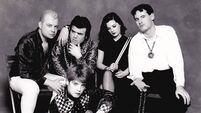
Perhaps the thing that most defined Horslips was their outlandish sense of fashion. They rode the glam rock wave right through the 1970s, blasting a burst of sunshine across Ireland’s grey skies with their ridiculous get-ups. As Bono remarked, Horslips were “the answer to the insecurity that was the ingrown toenail of that era”.

“I always say that there is still an arrest warrant out for us from the Hague for crimes against fashion,” says Barry Devlin. “They’re going to show up at our doors any day and go, ‘OK, where are they?’ You have to put it in context, though, as axe murderers say: ‘Everyone was axe-murdering at the time.’ Bowie wasn’t the thin, white duke around then. He was wearing some pretty outré stuff.

“We’d turn up in Rockcorry, Monaghan looking like a pound-shop version of Bowie but people loved it. It outraged the trad community even more than the fact we were messing with the tunes – the idea that we would mess with the tunes dressed like that was a poke in the eye. The fashion was a huge part of it – if you went to a Horslips gig, you could be scandalised or enjoy it. It would be unlike anything else you were going to see in the early 1970s."

Charles O’Connor, who played fiddle and slide guitar, among other instruments, in the band, designed their clothes. A Scottish seamstress, Jackie McNeill, turned his dreams into reality. Devlin always sought out the daftest outfit. Sometimes their dress sense – and their long, unruly hairstyles – garnered unwanted attention, especially in West Germany at a time when the far-left Baader-Meinhof Gang were waging terror.

“The German police got it into their head that Eamon Carr and Jim Lockhart looked a bit like members from Baader-Meinhof – the RAF, the Red Army Faction,” says Devlin.

 “They were arrested in Frankfurt, Berlin and Bremen. The police would arrest them and when they discovered they were lads from Kells and Dublin, respectively, they’d ask for photos beside them. There’s photographs going around of the two lads grinning rather sheepishly in the back of Volkswagen police wagons with coppers standing beside them, posing proudly.”

More in this section

Scene & Heard

Newsletter

Music, film art, culture, books and more from Munster and beyond.......curated weekly by the Irish Examiner Arts Editor.

Cookie Policy Privacy Policy Brand Safety FAQ Help Contact Us Terms and Conditions

© Examiner Echo Group Limited