Books are my business: Alan Hayes of Arlen House
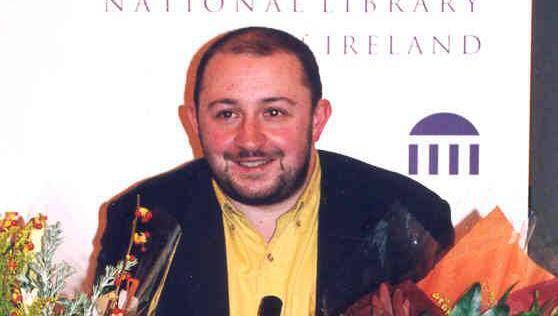
Alan Hayes runs the literary press Arlen House: 'I have no staff so I literally do everything.'
Alan Hayes, originally from Dublin, runs the literary press Arlen House, known particularly for its groundbreaking work in feminist publishing. He is founder of the Dublin Book Festival and co-founder of the Dublin Unesco City of Literature.
I left home at 18 and moved to Galway, where I did my degree at the university, and then I worked in the library. I was also involved in establishing Women’s Studies in UCG — we founded Ireland’s first academic feminist journal in 1992, which I managed and distributed.
I was interested in the subjects of women and publishing, gender roles, and accessibility for women in publishing. In 1998, I did a research project on women and publishing and discovered that Arlen House had been founded in Galway in 1975. It was an independent press run by a Cork woman, Catherine Rose.
The first Arlen House book came out in September 1975, the same month that Virago in London published their first book. The first Virago book was a gentle oral history of women in the Lake District while the first Arlen House was a radical exposé of women’s lives in 20th century Ireland and the controlling power of the Church.
When I was doing my study on feminist publishing, I met Catherine Rose and also Róisín Conroy who ran Attic Press. I realised how much they changed Irish society by exposing issues and being the first to publish books on women’s history, politics, sexuality — extraordinary stuff.
In 1977, Catherine published a book that gave information about contraception and abortion, taking the risk of going to jail. She asked me if I would consider relaunching Arlen House and that’s what I did. I relaunched it in 1999, and the first books came out in 2000.
I run the company, I have no staff so I literally do everything. I am 25 years now running Arlen House and most of that is without a cent from the Arts Council.
I get a little bit of funding from Foras na Gaeilge and from Arts Council of Northern Ireland but most of the books I do I fund myself. I bring in freelancers for different projects when I’m not able to do it myself. But basically, I do 99% of the work.
I love my job — 25 years later, I still get a buzz from every book I do. I have done more than 300 now. I love the creativity — I meet a writer and commission a manuscript. Then I get a raw document and I love how we work together to shape it into something that we can both be incredibly proud of. If a writer loves their book, they will continue to sell it, and that is how I survive. I’m still selling books I did 20-odd years ago because the writers are still promoting them.
I am appalled by the ruthlessness and commercialism of publishing where a writer has a few months to make an impact and then the book is remaindered. If the writer doesn’t do well enough, then their career is over basically.
There is still a lot of ageism and sexism in publishing. I particularly focus on older women writers — I have done debut books by women in their 80s; I published the late Margaret McCurtain’s last book for her 90th birthday.
Really there is nothing I don’t like. When we launched Arlen House, I realised even if I had to work 15-hour days and go into massive debt, it was all part of the bigger picture and the right decision. Anything that is difficult, I deal with it as it happens. I count myself lucky, what I do is a huge privilege.
I would pick three Arlen House books because my writers don’t have PR machines behind them and need more support. I would pick the poetry anthologies and also by Geraldine Mills, which is being launched in May.
The third book would be , the debut collection by Martin Dyar that I published a decade ago; he is a superb poet, one of the best on the island.
Nuala O’Connor is also a writer I have worked with a lot — I would have to bring her book , which is out in April.
- arlenhouse.ie