Book review: From crypto king back to friendless kid
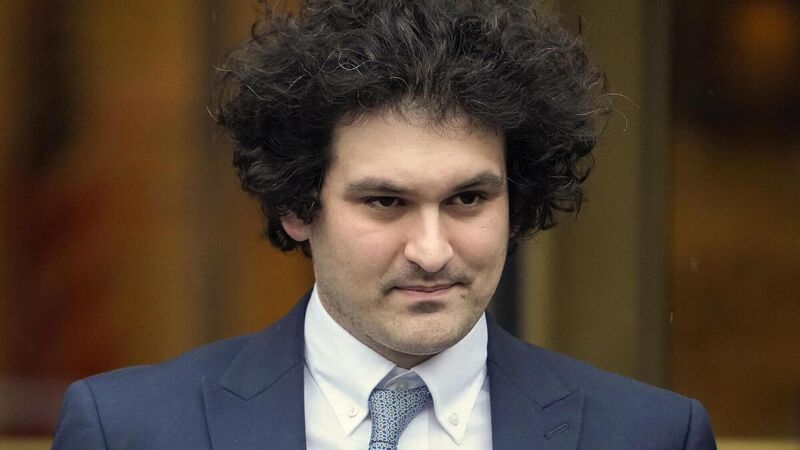
Crypto king Sam Bankman-Fried was a precocious child who struggled to make friends. Picture: John Minchillo/ AP
- Going Infinite: The Rise and Fall of a New Tycoon
- Michael Lewis
- Allen Lane, €23.50
"In a crypto landscape ridden with scams, hedonism, and greed, Bankman-Fried offers a kinder and more impactful vision brought forth by the nascent technology.”
That was magazine’s assessment in May 2022 of the crypto king Sam Bankman-Fried when they named him one of the world’s 100 Most Influential People of the year.
In 2017, he didn’t know what bitcoin was and had almost no financial worth.
Yet within three years, through his cryptocurrency exchange company, FTX, the Californian had become the richest person in the world under the age of 30. Forbes listed his net worth at $22.5bn.
To help the Bahamas create the infrastructure he required to build his global financial empire there, Bankman-Fried considered paying off the country’s $9bn national debt.
But in November 2022, FTX went bankrupt.
A year later, the cryptocurrency billionaire was convicted of fraud and conspiracy.
Michael Lewis’s international bestsellers include , a riveting explanation of the credit bubble that precipitated the 2008 financial crash.
is the author’s portrait of Bankman-Fried, a messy-haired, socially awkward “artless workaholic” who always dressed in a wrinkled T-shirt and cargo pants.
During the eight months Lewis spent with the entrepreneur, the latter’s world collapsed.
is a zesty, though partial, account of the downfall of the world’s youngest billionaire, conveyed in the author’s trademark style — an eye for telling details, lucid prose, and fluid pacing.
The book’s refrain is the astonishing world Bankman-Fried’s fortune allowed him to inhabit.
To promote FTX for 20 hours a year for three years, he paid the American football superstar Tom Brady $55m.
Bankman-Fried gave $5.2m to Joe Biden’s 2020 presidential campaign (though he never received a thank you) and allegedly contacted Donald Trump before that election offering him $5bn not to run.
“He was never comfortable with kids, or with being a kid,” his father tells Lewis.
As a child, Bankman-Fried couldn’t understand how others subscribed to a belief in God (or Santa) and concluded that almost everyone could clearly be wrong about something.
He attended maths summer camps, graduated from MIT, and started working for an exclusive trading firm who told him that within 10 years he could be earning up to $75m annually.
Lewis writes that Bankman-Fried intended FTX to be the “world’s most regulated, most law-abiding, most rule-following crypto exchange”, but the company’s spectacular unravelling began when it emerged that more than $10bn of investor funds meant for FTX had been transferred to Bankman-Fried’s private trading fund.
For all the book’s brio, however, the narrative is haunted by Lewis’s largely sympathetic depiction of its subject.
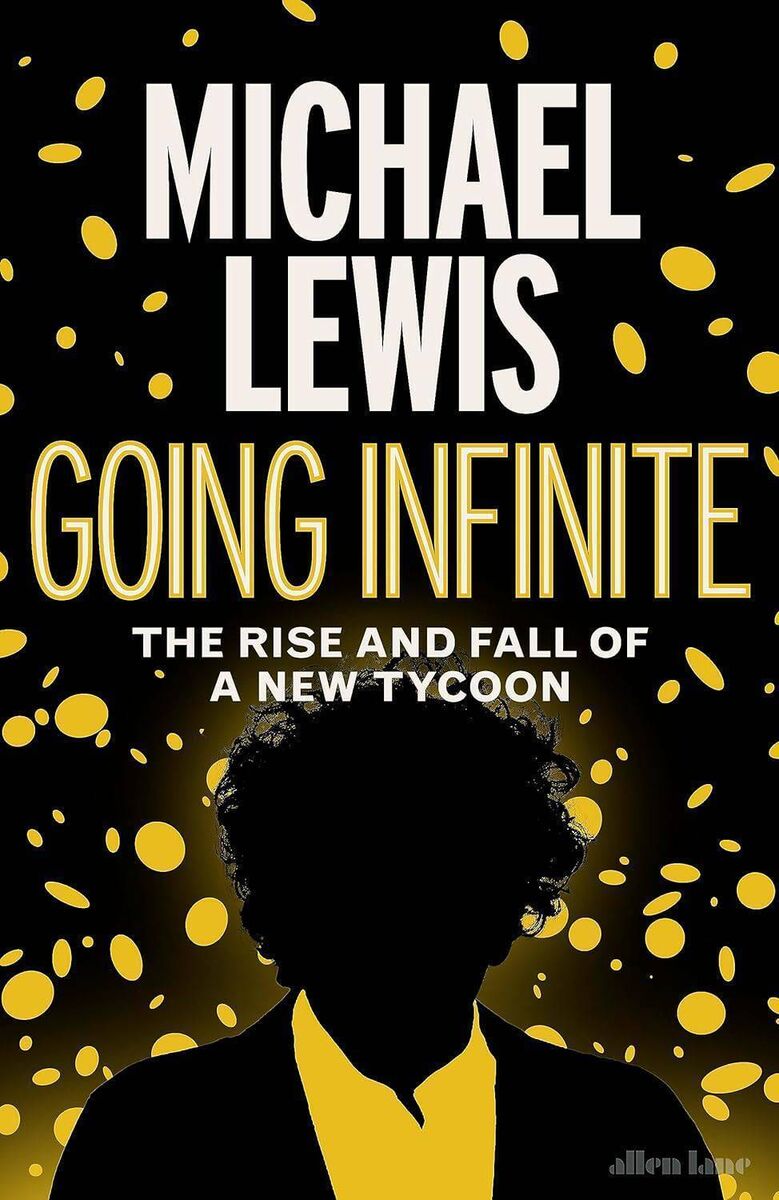
Bankman-Fried tells Lewis he wants “infinity dollars” to address our existential threats.
‘‘His ambition was grandiose, but he wasn’t,” Lewis writes.
Labelling him as “a bit odd” is the closest the author comes to criticism.
Yet the text reveals Bankman-Fried as blatantly insensitive to destroying the life savings and reputations of FTX employees.
Exemplifying his refusal to account for his behaviour, he wrote to a colleague he was secretly seeing: “I’m really sorry that I’m such a shitty person to date.”
After trying to identify where some of FTX’s money went, Lewis concedes: “I’d poke and prod and always come away with the sense that I’d learned less than I needed to know.”
It’s hard not to feel that is also a fitting description of Lewis’s attempts to understand Bankman-Fried.