Britney, Lou Reed, Creation Records... the best music books of 2023
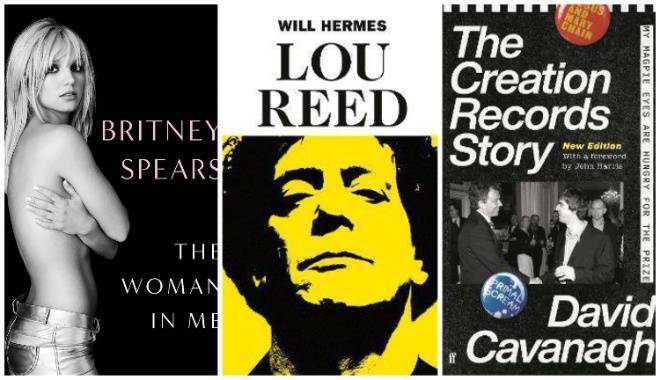
Britney, Lou Reed, and Creation Records: some of Eoghan O'Sullivan's music-literature picks.
Taking the brilliant Meet Me in the Bathroom, an oral history about New York music in the early 00s, as inspiration, Cragg turns the spotlight on the Spice Girls, 5ive, Mis-teeq, Craig David, Atomic Kitten, and a host of similar turn-of-the-century pop acts that you’ve forgotten about in the couple of decades since.
The stories that result are ones of ridiculous excess and awful exploitation and abuse that one hopes would not even be contemplated nowadays.
Louis Walsh, who gives the book its most memorable blurb - “no one’s going to read this” - is a quotable standout, but there are so many highlights, from the rise of Xenophobia to the curious case of Rachel Stevens’ ‘Some Girls’ and the glorious persistence of Girls Aloud.
The biggest memoir of the year is slight, coming in at less than 300 pages and the biggest revelations had been well-flagged on release, but they’re no less shocking on hearing Spears tell them.
Her former boyfriend Justin Timberlake reportedly put off a comeback in the wake of some of the confessions here, while the story of Spears’ long conservatorship is finally shown as the controlling abuse that it was.
“I never said I wanted to be a role model,” says Spears. And yet she is. Still.
First published in 2001, this tome has been reissued following the tragic death of the Dublin-born Cavanagh in 2018.
It’s the definitive story of one of the defining record labels in music history, whose roster included My Bloody Valentine, Jesus and Mary Chain, and Primal Scream.
But this story mostly belongs to the volatile Alan McGee and Oasis, who overshadow all before and after them on Creation.
Told in chronological order, it’s an extensive read, featuring many indie landfill acts and cameos by the likes of Cork’s Five Go Down to the Sea.
McGee recalls: “[Frontman Finbarr] Donnelly would lick my ears, trying to get the wax out. But they were good to have in the club if there was ever any threat of violence to any of us.”
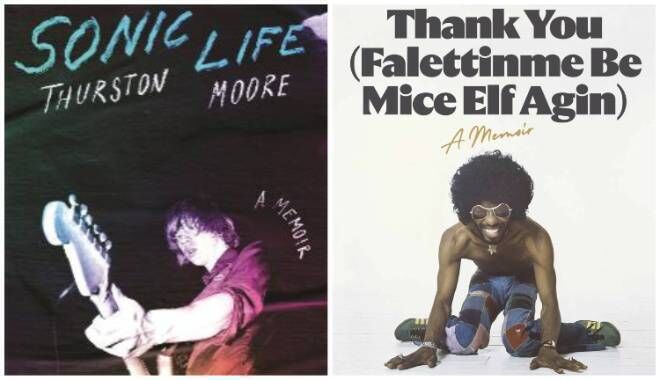
Sonic Youth guitarist Moore has been there, done that, and bought the band’s t-shirt.
Sonic Life is like a snapshot of music history as Moore moves to New York just as Pattie Smith and her peers were making CBGB’s their second home.
This is like a ticklist of bands you should have in your record collection. It’s also the story of how the no-wave band Sonic Youth came to be.
Youth bassist Kim Gordon told her (eviscerating) side of the story in 2015’s Girl in a Band, but her ex-husband refuses to divulge much of his personal life here. He lets the music do the talking.
Certainly one of the book covers of the year, Stone has always stood out from the crowd.
That he has reached the stage of actually being able to tell his story is one that might surprise many - “I spent years not regretting the drugs. They served a purpose,” he writes - but after being hospitalised for a fourth time, in the past couple of years, he decided to kick the habit.
Before all that though, there was the music, told in an indelible, matter-of-fact way.
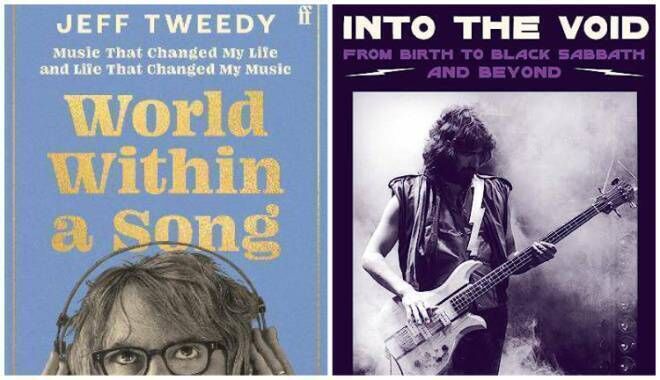
Anybody who caught Wilco on their tour this year, which included a stop at Cork Opera House for Sounds from a Safe Harbour, will have felt that frontman Tweedy had found a new lease of life, a creative bent.
Going for 30 years as a band, Tweedy has already released a couple of books, including a memoir, and this year’s World Within a Song, kind of like Bob Dylan’s The Philosophy of Modern Song, covers his personal relationship with a suite of sweet songs, such as Abba’s ‘Dancing Queen’.
He writes that on its release, “I was still too young to identify myself as anything”.
There is no shortage of Lou Reed and Velvet Underground books out there, but Hermes’ effort is extensive and definitive, delving into Lewis Reed’s school yearbook, charting his college life, and discovery of influential figures like the barfly poet Delmore Schwartz.
Hermes showcases the dividing line between Reed the person and Reed the poseur and pop star.
Along the way, there are the expected big names like David Bowie and Andy Warhol, while it also delves into his later years and marriage to the artist Laurie Anderson.
It’s been just over 10 years since Lou Reed died. He’s still the king, though.
Ozzy Osbourne and Tommy Iommi have already released autobiographies but Butler’s is a welcome addition.
Born in working class, post-war Birmingham to parents who had moved over from Dublin (“once a Catholic, always a Catholic”), his was not a happy household.
Elvis and skiffle arrived and soon, so did Sabbath.
Butler was the bassist and chief lyricist in a band synonymous with 70s excess and this account doesn’t disappoint, full of stories that will have you ready to throw your TV out the window.
As Butler writes, “When you’re in a rock and roll band for as long as I was, there tends to be a lot of drama.”
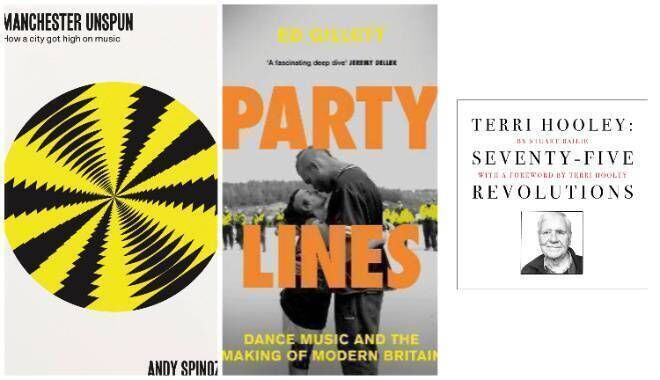
Are there any more tales left untold about the Hacienda and the Madchester scene of the turn of the 80s into the 90s?
Manchester has lived a couple of lives, and is going through another (high-rise) change at the moment; Spinoza’s Manchester Unspun is a personal and sociological look at how its fortunes changed, featuring encounters with all the expected characters like Tony Wilson and even Alex Ferguson.
Gillett’s Party Lines, meanwhile, acts as social history, deeply researched and ensuring it is not whitewashed of black culture. He brings it up to, well, modern Britain, too, discussing “plague raving” during covid.
The Belfast record store and label Good Vibrations has long had a special place reserved in Irish music lore - a film of the same name was released in 2012 - its owner Terri Hooley a vaunted figure for his role in helping the likes of the Undertones in a divided 1970s.
This is a photo book to mark Hooley’s 75th birthday, but it’s so much more too.
As Bailie, a former assistant editor of the NME, told the Irish Examiner last month: “I’ve been taking photographs of Terri for 30 years. Why not do a photo-book? And then you go, ‘no that would be a missed opportunity’. There are so many stories there. I didn’t want to do a huge book. Why don’t we make it something really beautiful?”
- Time Come: Selected Prose, Linton Kwesi Johnson: Ranging from the mid-70s through to 2021, the poet gathers writing about places, people, and politics in one collection.
- High Bias: The Distorted History of the Cassette Tape, Marc Masters: Seemingly enjoying a (mini) resurgence, Masters posits how the cassette tape was revolutionary. Will have you reaching for a pencil to rewind some tape.
- George Harrison: The Reluctant Beatle, Philip Norman: The most undervalued and mysterious Beatle? There have been so many books on the guitarist that we’d disagree - but another biography on Harrison is always welcome.
- Wayward: Just Another Life to Live, Vashti Bunyan: Musicians taking back control of their own lives is cliche at this stage, but Bunyan, in her autobiography, shows why she had to do just that in a decades-long struggle.
- Lead Sister: The Story of Karen Carpenter, Lucy O’Brien: The loss of Carpenter in 1983, aged just 32, is such a tragedy. With fresh interviews, O’Brien paints a profile of a musical genius.