Meet the Filmmaker: Alan Gilsenan, director of The Days of Trees at Cork Film Festival
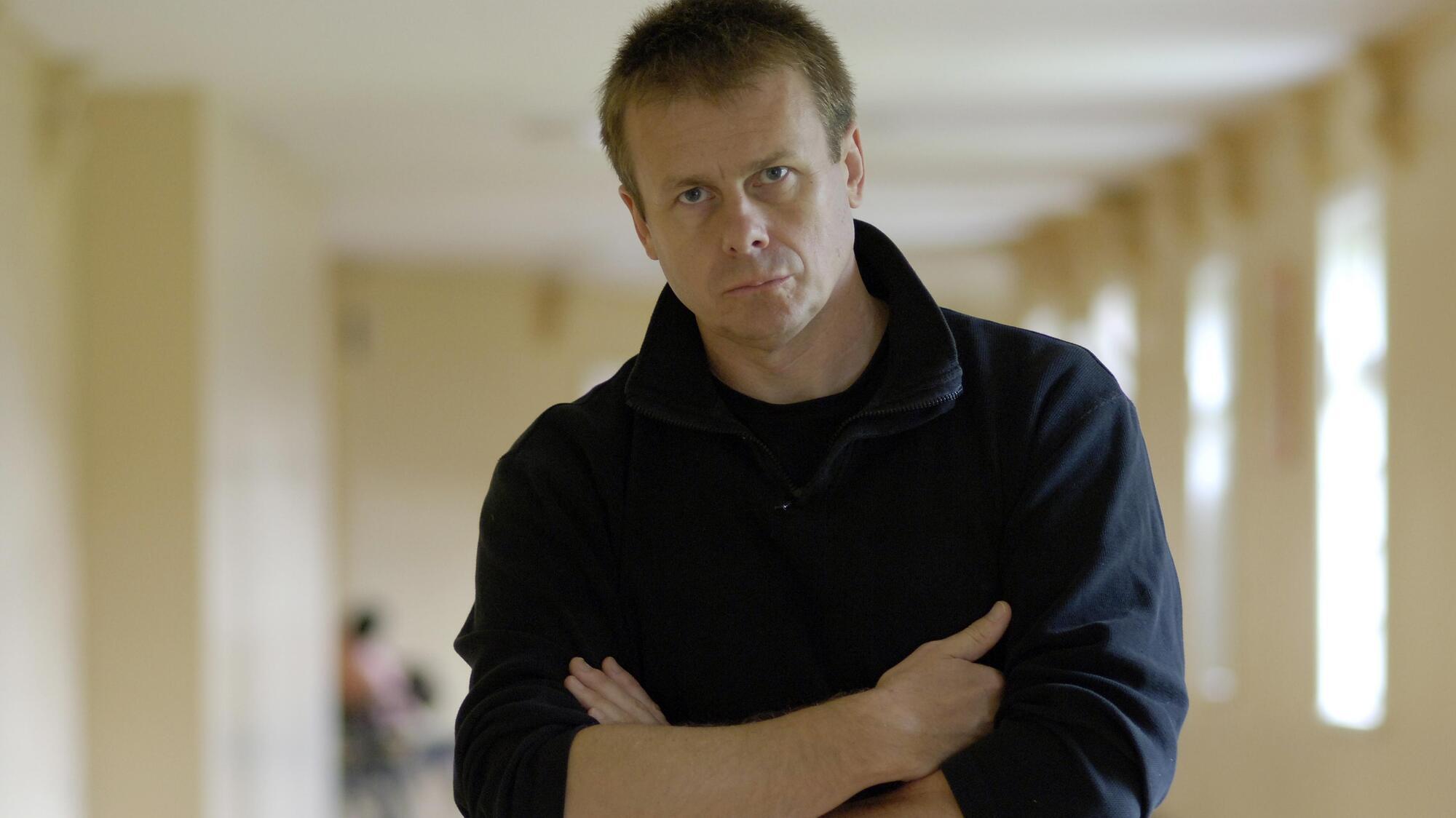
Alan Gilsenan: Cork International Film Festival.
Alan Gilsenan is a filmmaker from Dublin and has two documentaries showing at Cork International Film Festival (Nov 9-26). The Days of Trees focuses on his longterm collaborator Tomás Hardiman and his very personal battle to come to terms with what happened to him in childhood. It has been nominated for the inaugural CIFF Best New Irish Feature Award, supported by the Irish Examiner. The United Irishmen looks back at the movement who were at the forefront of the 1798 rebellion.
For screening details, see https://corkfilmfest.org/

Looking back I wasn’t a huge movie fan but I was very interested in writing and theatre, strangely interested in musicals too. Most filmmakers have these stories about sneaking out to the movies and having their world opened up by cinema but the reality of it for me was I went to Trinity to study English and Sociology and the film society there decided to make a film and I got involved and that’s where my love for it all began.
I made a film after college based on a Beckett screenplay and that was in a time where there was only three or four short films known to the public, now there’s three or four thousand. Back then if someone made a short film it was almost a national event. The first proper short I made actually opened in Cork on the opening night of the festival, so I have a history with this wonderful film festival.
I remember going to Easy Rider as a teenager and that really made a big impression. I kind of vividly remember seeing a film called Christiane F as a student, which was about drug addicts in a Paris suburb. There was something visceral about that film that had an impact on me.

Very different films. The United Irishmen is a major historical documentary on the history of The United Irishmen, while The Days of Trees is a small sort of intimate film about one man’s life, trauma and sexual abuse. It was shot on black and white during COVID during a religious retreat. It’s a strange film. I was talking to a fellow filmmaker recently and he said he wasn’t even sure if it was a film at all.
It’s a film about hope and abuse in childhood. One of the things we wanted to avoid in the film was it becoming a sort of expose and a cliched look at clerical abuse. Really this is a very personal film about one man’s journey who didn’t want to go the court route. It’s trying to piece together the dark memories of his life but I like to think on top of that that it is a hopeful film.
The early years of my work in the industry were all around trying to make a viable industry that works at both a cultural and industrial level. I think that has been achieved when you look at how vibrant the current industry is. If I had one wish it would be for us to reconnect with a certain idealism. Film is an art form and it has increasingly become an industry. It’s almost like everything is sacrificed for success and money.
Even in the documentary scene things like truth have been abandoned for entertainment. There’s still a lack of a certain authentic voice. It has become hugely cynical in that it has all become one big marketing exercise. So I’d love for us to return to a stage where we are making films for the sake of film and not just for success and profit.