Book Review: Zadie Smith plucks London characters from obscurity for The Fraud

English novelist Zadie Smith at Redaktion BLAU on November 10, 2016 in Berlin, Germany.
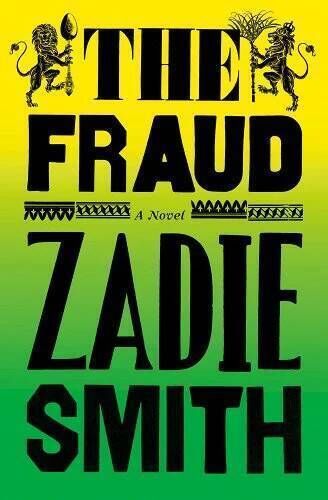
- The Fraud
- Zadie Smith
- Penguin €16.99
Zadie Smith loves to write about her home patch, North West London, as is evidenced most obviously in her novel NW and her play The Willesden Wife.
In The Fraud the familiar roads appear, as it were, naked: the city has not yet stretched this far out.
Instead, the bustle of Edgware Road, now nestled under the elevated traffic lanes of Westway, was “long, rural boredom with fields as far as the eye could see”.
Some pubs such as the Old Bell and the Black Lion stood, as they do now, on the side of Kilburn High Road, but turning left into Willesden Lane the current fast-food outlets were verges, verdant with wildflowers and hedgerows.
In 1830 Eliza Touchet trudges up these byways towards Kensal Lodge, the home of her cousin, novelist William Harrison Ainsworth.
Owing to her recent widowhood she must work her way through life, helping his wife, Annie Frances, with their children, whilst the paterfamilias is away in Europe.
His prolonged absence allows an intimacy to grow between the two women, as they, and the three little girls, blossom in a strongly female environment.
William’s return explodes their calm, necessitating a radical rearrangement of sleeping quarters, meaning that Eliza reclaims her bed, and the cook is back on the kitchen floor.
Smith’s characters were real people; plucked from their peaceful rest as she peered under the tombstones of obscurity and discovered the creepy crawlies hiding there.
Smith transforms words from dusty journals, long-forgotten novels and foxed magazines into a tale more sensational than anything written by Ainsworth or his contemporaries, Thackeray and Dickens.
At the centre is Eliza, a woman not unlike ‘Gentleman Jack’ in terms of her charisma, if not, entirely, her sexuality. She, working from within the constraints of that which is considered ladylike, strives to achieve her own immortality, like George Eliot, through writing.
An excellent horsewoman, Eliza rode with Ainsworth and Dickens in 1836 to the fashionable salon of Tipperary-born Marguerite, Countess of Blessington.
Here, in Gore House, she met the Comte d’Orsay, rumoured to be the lover of both the countess and of her late husband, the liaisons taking place both before and after his divorce from their daughter, Harriet.
Escaping from the hothouse of small talk to the kitchen garden, Eliza has a confrontation with two Black children, and amuses bouches for the residents and their guests.
Smith uses her chameleon-like protagonist to cross class boundaries and examine race issues, including the abolition of slavery.
Sarah Wells was the maid in Ainsworth’s home until she bore him a child and she metamorphosised from servant to second wife.
At first, Eliza is irritated by having to shoulder Sarah’s menial tasks but eventually, she is mollified when Sarah determines to attend the notorious 1871 Tichborne case at Queen’s Bench.
Sarah was born in Stepney and is truly working-class entitling her to support the criminal Arthur Orton in his efforts to be declared heir to the Tichborne estates.
Whilst Sarah focuses on the claimant, Eliza, like Smith herself, is fascinated by his chief witness, Andrew Bogle, a former slave from the Jamaican plantations managed by Edward Tichborne.
Plumb in the middle of this most English of novels, Smith wedges the history of Bogle and his African antecedents.
Smith’s thorough research and consummate writing skills enable her to present a rich degustation, as she exposes the cognitive dissonance or, as Orwell has it, ‘double-think’ of all her characters, black or white, rich or poor, male or female.
This black comedy is the novel that Eliza would have written had she had been enfranchised.