A Cork exhibition that dips into grandparents' past in Uganda
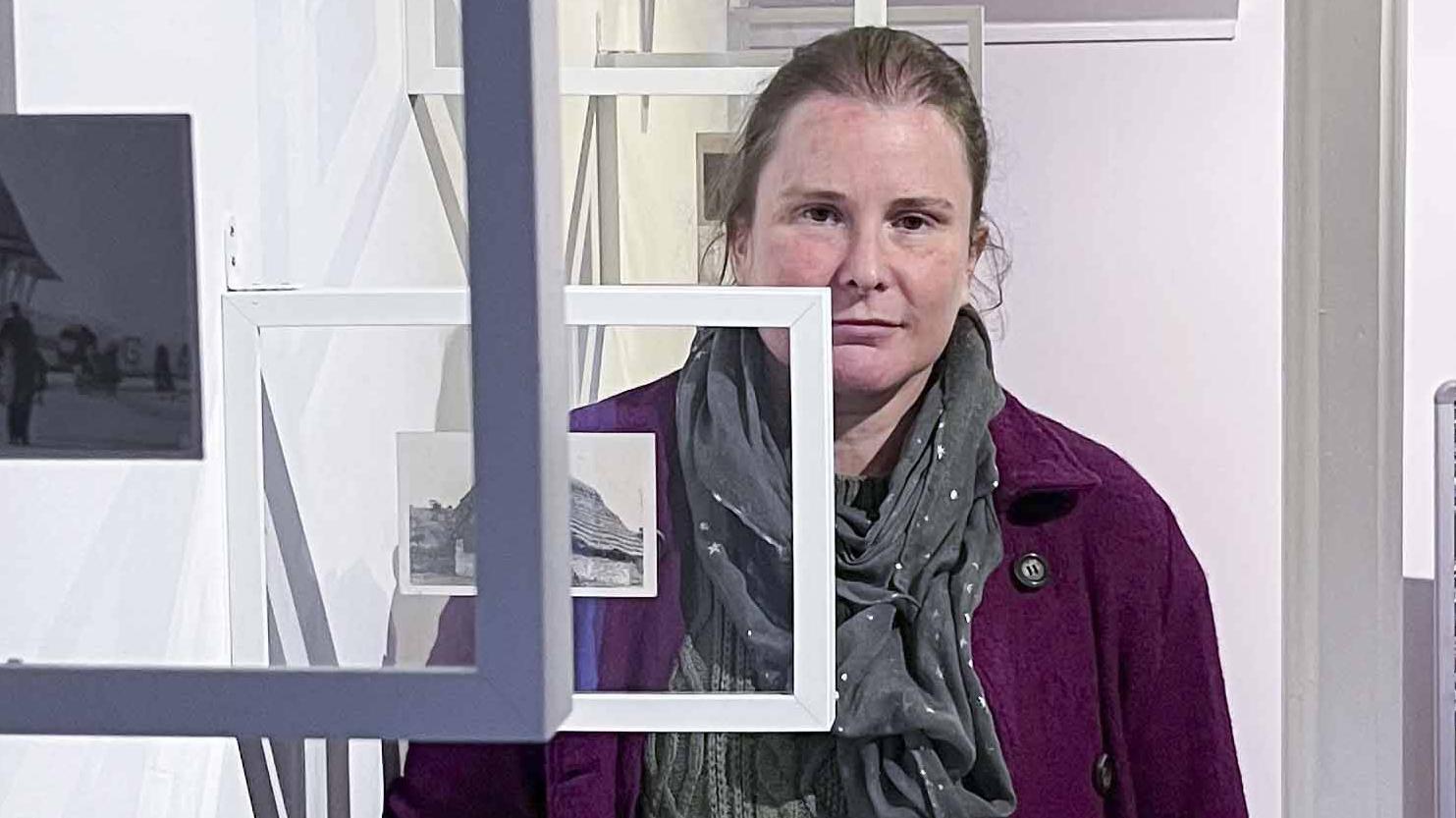
Myfanwy Frost-Jones' exhibition, Another Country, runs at the Lord Mayor’s Pavilion at Fitzgerald’s Park in Cork'
Myfanwy Frost-Jones is grateful for the day she began unpacking the boxes stored in her attic. Her home, on a small landholding by the sea in Tuosist, outside Kenmare, Co Kerry, was built in the 1950s by her maternal grandparents, Dr AT and Georgina Schofield, and the boxes contained a vast trove of photographs and film Dr Schofield shot while serving as a medical missionary in Uganda in the 1920s and ’30s. The material now forms the basis of her new exhibition, Another Country, at the Lord Mayor’s Pavilion at Fitzgerald’s Park in Cork.
Frost-Jones has lived and worked in Tuosist since her early twenties. Her activities as an oyster farmer helped inspire her degree show when she graduated from the Crawford College of Art and Design in Cork in 2022. The project won two prestigious awards: the MTU Registrar’s Prize, which led to the exhibition Infinite Harvests at the James Barry Exhibition Centre at MTU in March this year; and the RDS Mason Hayes & Curran LLP Centre Culturel Irlandais Residency Award, which saw her decamp to Paris for three months last summer.
“I did a cinematography course while I was there,” says Frost-Jones, “and I used the opportunity to put together a video for the new exhibition, which is basically an installation about my grandparents’ time in Africa. My grandfather served in the First World War, and he got gassed. It was after that he went to live in Uganda.”
Dr Schofield worked with the Church Missionary Society, and served as head of the Toro Hospital in Western Uganda. Uganda was still a protectorate of the United Kingdom at that time – it would not become independent until 1962 – and one of the scenes Dr Schofield filmed was a parade by the King’s African Rifles.
“I’ve put that together with some footage of Irish troops in 1902,” says Frost-Jones, “found footage I got from the army barracks in Cork. Basically, it’s two different armies, in two countries that later won independence. There’s this idea of nationality and identity. I’ve called the video Marching to a Future that Does not Exist.”
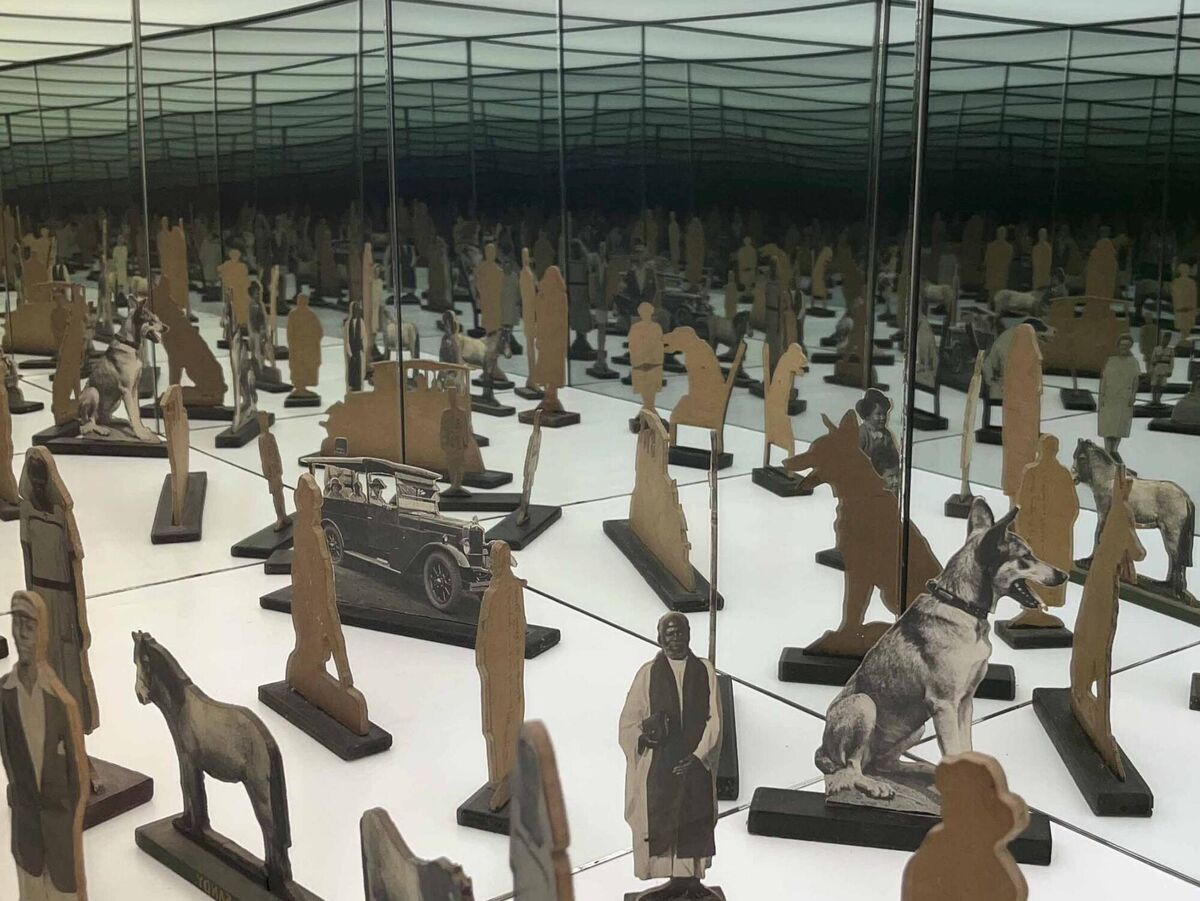
While serving in Uganda, Dr Schofield met and married Georgina Armitage, a missionary nurse. Both were from Yorkshire, and they chose to send their children home to be reared by relatives. The photographic cut-outs Frost-Jones has used in one of her pieces are believed to have been made by Dr Schofield as gifts for his offspring.
“I’ve put some of these in a mirrored infinity box,” she says. “The work is called 'Remembered?', a reference to who is left in or out of the history books.”
Also included in the show is a selection of Dr Schofield’s glass lantern slides – black-and-white images of everyday life in Uganda in the 1920s and ’30s – and a video work called Complicated Legacy, in which Frost-Jones combines his visual images with her own narration and an experimental flute track by Martina Rosaria O’Connell.
The Schofields remained in Uganda until 1938, when they returned to Britain and reunited with their children. They set up a medical practice in Yorkshire, and were regular visitors to the Armitage family's holiday home on Dinish Island in Kenmare Bay. Eventually, they retired to the new house they built on the mainland at Tuosist.
“In Uganda, they’d become good friends with two kings, the Kabaka of Buganda and the Omukama of Tooro, who both came to visit. I hope to put together another project about that, The Kings in Kenmare. I have one old cine film labelled ‘The Kabaka at Dinish'. I’ve been in talks with the Irish Film Institute, and I hope at least some of the footage on that is recoverable.”
Frost-Jones has recently enrolled on a Masters in Art & Research Collaboration at the Institute of Art, Design and Technology in Dublin.
“I take the train up from Killarney one day a week,” she says. “As part of my research, I’m continuing my work on conserving my grandfather’s material. I have boxes and boxes of negatives and photographs, lantern slides and cine films that I’m trying to have digitised, as it’s all very vulnerable at the moment. I’ll be a lot happier when that’s done.
“Through IADT, I’ve met a Dutch researcher who’s been doing a lot of work with Ugandan photographers, some of whom I hope to collaborate with in the future. And I’ve started work on my thesis; it has the working title, ‘What to do with an archive, other than leave it in the attic?’.”
- Myfanwy Frost-Jones is the inaugural recipient of the Parallax Emerging Film Artist Award, supported by the National Sculpture Factory, Cork International Film Festival and Sample Studios, Cork. Her exhibition, Another Country, runs at the Lord Mayor’s Pavilion at Fitzgerald’s Park in Cork until December 2. Frost-Jones is in conversation with artist and researcher Andrea Stultiens from 1pm, November 24
- myfanwyfrost-jones.com
- sample-studios.com/exhibitions/another-country