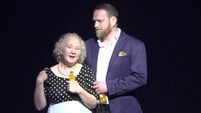
Dublin Theatre Festival review: Jack Gleeson and a VR twist in To Be a Machine
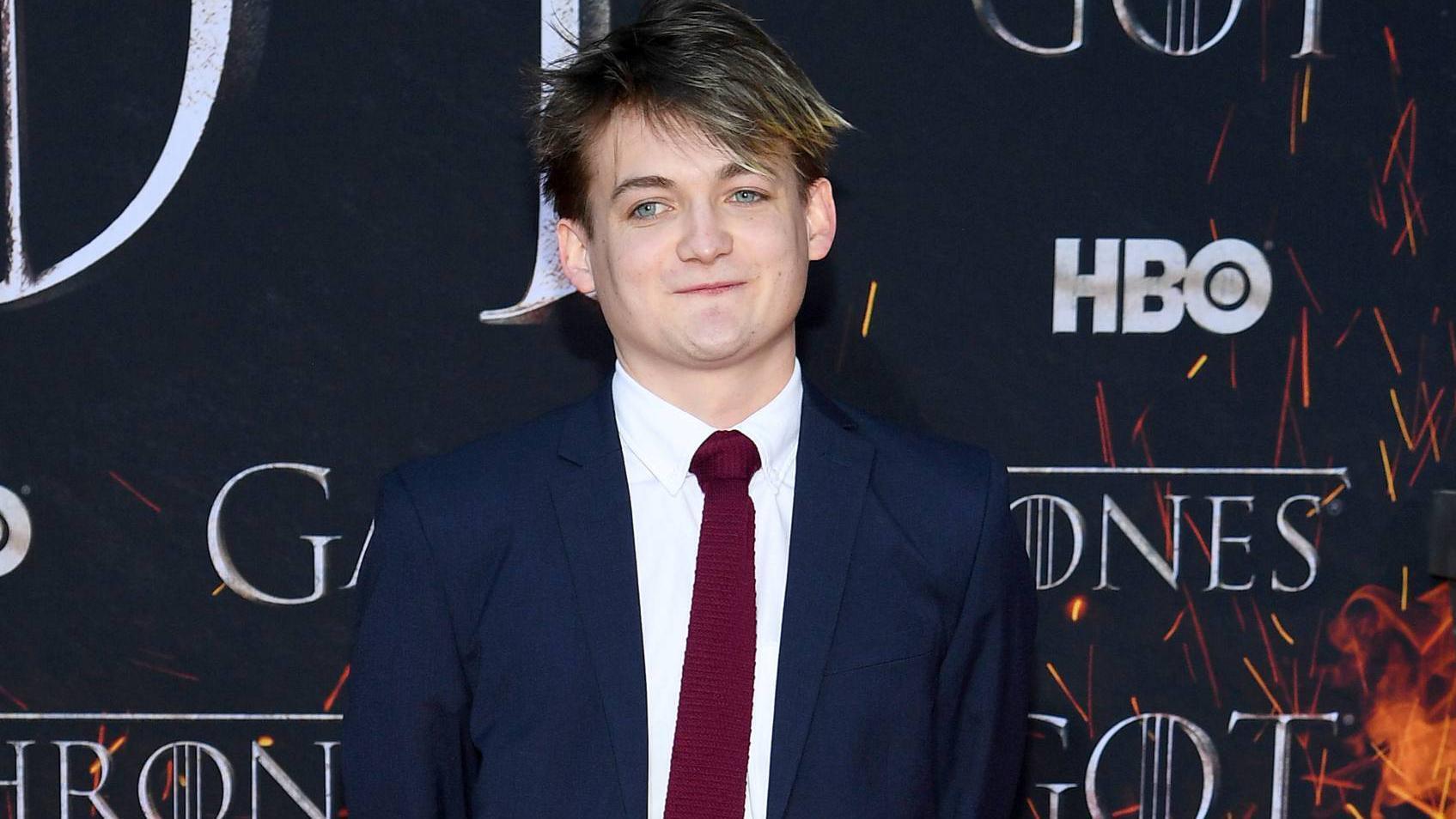
A file picture of Jack Gleeson, the Cork-born star of To Be A Machine (Version 2.0). (Photo by Dimitrios Kambouris/Getty Images)
★★★★☆
Back in 2020, Dead Centre gave us the first outing of To Be a Machine. The perfect Covid-era show, we were invited to see ourselves in the theatre we could not be in: as disembodied heads on tablet screens. It was an apt metaphor for a show exploring the post-human, based on Mark O’Connell’s deft 2017 book of the same name.
Now, with To Be a Machine (Version 2.0) we’re back in the room. Well, sort of. We sit in a circle to begin with, and are asked to don our VR headsets. We see floating before us the Meta logo, an apt symbol of how any VR world we end up with will inescapably involve corporate capitalism colonising our very eyeballs and minds.
With these unsettling thoughts in our heads, Jack Gleeson (familiar as Joffrey in Game of Thrones) comes onto the virtual stage. The very phrase “virtually reality,” the Cork-born actor tells us, was coined by a playwright, Antonin Artaud, in 1938. The trouble is that the sort of virtual reality he had in mind, a world onstage created for a live audience, is not immersive enough.
Look at us, he says, are we really paying attention? Or are we somewhere else, thinking about picking something up in the shops on the way home? He has a proposal: we are to be the stars of the show. We are to sit inside someone else’s head, as if we’re living Being John Malkovich for real.
It’s an unsettling experience, as we navigate the theatre, then the streets of Temple Bar, our own face appearing before us, first as a Tinder avatar, then morphing to life to speak to us. As things get very Meta indeed, we see that logo again, when our VR avatar himself dons a VR headset. What level of unreality is this?
Who knows. But one thing is for sure: it feels so claustrophobic, unignorable, and immediate that there is nowhere else for one’s attention to be. The wandering mind problem is solved – in the worst way.
This being a show by those ironic postmodernists Dead Centre, we should not be surprised that To Be a Machine (Version 2.0) ultimately becomes a work about theatre. As with this company’s show Good Sex last year, we are nudged to consider the artifice, suspension of disbelief, and literal play of the form itself, and how we engage with those elements.
Theatre at its most essential was the first art form: stories around a fire. It is because of this simplicity that it will be the last. Not because technology can save it, but because it can outlast technology. The atomising, almost nauseating claustrophobia of To Be a Machine (Version 2.0) is the antithesis of theatre. Anti-theatre.
When we are finally back in the room, for real this time, and find Gleeson sitting amongst us, it has the shock of the new, or, perhaps more accurately, the old. To see him in the flesh, listing our names and then leaking blood is to be reminded that human contact is what makes theatre. Now, if there was only a way we could stop our minds from wandering, without those awful headsets.