'Celtic superhighway': New art project celebrates Irish Sea ports and their history
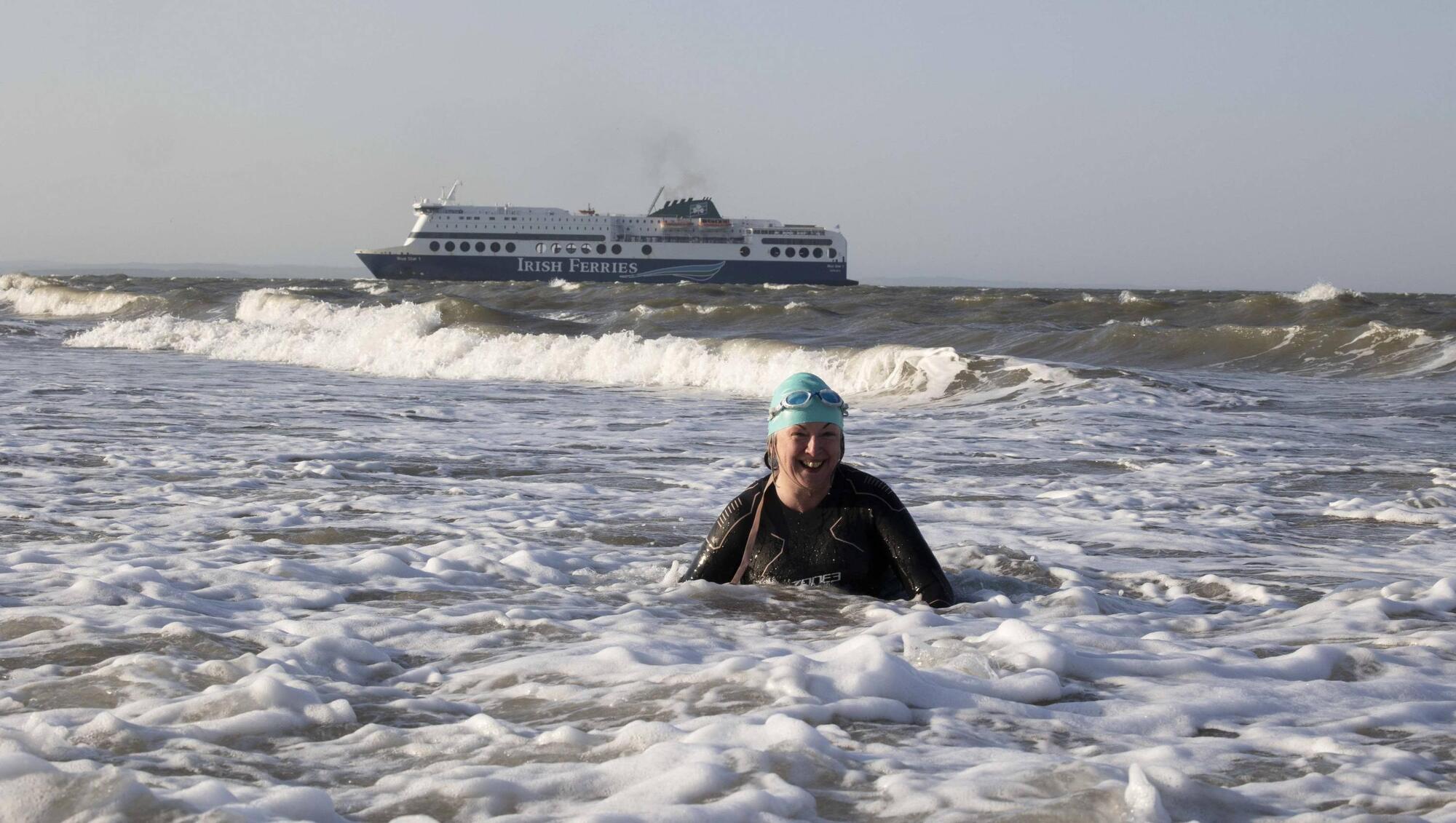
Professor Claire Connolly swims at Rosslare Harbour, April 2023. Picture: Clare Keogh
For people of a certain age, crossing the Irish Sea is synonymous with emigration. In recent years, the passage has become more associated with tourism, while historically it has always facilitated trade.
Constant traffic between Britain and Ireland led to the establishment of a number of major port settlements in Wales and the east coast of Ireland, five of which - Dublin Port, Fishguard, Holyhead, Pembroke Dock and Rosslare Harbour – are now being celebrated in a multi-media project, Ports, Past and Present.
Initiated and led by Claire Connolly, Professor of Modern English at UCC, features books, photographs, films and artworks, as well as a website and app.
“I lived in Wales for twenty years, so the project partly came from personal interest,” says Connolly. “When I moved back to UCC in 2012, I began looking for an opportunity to do Irish/Welsh comparative research. I had a long-term interest in the sea crossings, not least because in the years I spent living in Wales, I was a very regular passenger on the route between Fishguard and Rosslare.
“There was a scheme, sponsored by the European Regional Development Fund, called the Ireland Wales EU programme. The programme gave funding for projects relating to areas that connect to one another within the EU. I worked with colleagues in Aberystwyth University, and the University of Wales Trinity St. David, and also with Wexford County Council, to put this project together. I think, even at that stage, we knew that this would be the last iteration of those funds. Sadly, because of Brexit, the programme no longer exists.”
Connolly and her team focused on the ports because “the scheme we were applying for had to do with maximising the natural and cultural heritage of Ireland and Wales. The ports are not always thought of as an exciting topic. People pass through and they don't stop and think about them. But of course, we were all aware - from our own travels and histories and areas of research - of how rich in heritage the ports and their hinterlands actually are.”
The Port of Cork was dismissed for inclusion because the Cork/Swansea ferry is no longer running, “and we were aiming to capture the attention of passengers travelling on the ferries that are currently operating.”
When the project was approved for funding, Connolly’s team divvied up the different areas of responsibility. “So Aberystwyth, for example, commissioned the filmmakers, and Trinity St David did the creative commissions. In Cork we did a lot of the digital storytelling, along with creating the website, and we were also in charge of the governance and the practicalities of running the project.”
The greatest obstacle the project faced was the arrival of covid and its lockdowns. “We had our first public event in March 2020,” says Connolly, “a celebration of St David’s Day held by the Welsh Council at the Epic Museum in Dublin. It was a lovely reception celebrating all kinds of Irish/Welsh connections. But covid was already a talking point. There was a huge tray of Welsh cheese, and nobody would touch it. And the next day, when I was on the train home, they announced the closures of the schools and universities for two weeks. We had all these in-person events and activities planned, and of course we then had to change. We focused our attention on the digital aspect after that, and worked very hard to move the whole project online.”
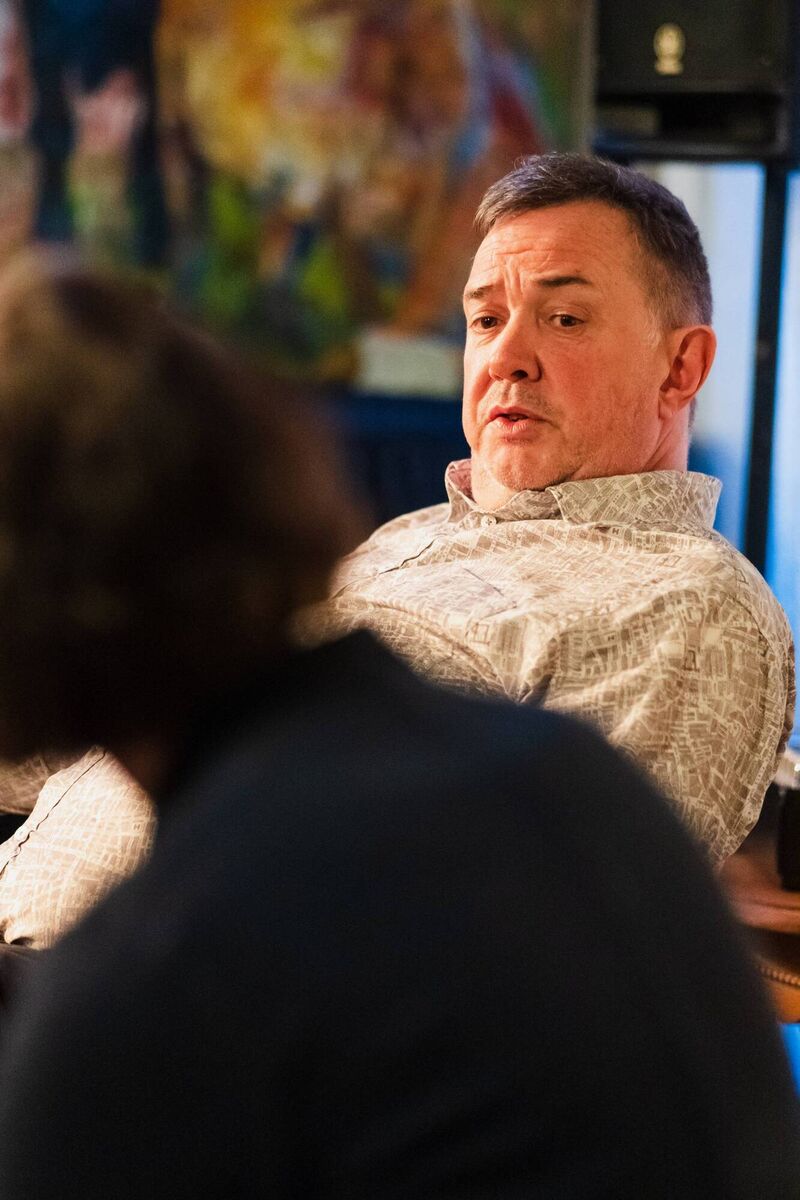
Some of those invited to produce work under the scheme had to wait until the covid restrictions were lifted. Others adapted. Jon Gower, a former BBC Wales arts and media correspondent, and the author of forty books, including , which accompanied the BBC television series of 2012, was commissioned to write a book he has recently published as . “What I intended writing was a travel book,” says Gower. “But when covid happened, I decided the best thing to do was to read my way into the subject while I was stuck at home in lockdown.
“When I started looking at the five ports, I realised they were all near really good wildlife sites. Our Lady’s Island, for instance, is an easy cycle ride from Rosslare, and it’s home to one of the rarest seabirds in Europe, the roseate tern. And then, the Greenland white-fronted goose - the rarest goose in Europe - flies into the Wexford slobs in winter. The case is easily made that, in terms of green tourism, even an old guy could get to these places on his pushbike.”
Gower’s books also cover a number of significant historical and mythological links between Wales and Ireland. “The Norman invasion of Ireland, for instance, was led by Richard de Clare, or Strongbow, the Earl of Pembroke in West Wales. And we exported a couple of saints from Wales, the best known being Patrick. One of my favourite stories is that of St Modomnoc, a disciple of St David, who is said to have brought bees to Ireland. As someone once said, myth is just very old gossip; you can almost believe it happened.
“But it’s true that, in the age of the saints, the Irish Sea was a sort of Celtic superhighway.”
Gower’s book is available through the website and app, where the films, creative projects and hundreds of stories collected for the project may also be accessed.
“If you’re sitting in your car, as a lot of people do in ferry ports, you can download the app and explore all around you,” says Connolly. “The website is active at the moment, but in time it will become more like a museum. Our funding finished on July 31, but we’ve committed to maintaining the site for the next ten years.
“We’d love to do more work with Wales in the future. After Brexit, obviously, the EU funding situation is very uncertain. But there are some Irish/Welsh bilateral commitments to sustaining connections, so we’re looking for more opportunities in that area.”
- Further information: portspastpresent.eu