Putting things in place: Karl Whitney looks to Tallaght of the past for context
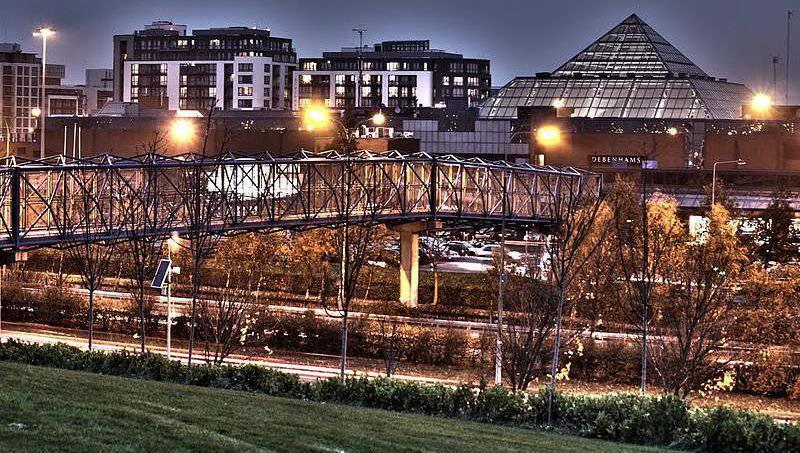
Skyline of Central Tallaght. Photo: Peyton Edward/Wikipedia
When I wrote my first book, I began the writing process by looking at a place I knew well, the southwestern Dublin suburb of Tallaght. In its time, Tallaght acted as lazy shorthand for a kind of working-class ne’er-do-wellism that had the middle-class Irish media frothing at the mouth. Over time, other suburbs or cities have played the same role – as rhetorical spaces onto which can be projected images of danger: no-go zones.
At the time I was writing, about a decade ago, Tallaght hadn’t fully shaken this perception, and alongside my own memories of the place, I wanted to explore the suburb’s wider significance.
I say I knew it well. The past tense is appropriate, as I had left it young, just after primary school, and moved elsewhere, to a more middle-class neighbourhood. This separation seemed to me to be a central part of the process of writing about a place: only when you’ve moved on can you recollect it. Memories can be a fiction, or at least can be lightly fictionalised, so I wanted to confront my memories with the concrete reality of the place once more.
What’s a place really like? The truth is that it’s so diffuse – there are often many perspectives, one of which is yours – that it’s difficult, perhaps impossible, to capture objectively. And yet, place is often my starting point for a piece of writing.
The temptation, because distilling a sense of a place is a subjective endeavour, is to supercharge it with colourful, pseudo-poetic descriptions that tend towards a sort of pantheistic raptness. Place writing, and particularly nature writing, is haunted by such practices, and I suppose it depends on your tolerance for writers being intensely writerly whether you like it or not. I personally prefer a kind of documentary approach that allows imaginative digression but is rooted in the physical.
There are two kinds of place writing I engage in: writing about somewhere I have a personal connection with, and writing about somewhere I’m less connected with. Perhaps I have never visited the latter place until a story brings me there. As a writer you’re expected to prove your close personal connection to a story, to trot out some proof that you qualify as a trustworthy narrator of a tale.
In some ways, this is laudable and logical: any exploration of a place that ratches up its exoticism carries a residue, whether intentional or not, of nineteenth-century colonial adventurism. The language of travel writing risks being inflected with such assumptions while the best work interrogates such inherited traits. Often, though, writers might find it easier to steer clear of such traps and not write about anything that isn’t seen as authentically their own.
Perhaps that’s for the best. But, then again, we’re also often told that writers should be ‘fearless’ and plunge into writing whatever they want regardless of the consequences. It appears to me that there’s a balance between the two extremes. That there are ways and means of writing about place that will result in better work. They involve carefully considering your own relationship with the story to be told and doing your research.

One can get tied up in knots when considering one’s own relationship to a story, to the degree that the relationship outweighs the subject of your work. My view of this oscillates between thinking that the writer is a valid character in a work and that their endless neuroses and distorted view of their own importance has its own kind of drama and, well, not thinking it at all and wishing they’d write about something else entirely.
And yet, without self-reflection, the work will be thin and there’s a serious chance the writer might not have considered the different aspects of what they’re doing, or fully sounded the imaginative depths of their chosen subject, and, as a result, end up with a lack of fizz in the writing. When a writer is pinging with ideas they can drive things on in a way that they can’t if they’re dutifully ticking off a list of topics they have to cover in their work.
Intellectual excitement creates its own momentum, and that happens, in nonfiction writing at least, when the research has been absorbed and digested and the writer genuinely feels like they have something to say.
That something to say may not be neatly summarisable. You might be communicating an atmosphere or sketching a character or exploring a phenomenon. You might not have any answers, but you’re posing a fascinating problem or illuminating a new aspect of the world or advancing a new way of seeing, and you need to get it across to the reader, and that’s what drives your writing.
When I decided to write about Tallaght, I thought it might be an idea to go for a walk, setting out one morning from my parents’ house in a suburb that adjoins Tallaght, and seeing what I encountered along the way. As I walked, I kept a small notebook in my hand so that I could scribble down whatever I thought might be of interest. Rather than zigzag around sprawling suburban estates I decided to trace the boundaries of the place.
This approach suggested a few questions that were to guide my writing: where did Tallaght end and the rest of Dublin begin? What did its development say about the Ireland of the time, and what’s the significance of the way it’s been portrayed over the years?
Ultimately, though, it was a personal journey, so many of the landmarks I encountered had some autobiographical significance, and, sure enough, memories would spring up when prompted by certain details, such as the corrugated concrete paving on the street outside my childhood home (I recalled how the tyres of my BMX bike would rumble along its surface).
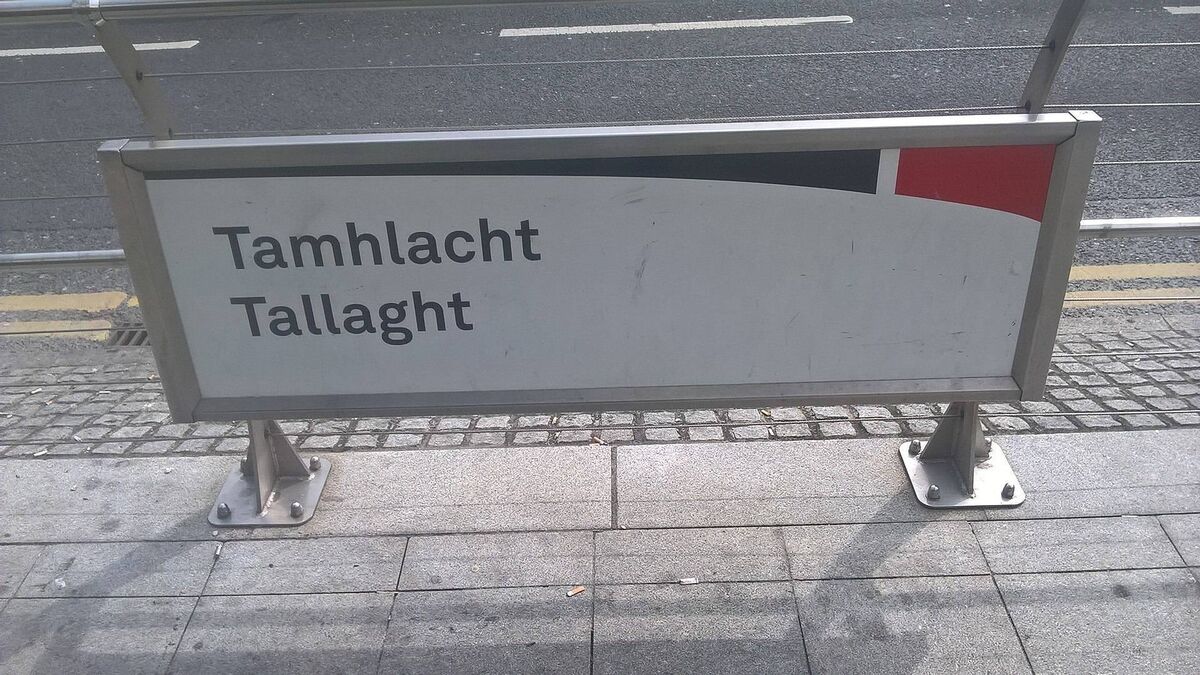
So, I set off with some idea of the kind of experience I might have, and a hazy vision of the general shape of the kind of piece of writing that might emerge. But the process of walking and encountering the place in all its complexity triggered memories and ideas that would then, in turn, play a part in the construction of the written work, changing the plan into something more complex and emotionally resonant. The experience of researching the chapter was a central part of making the writing come alive, and it meant being alert to how familiar places made me feel, but also being open to the unexpected aspects of a place in which, at that point, I hadn’t lived in for twenty years.
This is what I really enjoy about writing – that you can set off thinking you know, more or less, where you’re going, but are led in a new direction by the practice; that you have the ability to surprise yourself. When I talk to students about planning a piece of writing, I sometimes say that a writing plan is like a map to a place you haven’t visited yet, and that the experience of writing might fill in the gaps on that map or change it completely.
When I returned home from my day spent walking around the suburb in which I had spent the first twelve years of my life, I had a notebook filled with notes and a head swimming with ideas. I didn’t quite realise it then, but I had established an approach that would guide me through researching and writing my book. But it was a first step and nothing more. The real work was just beginning.
- Karl Whitney is the author of Hidden City: Adventures and Explorations in Dublin (Penguin).