Album review: Blur make a welcome return with The Ballad of Darren
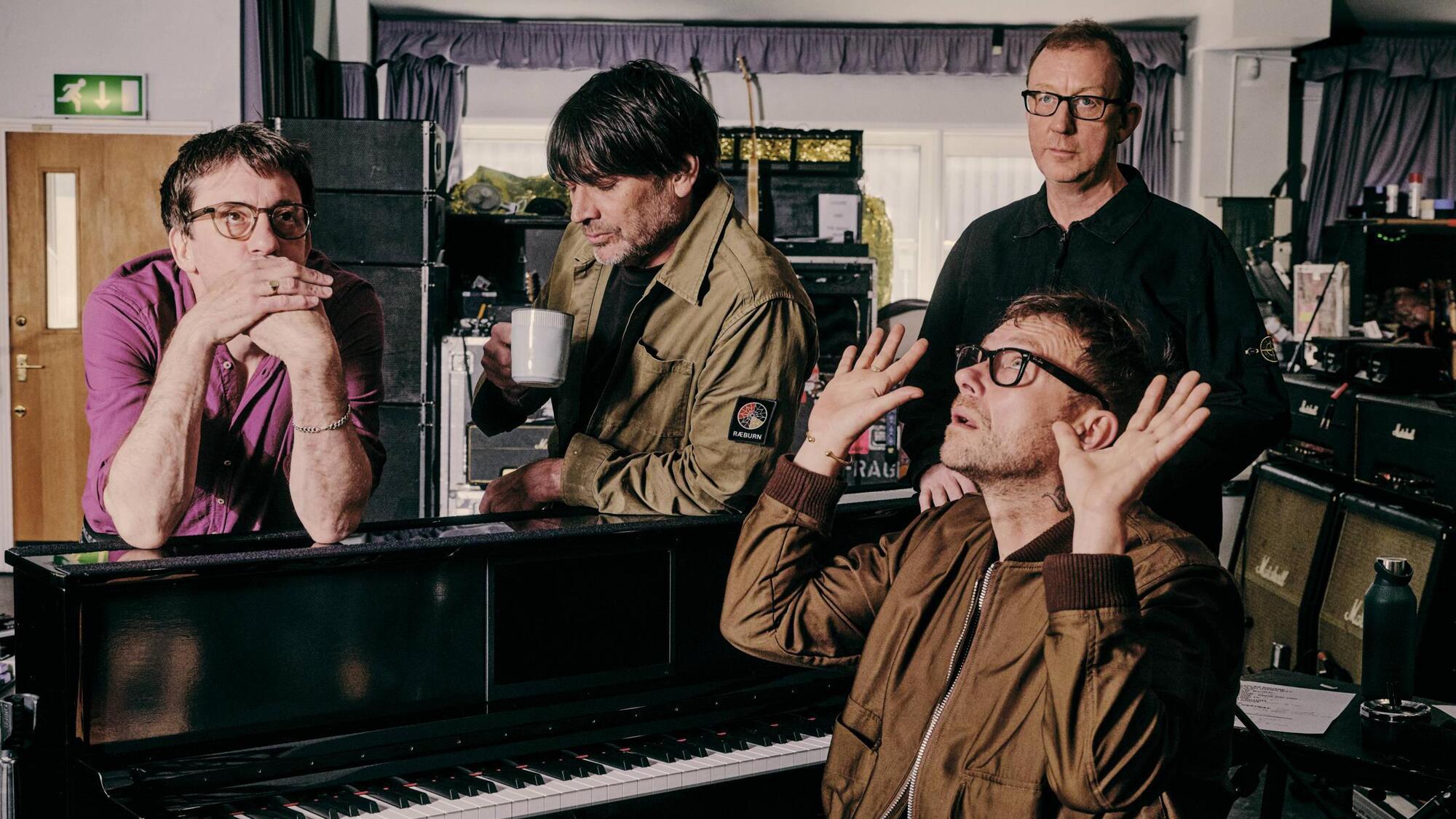
Damon Albarn and Blur working on The Ballad Of Darren. Picture: Reuben Bastienne-Lewis
- Blur
- The Ballad of Darren
- ★★★★☆
There is a grim aptness to Blur’s ninth album arriving several months after the death of Martin Amis. With novels such as London Fields, Amis was a major influence on the classic Blur incarnation of gobby intellectuals training a louche lens on British society.
Amis could not sustain the sublimely withering quality of his early work: it putrefied into a more conventional sneeriness. The worry with Blur was that singer Damon Albarn might follow a similarly tragic trajectory. That he would spend his elder statesman years boring us senseless with bleak revisitings of unlikeable songs such as Charmless Man and Tracey Jacks in which he portrayed ordinary people as living lamentably small lives.
Instead, he has surrendered to the melancholy of late-ish middle age. The Ballad of Darren walk a line between sadness and whimsy: Albarn is a cheeky chap by inclination, but at 55, has had his share of loss, and that is one of the defining quality of a powerfully downbeat album.
That The Ballad of Darren – named after the group’s old security guard – would be more angst than “oi” was revealed up front with the single 'The Narcissist'. It begins with Albarn gazing into the mirror and seeing on the other side of the looking glass the reflections of all the friends and loved ones who have shuffled off.
He brings a poet’s ear to these miserable musings, a quality offset by guitarist Graham Coxon’s quietly fraught playing. Coxon was always the brooding counterpoint to Albarn, that uncrowned prince of merry mockney-isms.
That tension between their contrasting sensibilities remains Blur’s most compelling quality as they reunite on their first new project in eight years. Coxon only truly goes off the leash once, with the funeral indie disco of 'St Charles Square'. But his gritty riffing is never absent. It underpins the glum 'Barbaric', where Albarn seems to lament the dissolution of a relationship, and ripples through the late-period Bowie-isms of 'Goodbye Albert'.
A downbeat Blur album is not a new concept. Albarn was pretty despairing on 13 from 1999, a meditation on his split from his girlfriend, Justine Frischmann. Bleaker yet was Think Tank from 2003. That project was assembled as the band reached the end of its original 1990s lifespan (most of it was made without Coxon, who’d finally walked away – albeit temporarily).
The new ingredient in The Ballad Of Darren is time. This record takes the measure of all the years gone by, all the people lost. It’s hugely affecting: a sea-side postcard from the edge that confirms that the further removed they are from the Carry On… campness of Britpop, the more Blur have to say.

BLACK FRIDAY
Already a subscriber? Sign in