Book Interview: Cecelia Ahern on approaching writing about empathy
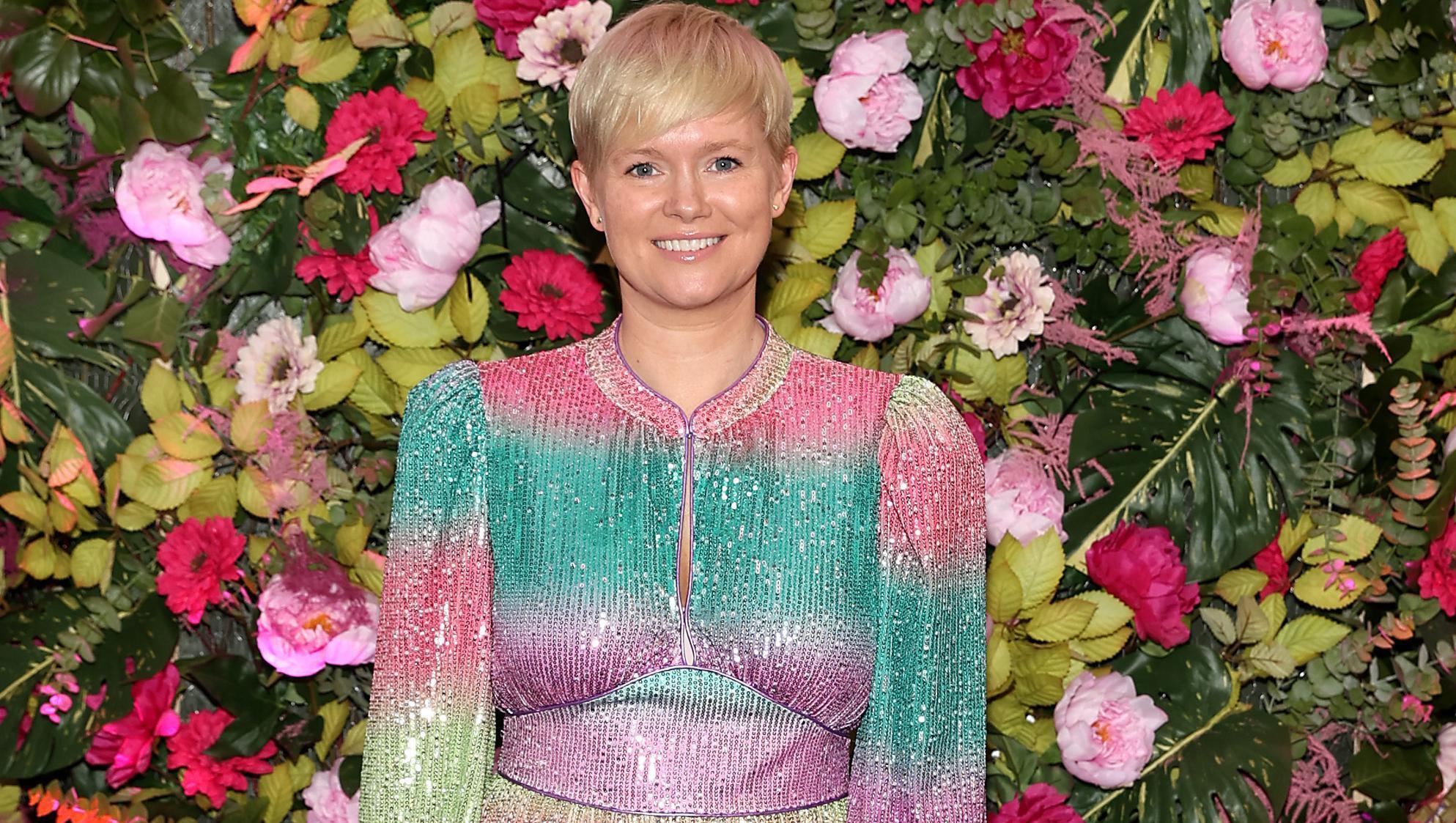
- In a thousand different ways
- Cecelia Ahern
- Harper Collins, €17.17; Kindle, €8.72
For some years, Cecelia Ahern has wanted to write about empathy. Describing herself as sensitive — as someone who picks up the energies in a room, and the emotions of those around her, she wanted to show those who aren’t sympathetic, what empathy is like.
“I think people who aren’t sympathetic don’t know what’s it’s like,” she says, when we catch up, on the phone. “Some people are quite cold and cruel and are really just looking after themselves in the world. They don’t realise how their actions are so easily transferred to other people. And I think if they did, those people would watch themselves more.”
The idea was playing in her head for some time, but she couldn’t come up with a character, or see a way to write the book. And then, when she was pregnant with her third child, Blossom, (now 3,) she suffered from aura migraines, and seeing colours, realised she had found a way in that was grounded in reality.
“I spoke to a neurologist, he explained what was going on, and I found it all so fascinating; that what we consider supernatural happens to people all the time and can be easily explained by science. I felt, Wow! That’s it. And the story grew from there.”
Phenomenally successful worldwide, with more than 25m copies of her novels sold, this 17th, , is her best yet. The heroine, Alice, picks up every emotion from those around her all the time.
Along with the love and goodness, she picks up sadness, anger and rage. And these feelings of others her — always seen in intense, swirling colours — overwhelm her, and make her want to retreat from the world. She doesn’t know how to be.
It doesn’t help that her mother — who appears monstrous — sufferers from mental health issues.
“When Alice is older, she starts to understand what Lily was going through, but as a child, she has no understanding of what version she will get. She’s trying to read her all the time. She is ducking and diving to avoid her mother’s colours. But her older brother Hugh, who has a goal, doesn’t let his mother’s moods affect him, whereas her younger brother, Ollie, absorbs it all.
“I wanted to show how people can live in the same house and experience the same things yet come out so differently.”
Unusually for Cecelia, the book doesn’t have chapters — but is divided by sections marked out by colours. She wrote the second section — rust — which shows an adult Alice rather unwillingly caring for her sick mum — during the dark days of the pandemic lockdown in winter 2021.
“That second winter was a horrible time,” she says. “During the first one I was editing , but this was a long grey January, and I was doing a lot of walking and trying to connect with nature to get some energy from it. I was, apparently, peri-menopausal; I was post-natal, and living in the pandemic.”
Still happiest connecting with nature, Cecelia always listens to her body. She gave up caffeine at 21 — on a doctor’s advice because she was experiencing heart palpitations, and, currently, she doesn’t drink alcohol.
In the book, along with talking about climate change, she mentions the holes in people’s souls.
“I have a very visual picture of the ozone layer melting or burning,” she says, “but people are part of the earth. It’s what is sustaining us. We should be putting as much effort into ourselves — and humanity — as we are in the world.”
There’s a strong gardening theme in in a thousand ways, and I’m aware that, some years ago, Cecelia purchased a family allotment — so I assume she has green fingers — but when I say this she laughs.
“It’s Mum and Dad — but mostly Dad who takes care of it,” she says. “He did this lovely thing where he made different plots for all his grandkids with their names engraved. Depending on the season they plant flowers or vegetables. They plant pumpkins for Halloween, and potatoes for Christmas dinner. It’s lovely.
“I don’t have green fingers, but I go, and I do what I’m instructed to do. Or I can sit there, on a bench, and watch them being taught how to plant and how to water. It’s nice for the kids to spend time with their grandparents.”
I remark how confident, and at ease Cecelia seems during interviews — and compare it to those early days, and the time she once had to be led, by Pat Kenny, into the RTÉ’s 'Late Late' studio. She laughs.
“That was my second appearance, by the way,” she says, telling me that the first one was uneventful. “I was just exhausted. I published in January 2004, and in November brought out, . (Filmed as .) I’d done everything back-to-back and I just ran out of steam.”
She swears she hasn’t become more confident with publicity.
“I’m exactly the same, but I’ve more to talk about. At the beginning, with just one book, you don’t even know what your author style is. You’re answering questions about a career that’s not been built yet. It’s like doing a job interview when you’re still trying to figure it out.
“That 'Late Late' was a lesson of how bad things can get. That was the worst, and I still went on and did it. Now I understand things a lot more. Experience helps. But I’m certainly not bouncing out on the stage to willingly do it.”
Cecelia, famously, writes her first draft on longhand; that hasn’t changed, but her writing routine has shifted since she wrote through the night.
“I used to say I write four days a week, nine to five, but it does change, depending on the children’s lives. They are my number one. If I can work for four hours a day, then that’s brilliant. It’s how long it takes me to write a chapter.”
She writes a first draft in about five months.
“But it’s messy. Early in my career I used to try and perfect everything as it was going along, but Now I try and get the story first; and work out what’s in there and trying to get out, then I go back, over and over again. There’s more work in the edit, but I’m having more fun with the writing than I did before.”
Writing in a thousand different ways — in lockdown, was different again.
“With lockdown, and home schooling, and a lot of things going on, I was writing in any moment I could. I was writing about Alice’s moments in my moments, and that’s how it came out the way it did.”
When I tell her how much I adored the book — for the writing, characterisation, and emotions it evoked, Cecelia says it’s her favourite so far.
“All my books go into emotions,” she says, “I always go to the heart, but for , and this one, I really emptied the tank. I’d say that’s because I was going through big transitional moments in my life.”
We talk about being an empath — and how sometimes Cecelia feels a need to keep those with bad vibes at a distance. As a writer, is sensitivity a blessing or a curse?
Stressing that her sensitivity to others, is nothing like as extreme as Alice’s she says, “I’d say it’s a blessing, though sometimes, if you’re feeling people’s stuff and don’t want it, it can feel a bit heavy. Empathy does not always equal compassion. But for me, being an empath has helped me be a writer. It has given me everything.”