Eyes of the Storm: Paul McCartney’s treasure trove of lost photographs
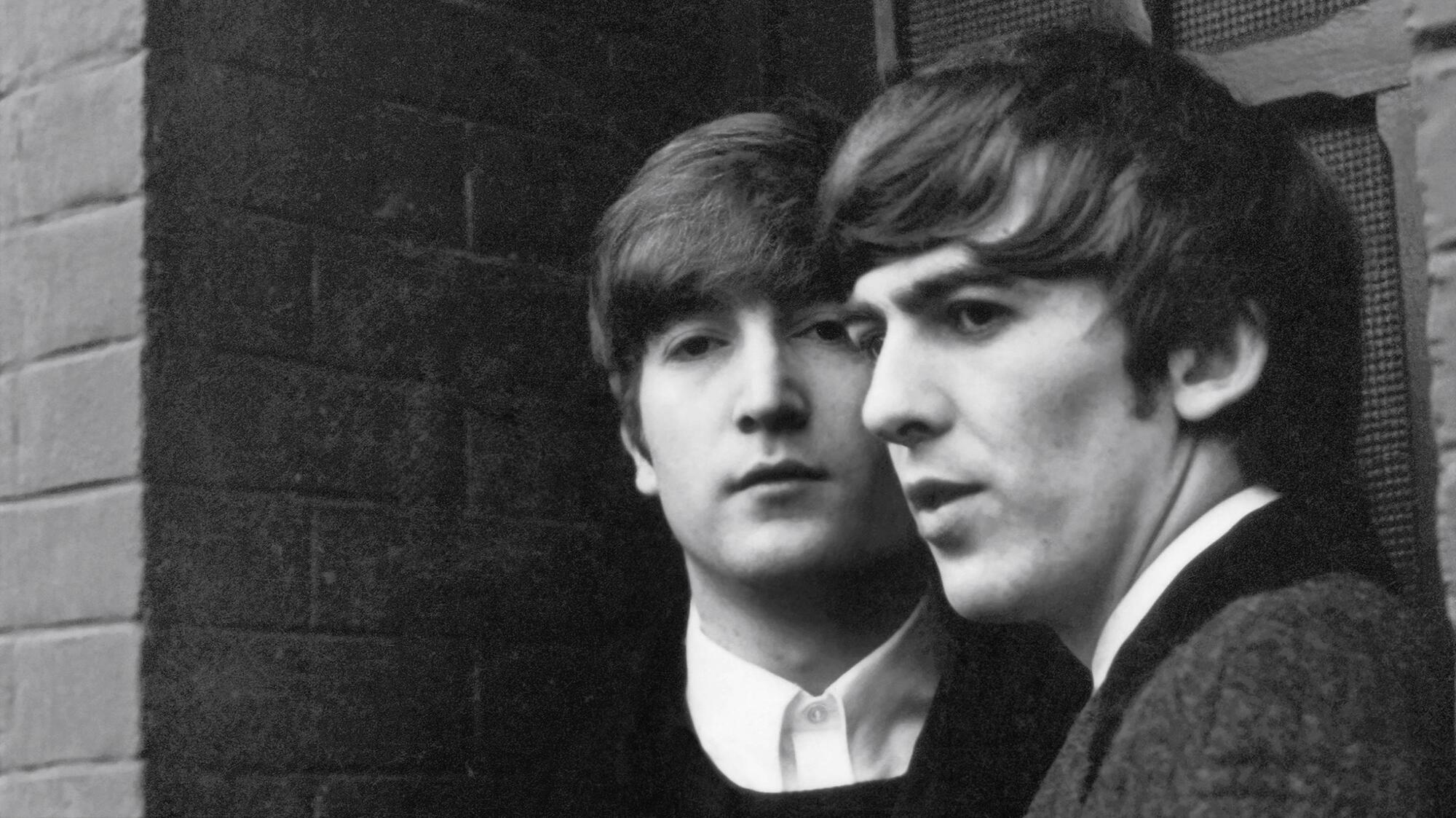
One of the pictures the Eyes of the Storm exhibition and book: John Lennon and George Harrison, Paris. 1964. Picture: Paul McCartney
It was during he lockdown of 2020 that a remarkable discovery was made in Paul McCartney’s office. A treasure trove of almost 1,000 unseen photographs taken by McCartney on a 35mm Pentax camera that had caught his bandmates’ reactions to Beatlemania, the Fab Four’s experiences together in cities such as Miami, as well as candid images of those closest to them.
In a market flooded with Beatles tomes, 1964: Eyes of the Storm is one of the most valuable insights into the cultural shift the group spearheaded at the start of the 1960s. The publication of the book coincides with McCartney’s 81st birthday. In the foreword, he explains, “Here was my record of our first huge trip, a photographic journal of The Beatles in six cities beginning in Liverpool and London, followed by Paris (where John and I had been ordinary hitchhikers three years before), and then what we regarded as the big time, our first visit as a group to America.” The book includes an essay by Rosie Broadley, 20th Century Collections senior curator at the National Portrait Gallery, the London venue also hosting an exhibition of the photographs.


Broadley explains: “Paul has been really involved through every step of the process, he comes to London regularly and made a lot of decisions about the exhibition but he also listens to our thoughts. When you were thinking about whether or not to include an image, he would tell you a story. There was one picture which to us was just of an old man, he said: ‘Oh that’s Bill Corbett, our driver, he was a laugh. He was an Eastender who blagged his way onto the Paris trip, he told us he spoke French, which he didn’t, to get the job’.”
Broadley says, that without McCartney’s memories, the exhibition wouldn’t be as rich. “When Paul came and had a look, for him it was the first time he was seeing these images bigger than a thumbnail. That was a really wonderful moment watching his reaction to these old faces and friends.”

McCartney’s sense of composition is aided by state-of-the-art technology for the time. “We’re not sure how he got the Pentax,” explains Broadley, “but they were possibly given one at a camera shop; it would be like Apple giving Harry Styles the latest iPhone today. In terms of cameras, they were ahead of the curve in 1963 and early adopters of those kinds of cameras and the developing technology. David Bailey who became the quintessential 1960s British photographer had acquired the 35mm SLR [single lens reflex] only two years before, so it’s the cutting edge of taking pictures on the move.”
McCartney captured the America of old blues songs when The Beatles were forced to take a train from New York to Washington due to a snowstorm. One shot of a trainyard worker catching sight of the band offers a sense of blue-collar America absorbing their arrival. McCartney was left wondering: ‘Did he mention having seen The Beatles at the dinner table?’”
Perhaps one of the most striking images is of photographers chasing the band around the streets of Manhattan, which also features on the book’s front cover. “Paul’s shot is from the back of a car through the window,” explains Broadley. “He didn’t feel threatened on that trip and hadn’t really had time to digest what this all might mean as well as the consequences for the rest of his life. The boys didn’t know Americans, only what they had seen through films, they couldn’t believe they were being chased around the street. The image is not as threatening as what we might think.”

There are also casual images of personalities the band admired, such as Ronnie Spector at the Plaza Hotel, as well as close family that include George Harrison’s sister Louise, who had recently moved to Illinois and dropped by for a visit when the band were on tour.
One of the photographer’s personal favourites in the collection is of Harrison wearing dark glasses, smoking a cigarette while collecting a ‘scotch and Coke’ from a girl in a “dazzling yellow swimming costume".
McCartney explains: “The composition was deliberate, and I’m glad that I didn’t move farther away but kept George as the focus of the image.” The evocative Miami shot suggests glamour, sexual awakening and freedom. It’s a world away from the black and white images taken just a few months before in Liverpool and London.
“Those pictures are almost claustrophobic and speak to a post-war Britain that was epitomised in the kitchen sink film dramas of the time,” says Broadley. “The dressing rooms are in old cinemas which were shared with several other bands and singers.”
There’s no sign of anything stronger than a cup of tea in the British images, which include McCartney capturing some evocative pictures of his then-girlfriend Jane Asher. While he suggests the black and white portraits don’t do her “copper hair justice”, from the same roll of film he has no problem capturing the spirited energy of a young and similarly flame-haired Cilla Black, also without the aid of colour film.
That picture taken from the reflection of her dressing room mirror bears a resemblance to a self-portrait of McCartney in Paris. “The image is almost like a still from a French New Wave film by Jean-Luc Goddard,” says Broadly. “It’s of a confident young man who takes it all in his stride, the composed selfie is not a surprise. He was always interested in art, more academic, enjoyed art during his teenage years, and was a high achiever.”

Back then, McCartney had won a prize for a drawing of St Aidan's church in the Liverpool suburb of Speke where he lived, and with the prize money bought a book about contemporary British art in the 1950s. We also find McCartney absorbing Paris with one shot of “an elegantly poised sitter” in the George V hotel suite, as well as images from when les Beatles shared the bill with French pop sensation Sylvie Vartan.
This fresh presentation of McCartney’s dynamic snaps stokes the early energy of The Beatles while offering a fly-on-the-wall view behind the scenes at recordings of the Ed Sullivan Show. Lennon is effortlessly cool in rehearsals, getting the bit between his teeth when playing his iconic black Rickenbacker 325 Capri. Broadley suggests other images of Lennon are less familiar.
“There’s a lot of John with his glasses, he refused to wear them for official photos at that time. He’s looking less confident, biting his nails. In others he is playing for the camera having a laugh, you see him leaping into a pool in Miami. There’s no tension at this point, they are all working towards the same goal and enjoying the fruits of it all.”
A previous rehearsal on the Ed Sullivan Show reveals a stand-in for George Harrison getting carried away while offering his fevered impression of a Beatle. “Paul must have handed his camera to someone else; we get a view of him at rehearsals in one of the sets developed for Ed Sullivan. George had tonsillitis so Vince Calandra from the show’s crew stepped in and had the time of his life.”
It’s clear from the pictures, everyone involved with The Beatles was doing just that.
- 1964: Eyes of the Storm: Photographs and Reflections, by Paul McCartney, is out now; Paul McCartney Photographs, 1963–64 Eyes of the Storm is at the National Portrait Gallery, London June 28 to October 1