Books: Is this an essay? Karl Whitney looks at the art of short-form writing

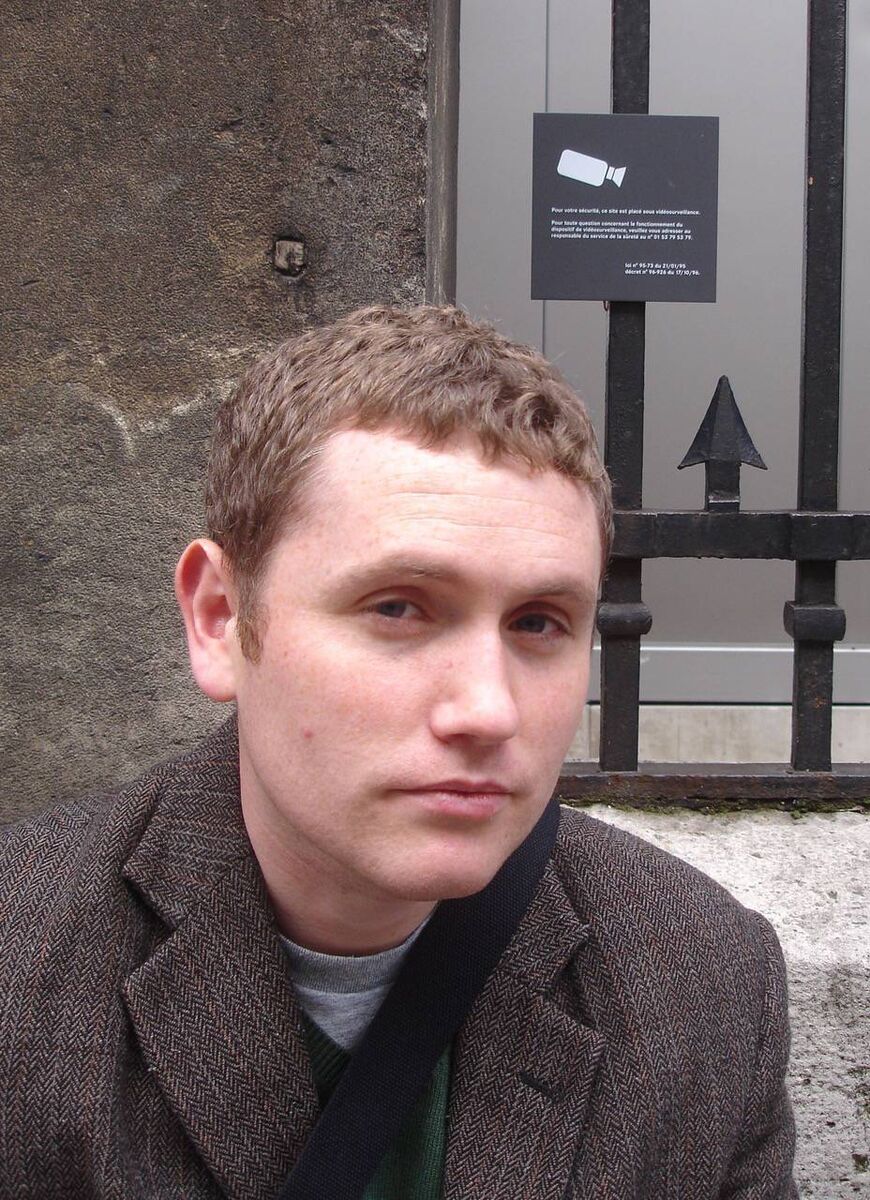
Karl Whitney: author and writer
After I published my first book there was a brief flurry of interest that soon died down, as these things will. When such a flurry happens you might end up being asked to do a variety of things that only tangentially relate to the largely thankless and lonely task of sitting down on your own and writing a book. One of the things I was asked to do was to write a piece about spa towns in central Europe for an inflight magazine. It came out of nowhere, was very much out of my comfort zone, and, perhaps because of those reasons, sounded interesting.
Prior to this, I had spent years pitching ideas to editors with little joy. To be approached to do something like this was novel. Great, I thought — I must have finally made it! I went to Austria and the Czech Republic, taking notes about the places I visited and sampling the often-sulphurous lukewarm water that squirted from the ground.
East met west in the Czech towns: hotels bore architectural traces of the Austro-Hungarian empire and the Soviet Union — elaborate ironwork colonnades juxtaposed with functional, often brutalist aesthetics — and tourists came from Russian-speaking nations and, at least in my case, from Ireland.
This wasn’t so long after Wes Anderson’s film , and I had discovered that a certain hotel in the Czech town of Karlovy Vary was a model for Anderson’s eponymous establishment. So, I went there, admired the aesthetics, sampled the water from the hot springs, which was an acquired taste, took some notes and returned home to write it. I puzzled over what the editor wanted from me, what the reader might want. I had fallen into the trap of writing for everyone but myself.
When I talk to students about writing, which I have been doing for a few years, I often stress that they should bear in mind who they are writing for. Who is the audience, and what do they need to know? In the case of an inflight magazine, you’re writing for a variety of people ranging from the distracted who might leaf through and then tuck the magazine back into the seat pocket to the deeply engaged ideal reader. So, you pitch it somewhere between those two, but in the process there’s a risk that something might be lost.
What could be lost? You might prioritise the notion of a reader and try to cater for that fictional construction rather than trusting your own instincts. You might endanger the sense of a personal voice, one that takes the subject of a piece of writing to be in here rather than out there — by which I mean that the writer has taken the subject to heart, tried to examine it from different perspectives before attempting to find a distinctive way into it that makes it their own.
When you’re trying to turn a piece around in a few days this isn’t always possible. But such situations illustrate what can make writing distinctive and memorable: the author’s perspective and way of thinking — their sensibility.
When you put something out there and it gets reviewed, you experience mixed feelings. The sensitivity required to write something extends to the process of being received by critics and readers. It’s hard to shut off. I still recall my work being called ‘idiosyncratic’ and for ages I believed that to be a bad thing, something I should work to excise. I’ve belatedly come around to believing that the idiosyncratic is essential, that the writer needs to impress something, perhaps everything, of their sensibility on their work.
Each week I read different kinds of writing: classic literature and introductions to classic literature; book proposals; essays written by undergraduates. What comes through in all this reading is the importance of a sense of structure — although not to the degree that it snuffs out the flame of the writing — and that the writer’s sensibility is communicated to the reader.
Students often try to bluff their way into knowing tone that, they hope, signals to the reader that they’re experts in the subject they’re addressing — but of course they aren’t, and they can give themselves away with a slip of the pen, a factual error, or a wrong turn taken in their argument.
They’re not alone. If you spend any time on social media, you’ll see that pseudo-expertise pops up frequently. An account with hundreds of thousands of followers will tweet a thread of dubious facts gleaned from random corners of the internet and package them for a credulous audience. In such an arena, unearned confidence can often be difficult to sift from actual knowledge. Which is why doubt is so valuable, not just for the reader but for the writer as well.
But if you’re trying to make a name for yourself, admitting your doubt in your writing isn’t the done thing. You’re expected to build a reader’s confidence in your writing and, ultimately, act as an advertisement for yourself. Even if you choose not to pose as an expert, you might be treated as one simply because you wrote a book that addresses a certain topic.
You might play along with this for a while, but eventually you’ll have to smash the mask: such ill-merited certainty can seep into your writing and destroy it. Because the fact is that, for a writer, doubt is an essential tool. The world is full of bluffers, and it’s full of bad writing of different kinds — the two are connected, I think. So, it’s useful to not be one of those bluffers.
Those who deal with academic writing, as I sometimes do, often talk about critical analysis. I see that as attending to other people’s views or arguments and then developing your own perspective — simple yet elusive, because it forces you to ask of yourself: what do I think? When dealing with writing for a general readership I see this academic approach as comparable to the writer might dramatise their own doubt, let their interest guide their attention, and how they might talk the reader through that process. It takes confidence to have doubt, and to expose to the reader the mechanisms of that doubt.
I set about writing this piece thinking that it was going to be about essays, and, in a way, it is. Because I’ve found a lot of the good things that I’ve been talking about in essays — but not in all essays, and not only in them. I suppose what I’ve been talking about here is a certain self-reflection and reluctance to position oneself as the only voice on a subject, while also making judgements, being sharp and wide-awake to the possibilities and problems of life.
Is that all contained in the essay, or is it just what I now consider to be good writing? Certainly, an essay roams around to find its theme, digresses and eventually settles on something. It creates space for the reader. But so, now I think about it, do other forms: novels, full-length works of nonfiction. A writer can tell you what they think obliquely, can illustrate arguments through plot and characterisation, can create ambiguity and resolution in a variety of ways. The complexity of thought finds different forms when realised in writing.
Maybe what I like most about an essayistic approach to writing is that it communicates a sense of time, of place, and of how the apparently intractable difficulties of life might be met. Perhaps that’s my middle-age speaking. Nevertheless, the profound and the frivolous can be treated equally seriously, and can be equally compelling, should the writer wish.
Most of all, you get from this kind of writing a genuine sense of a human being thinking things through. In an age in which so many things are done on our behalf, when opinions are supplied to us on a plate by unseen algorithms — and with machine-generated writing suddenly being at the fingertips of all — that appears to me an increasingly precious thing.