Book Review: Adam Gopnik weaves magic of his own with The Real Work

Writer Adam Gopnik attends the PEN American Center Literary Gala at American Museum of Natural History on May 5, 2015 in New York City. (Photo by Jemal Countess/Getty Images)
- The Real Work: On the Mystery of Mastery
- Adam Gopnik
- Riverrun, £14.99
Just to give you one early measure of this often wonderful book: it contains a tour de force chapter about paruresis or ‘shy bladder syndrome’; that is, the inability to urinate in public places of any kind. The fact that Adam Gopnik (who suffers from the condition) works this material into a rumination on how and why we master skills like drawing, driving, baking, boxing, and more tells you about his agility as a writer and a thinker. A phobia, he says, is “a kind of black-mass parody of accomplishment, a memorial to anti-mastery that, tragically, to the one enclosed within, looks more impressive than the positive kind”.
Gopnik is a stalwart of , an art critic and food critic, a writer about France, and now our guide through the dedicated accumulation of steps that make a sequence that make a flow that make mastery. Mastery is mundane: it is “all around us, all the time”. In “a world seeking excellence, with millions of people crowded into competitive cities, excellence becomes surprisingly well distributed.” But it is still a mystery, a matter of always hunting down ‘the real work’, a phrase Gopnik borrows from magicians.
Gopnik excels at amiably but perceptively rooting around in different sub-cultures from magic to Broadway. And he’s funny too with a fine eye for anecdote. When seeking to convey the viciousness that characterises the musical theatre, he recalls a director telling him that he planned to call his memoir I Didn’t Know Grown-Ups Could Talk That Way to Each Other, after something his frightened eight-year-old daughter once said upon seeing a routine rehearsal for a nascent musical comedy.
One by one, Gopnik also ushers into our sight some tremendous’ larger-than-life characters. (Gopnik is a New Yorker so he has a home city that offers rich pickings.) Jamy Ian Swiss, is a master magician who bristles with eagerness to engage in intellectual combat about his art form. Arturo Leon is a driving instructor who offers a very plausible deconstruction of the mind of the examiner (and who also, in a nice twist, ends up asking for Gopnik’s advice on how to write a book about driving). And the author’s own mother, a consummate baker, lends the distinctive savour of her personality to several pages of her son’s book.
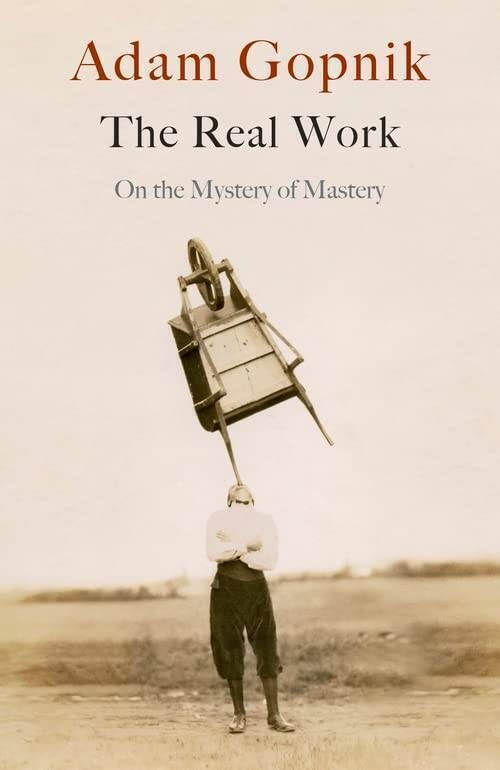
What impresses most about the author of , though, is that he is someone who cannot just think, but someone who can re-think. His drawing lessons cause Gropnik, a vaunted art critic, to reconsider some of his most assured assumptions about the subject. Learning to drive makes him think again about cars, which he had previously denounced, many times, as a weapon against civilisation. Now he can admire the “social contract at work at forty miles an hour”.
Historic ethnic frictions among immigrant New Yorkers also creep into a form of regard: “”Respect,”, the primitive form of inter-ethnic honor, is not an entirely dismissible emotion. We really do want respect. Ritualized conflict is one way to earn it.” (This comes on the back of some wonderful reflections on the career and fighting style of Jewish boxer Benny Leonard, world lightweight champion from 1917 to 1925.) His stop-you-in-your-tracks reflections on the true differences between youth and age are astoundingly accurate and especially worth reading by those of us making the transition.
Gopnik is everything, then, that you might hope a seasoned writer for to be. He has a mellifluous style that can lead you into deep waters, and then out again, in the space of two or three paragraphs, while still making the experience rewarding and moving seamlessly on to a new theme. is the real deal.