Book Review: Tom Hanks' debut novel is engaging, and well worth reading

Tom Hanks: an engaging debut novel
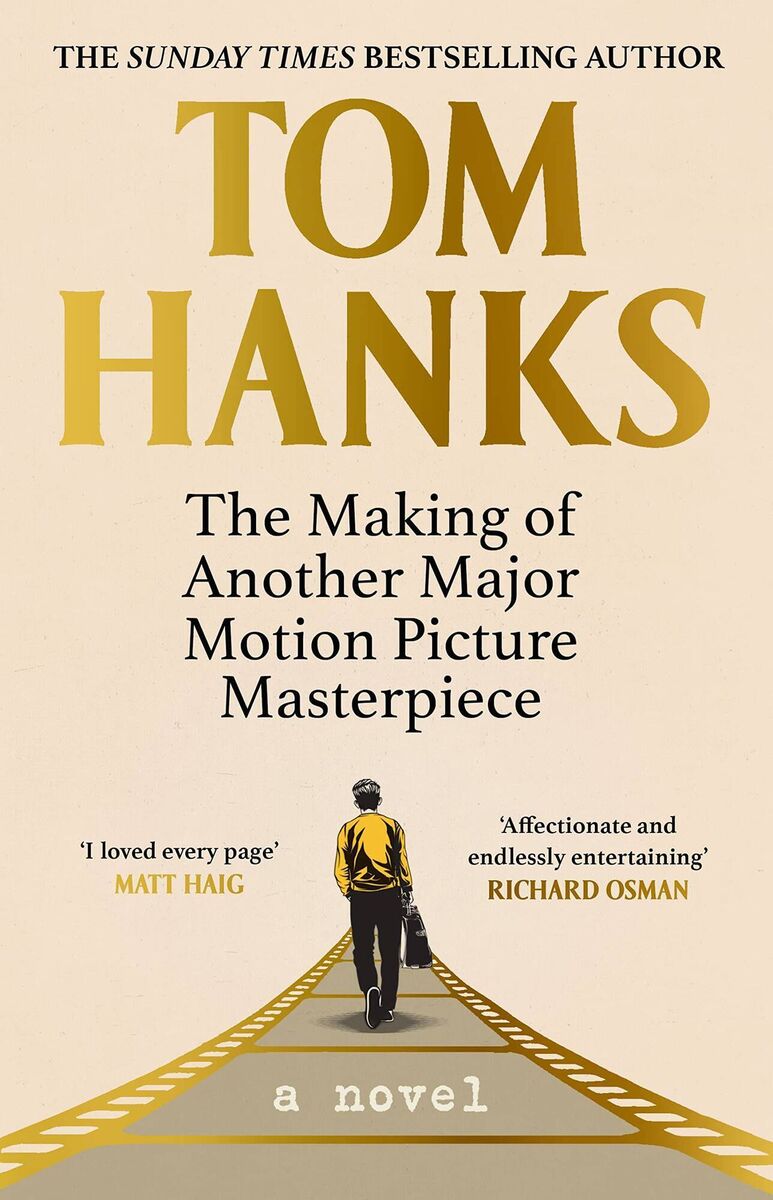
- The Making of Another Major Motion Picture Masterpiece
- Tom Hanks
- Hutchinson Heinemann, £15.99
This first novel by the Hollywood star is touching, funny, and informative, particularly if you ever wanted to learn what goes into the making of a superhero action film. It also covers 80 years of American life and how it changed from the Second World War to covid-19. Why so many films are now made for streaming services rather than cinema release is also explained.
There is much that is unusual about the novel. It is divided into sections with titles, among them 'Source Material', 'Prep', 'Casting', and so on. Hanks uses lots of footnotes. The shooting schedule is followed day after day. As character names in film scripts are always capitalised, the author does the same. He includes extracts from the film’s script and the earliest versions of the comic book which inspired it are reproduced as facsimiles as well as a version of the comic influenced by the film itself after its release.
Hanks explains that he downplayed the restrictions imposed on film-making during the pandemic, preferring to depict interactions between characters as if covid-19 had not happened.
The characters are diverse, but always interesting. Among them is a marine returning from teh Second World War, troubled by what he had witnessed. He had been a flamethrower, and his artistic young nephew sees him as a hero and collects comic books about the exploits of servicemen like him. Later that young man Robby is inspired to record his uncle’s experiences, as he imagines them, by creating his own comic books. They will eventually go on to inspire the multi-million-dollar superhero action film Knightshade: The Lathe of Firefall.
During the filming the cast and crew inhabit their own world, where they are interdependent, and the author goes into great detail about their individual responsibilities and challenges, including stalking.
He writes in such an engaging manner that the reader’s attention is maintained. While some are involved in post-production, for the majority the end of filming means they go their own ways, perhaps never being involved with each other again.
One aspect Hanks chooses to emphasise is how some of the central characters first got involved in the industry — in particular the women working in production: Dace Mills, Al Mac-Teer, and Ynez Gonzales-Cruz. They were offered employment because they had been spotted demonstrating their quiet and unfaltering efficiency in previous jobs. The author also gives some of the characters back stories, including the director, and not only the stars but also the actors playing lesser roles, and some crew, which makes them convincing and mostly likeable.
The most amusing sections of the novel are the descriptions of the behaviour of the male actor first chosen to play the lead role of Firefall who, despite only having two films on his CV, is convinced he knows more than Bill Johnson the writer director who has had decades of success.
As well as learning in detail about all the challenges of making a film, the novel also mentions other little-known facts. Among them V-mails (decades before emails); letters from American service people overseas during the war were first photographed, then shrunk, before being microfilmed and flown across the Atlantic. On arrival they were processed and enlarged to half their original size.
Hanks has previously published , a collection of short stories, this is his first novel. It is much more than an insider’s look at film-making, and well worth reading for what we learn about life in America over the last eight decades.