Joanna Walsh: Creativity and expression shouldn't be bound by ageism
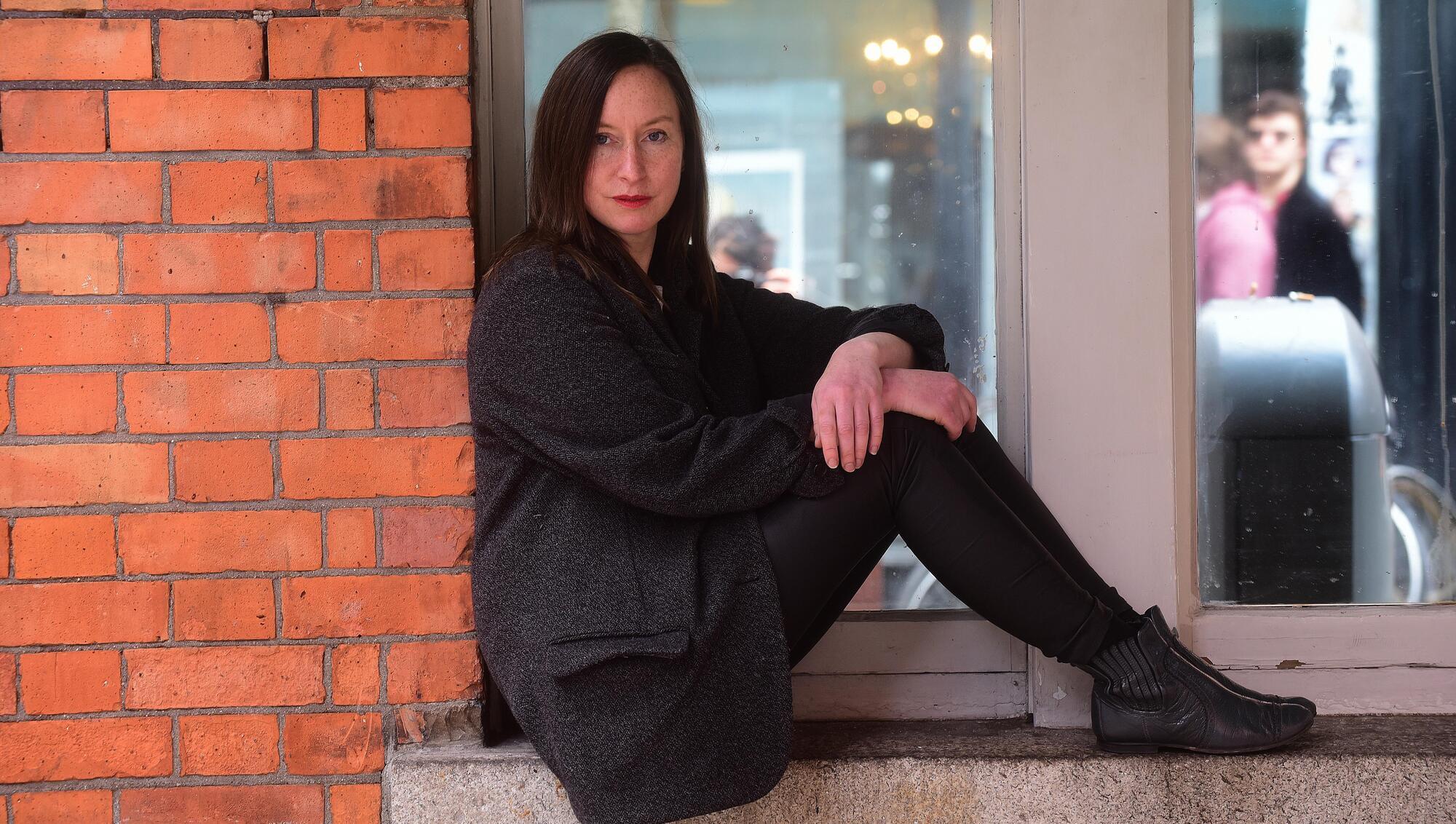
Joanna Walsh, author. Picture: Moya Nolan
The piece I keep writing is about age barriers on opportunities in the arts. They happen in theatre and visual art, in film and literature and music. These prizes, grants and residencies call for ‘young’ practitioners (I’m going to use the word ‘practitioners’ here, which can sound a bit over-formal, but it covers people working in any arts sector). What do they mean by young? Sometimes the bar set is 30 or 35; sometimes it’s 40. Often in poetry, music and drama, it’s younger. So far, so arbitrary.
With age limits like this, ageism is not ‘someone else’s problem’. It’s yours. Or it will be soon. It’s even a problem for people who do fit the age criteria. The truth is age limits also exclude a huge number of deserving younger candidates.
On an arts residency last year, I spoke to a woman in her late twenties, working on her first novel, terrified that she won’t finish ‘in time’ to be considered for various awards. Why? Because she has to work in order to afford ‘luxuries’ like rent and food. This is hardly an unusual situation. The majority of writers do not write full-time and can only set aside a few hours a day for creative work. Even that requires relentless scheduling. Add anything from care responsibilities to personal illness or disability, and these hours dwindle. Are you confident you’ll make it?
Who sets these boundaries? Magazine’s influential ‘Best Young British Novelists’ lists was announced with a great fanfare two weeks ago. ’s cut-off is 40. But in ’s sister publication in the Spanish-speaking world, it’s 35. If one publisher can’t even decide consistently what is ‘young,’ how can we trust it as a factor in deciding who should benefit?
Though I’ve heard privately from shortlistees on a number of age-limited prizes who are deeply uncomfortable to be chosen partly on the basis of their birthday, it’s rare that one will speak out publicly, but last week one of ’s listed authors did.
Commenting on the list, Yara Rodriguez Fowler tweeted: “It’s a huge problem in literature … as well as everything else it makes for a more boring and homogenous literature imo.”
She added: “Age cut offs are discriminatory to women, carers, disabled + working class ppl” and told me she’d repeated this in an interview with newspaper: “I hope they print it”.
Rodriguez was responding to a campaign on Twitter called @noentry_arts. Its Twitter handle is deliberately provocative; its symbol is a no-entry road sign. But all it does is describe what’s happening without euphemism. Let’s see these prizes for what they are: exclusionary.
Age advocates are — as you might expect — seldom powerful. They are usually exactly those practitioners who have already been marginalised and excluded over years due to disability, race, class or gender prejudice, misogyny, lack of time and money but, speaking together, our diverse voices are gaining audibility.
@Noentry_arts exists to engage arts organisations in conversation and to change minds. It is slow, long, hard work. It is miserable, as a lone individual, to openly critique respected public bodies, particularly in my own industry, who may have the power to employ me. It’s the same for every one of the account’s supporters. When they speak out, in a precarious industry, they take a very real risk.
To speak for age can seem like speaking against youth. This is not so. Everyone who writes to the account was once ‘young’: some still are. None of them would say that supporting young people to begin arts practice is wrong. What is wrong is limiting opportunities for practitioners outside a certain age group, when their age is not a major differentiating factor. This is particularly true when the opportunities are for ‘emerging’ artists, and it is even more true when the cut-off age is old enough for many of the ‘younger’ practitioners to have already established successful careers.
Some young emerging practitioners are poor: others are rich; some have little education; others have several degrees; some are culturally secure and well-connected, others have never met an artist or writer and live far from cultural centres. Some are disabled or ill; others are in perfect health. This is exactly the same for practitioners who are not young.
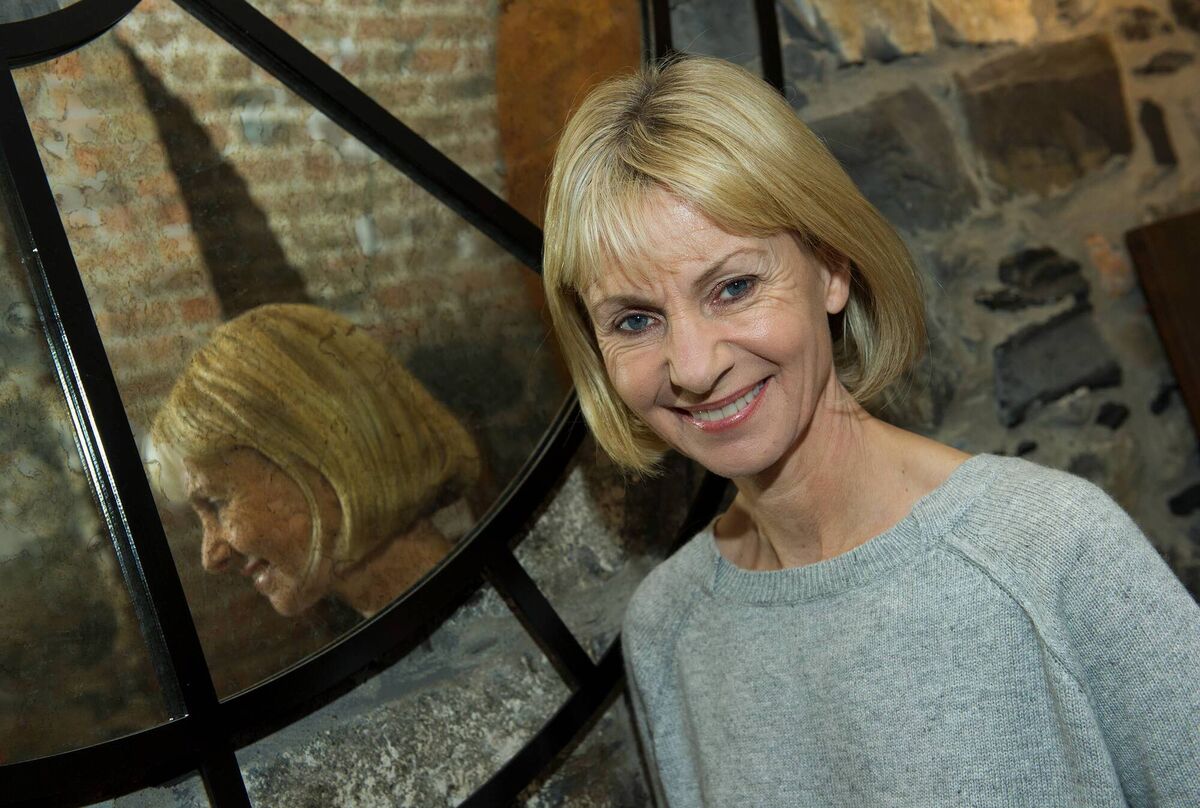
What’s more, there’s a backlog. Work by women, queer practitioners, and people of colour is now welcomed in ways it was not in the past. In 1996 Kate Mosse founded the UK’s women’s prize because her research told her that women represented an average of 10% of literary prize shortlistees.
Most shortlists consisted of fewer than 10 writers. Do the math. These writers and artists are still around, some of them only now getting the chance to publish their first work, have their first shows. They have done so much hard work making space for people of all ages to follow the same paths. The do not deserve to be punished by exclusion.
Across the EU, age is a ‘protected' category. This means that, like sex, gender, ability, and race, age attracts so much discrimination that it is necessary to legislate for its protection. Why has no one done this?, you’d be forgiven for asking. They have. The problem is, these laws apply to employment.
Although freelance practitioners not in PAYE arts employment (and who is?) rely on grants and awards as a significant part of their income, across the EU these opportunities are governed by little more than guidelines. The UK Equality Act 2010, however, includes provisions that ban age discrimination against adults in the provision of services and public functions (this would arguably cover any arts organisation that is receives any state funding) “unless the practice is covered by an exception from the ban” or “good reason can be shown for the differential treatment (‘objective justification’)”. I have yet to see an ‘objective justification’ put forward by any arts organisations for excluding over 40s (rather than, says, over-33s or over-58s).
If you run an opportunity with an age limit, you are also contributing to a system of discrimination that actively combats the aim of ‘diversity’ that so many organisations aspire to, including and beyond age diversity. If you insist that they schedule their achievements to your timescale, you are unlikely to have many disabled applicants, or many single parents.
Luckily, as most age limits are entirely arbitrary, there’s a very easy solution.
Replace the word ‘young’ with the word ‘emerging’. Some organisations, for instance the Turner Prize, the UK’s biggest visual arts award, abandoned its upper age limit in 2017. “We want to acknowledge the fact that artists can experience a breakthrough in their work at any stage,” said the prize’s chair, Alex Farquharson, in . It’s more than time for others to follow suit.
How do you define ‘emerging’? Some grants, for example the Irish Arts Council’s Next Generation Award asks candidates to self-define. Or perhaps you might want to rethink the whole idea of only supporting practitioners at the beginning of their careers: there are also excellent arguments for funding mid-career artists who are left floundering as the opportunities for those past their debut dry up.
One of the most difficult things I’ve encountered running @noentry_arts is that arts organisations don’t understand the harm they are doing. That’s how you can help. Make your voice heard on this issue. It’s as simple as commenting on a post, writing a tweet, talking to a friend. You don’t have to be confrontational. It’s enough to ask for change. The more people do this, the less acceptable ageism will become.
Why should you bother? There is more to this than just who gets a grant or (sometimes only) a fancy photoshoot. Visibility is central to what the philosopher, Judith Butler called “grievable” lives. If we don’t see ourselves and hear our stories, if our narratives of ageing and old bodies are ignored, so are our lives. If they are disposable, so, ultimately, are we.