Liv Preston: Digging deep with underground art at the Glucksman
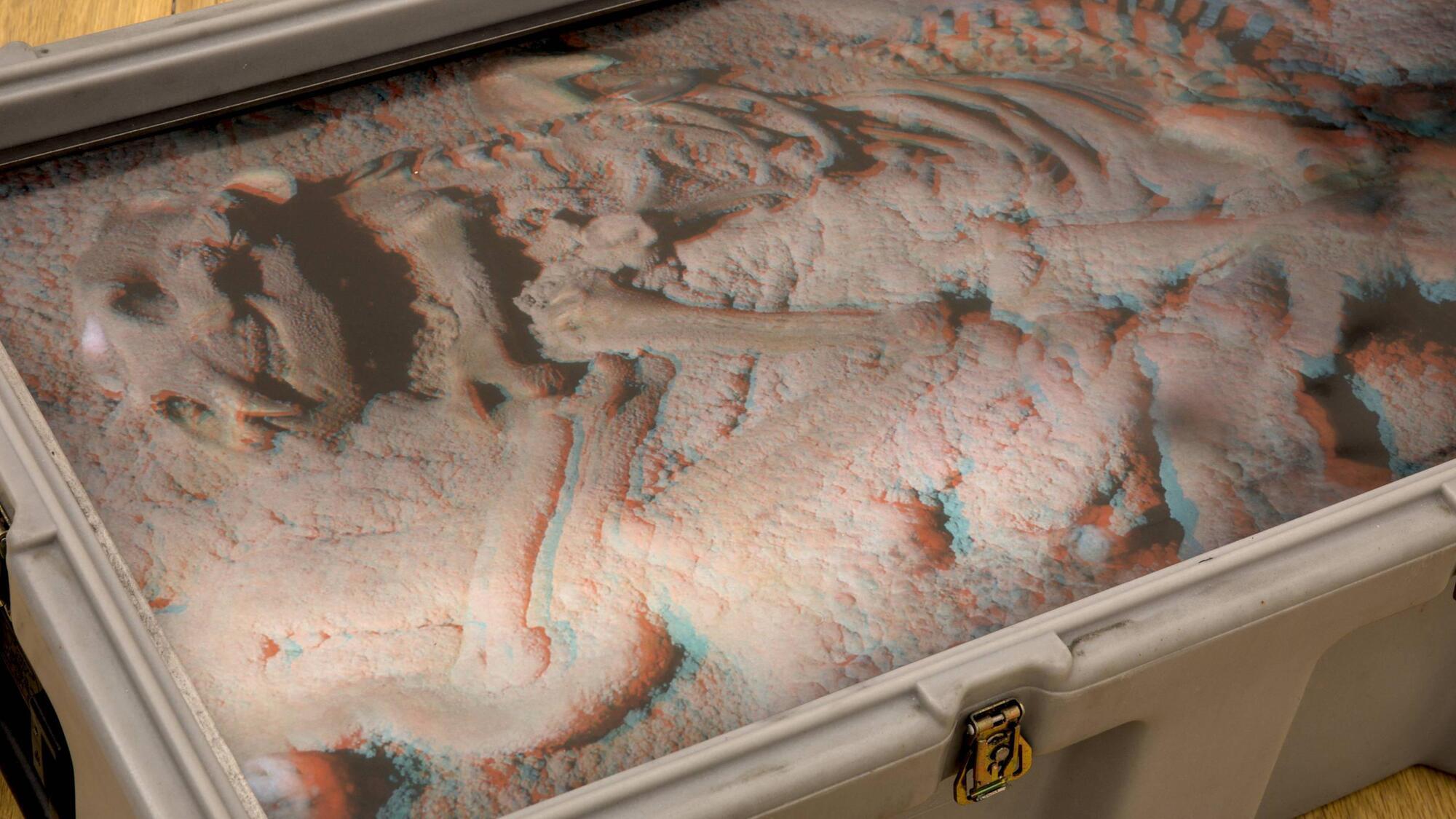
Liv Preston's Anaglyph, part of Hollow Earth at the Glucksman, UCC.
The English scientist Edmond Halley was right about a great many things, not least the orbit of the comet named in his honour. But he could also be mistaken. Hollow Earth: Art, Caves and the Subterranean Imaginary, the new exhibition at the Glucksman Gallery in Cork, is at least partly inspired by his belief that the Earth is hollow, or – more specifically - comprised of a series of concentric shells.
Halley was not alone in speculating on what lies beneath, of course. Just as the underground has fascinated philosophers and scientists, and featured in every religion and mythology known to man, so too has it intrigued generations of visual artists. Hollow Earth features work by 37 creatives, ranging from the 18th century painter Joseph Wright of Derby to the 20th century masters René Magritte, Henry Moore and Barry Flanagan, and contemporary makers such as Amanda Coogan, Ailbhe Ní Bhriain and Liv Preston.
Preston, a graduate of Leeds College of Art and the Royal Academy of Art in London, has contributed work inspired by her interest in caving. “I grew up in west Yorkshire,” she says. “The landscape is full of caves, largely due to the geology of the area. But also, at the height of industry, lots of subterranean networks were built. The first house I grew up in had an underground tunnel that connected all the terraces together under the street. If you live in a place like that you’re more likely to get into underground exploration.”
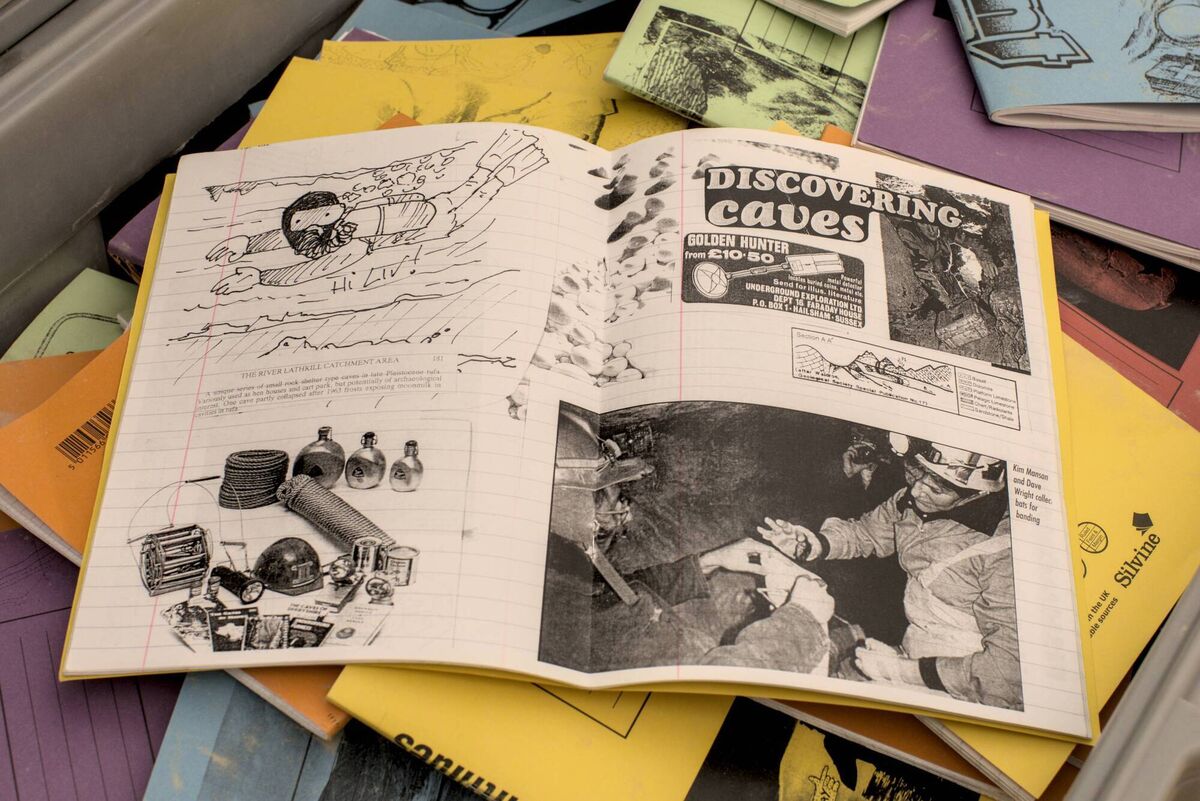
Caving is a relatively recent phenomenon, but the hobby has generated a slew of magazines and comics, which Preston has collected keenly. “When groups of people that are passionate about a specific topic generate these kind of things you get some really cool results,” she says.
“Caving is a great example because it's so hard to document, and progress can be slow. A lot of the caving literature is home-made, so it's probably been processed on the local library photocopier, and this presents the information in a really particular way. There's a lot of space in that to reflect on local history, storytelling and humour, and often it ends up being the only kind of archive in existence.”
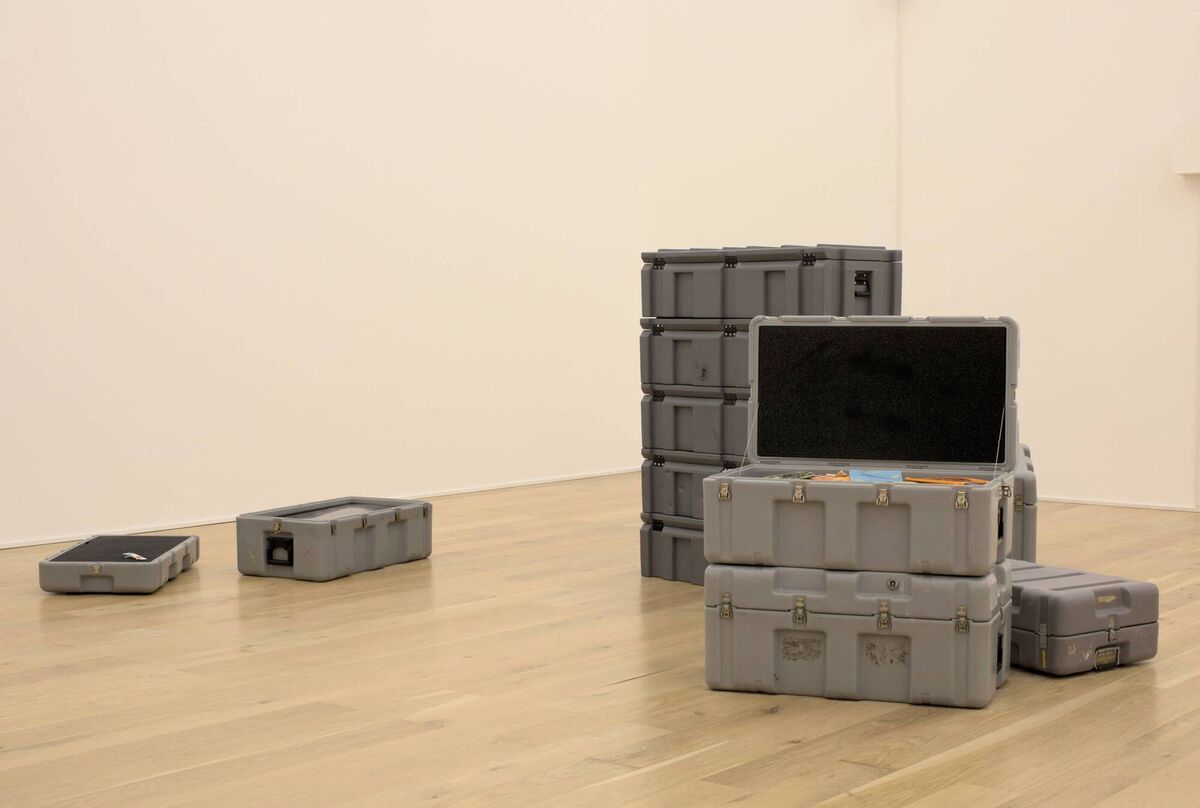
Preston’s work in Hollow Earth utilises ex-Ministry of Defence Pelican Hardigg package cases as a means of displaying her work. “These are really popular with hobbyist communities,” she says. “They’re favoured by cavers for transporting gear as they are tough and can survive the underground conditions.”
One of the cases contains school exercise books, the kind those of a certain age would have completed written and visual projects in as children. “This is an attempt to process the information and images in the caving relation publications I’ve collected,” says Preston. “Every book contains photocopies taken directly from the original material, producing a kind of randomised set of drawings. The process relates to the kind of hobbyist modes of making I’ve mentioned before, but also embraces the informality that you might find in a real child’s exercise book. I was always drawing all over my books in class, and I remember the coolest teachers would always let you decorate your subject book.”
Another case contains the kind of random material that might be found at the bottom of a canal or a pit. “The objects are a mix of quite everyday items and others that may be more unexpected, such as a dog skull. They’re all cast in sandcast metals to replicate the process of calcification. It’s a kind of physical cartoon of a scene, something you might find in a comic or D&D manual, and reminiscent of a pile of treasure.”
A third contains an anaglyph, which superimposes two images to create a kind of 3D effect. “Anaglyphs were quite big in the ’90s," says Preston. "There’s still a nostalgia around them, but they’re very easy to make yourself. The one I've used is an anaglyph of the skeleton of a Palaeolithic cave bear produced by the caver Paul ‘Footleg’ Fretwell. Sadly, the skeleton was destroyed by people stealing its bones. I’m interested in how Footleg’s image is now the only ‘semi-real’ version of the skeleton, and in his choice to portray it like this.”
The Hollow Earth exhibition has toured a number of venues in the UK before coming to the Glucksman. At each, Preston has changed up which cases are open and closed.
“I’m interested in that kind of infinite imaginary space,” she says. “Speculating what could be inside the closed case is as important as what you can see in the open ones. The closed cases are about playing with or suggesting what could be inside. Because you can’t draw a definitive conclusion, it allows you certain freedoms. If you’ve read about Schrödinger’s cat, it’s a similar principle.”
As an artist, Preston has always leaned towards producing objects. “I make work across many mediums, but I think it all has a kind of sculptural sensibility,” she says. “It’s hard to pin down specific influences because I feel like there are so many, but if I’m being honest I’d say video games probably influenced me more than anything.”
Preston is delighted at how Hollow Earth features such a diverse range of disciplines, from painting and sculpture to film and sound. “There are tons of incredible things in the show,” she says. “But I really love the Gordon Parks photographs, and the subterranean maps of Nottingham. My family is from there and worked in the mines, so it was great to learn more about that history.”
- Hollow Earth: Art, Caves and the Subterranean Imaginary runs at the Glucksman Gallery, UCC, Cork until July 9.Further information: glucksman.org