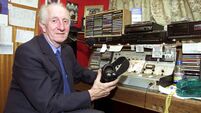
Book Review: Paul Fischer puts the spotlight on The Man Who Invented Motion Pictures

Paul Fischer author of The man Who Invented Motion Pictures
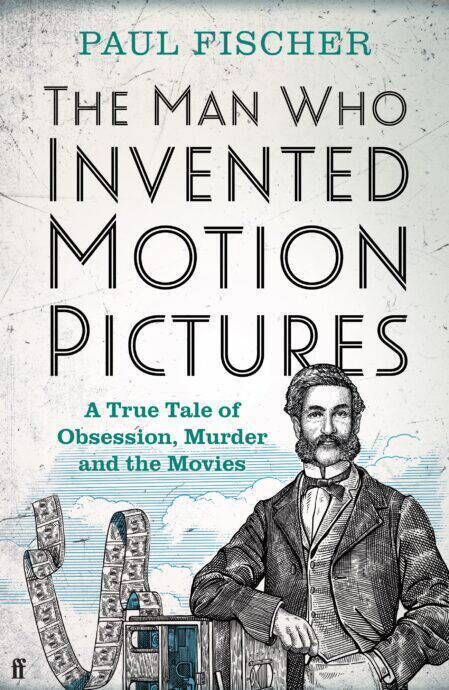
- The Man Who Invented Motion Pictures: A True Tale of Obsession, Murder and the Movies
- Paul Fischer
- Faber & Faber, €15.99
When, in December 1895, Auguste and Louis Lumière showed a film in a Paris café of a train charging straight at the audience it sent punters shrieking out of the screening room.
The Lumière brothers made the film using the camera they had invented, the Cinématographe, and the realism of the new medium disorientated some viewers.
In debates about the birth of cinema, proponents of the Lumières are on one side.
On the other are advocates for Thomas Edison.
In New York in April 1894, Edison — the inventor of the telegraph and the light bulb — showed moving pictures on his peep-show device, the Kinetoscope.
But cinema’s real origin story is much more complicated — and more controversial.
On October 14, 1888, Louis Le Prince, a Frenchman living in Leeds, shot the world's first motion picture.
Two years later and just weeks before Le Prince was about to publicly unveil his camera and projector, he boarded a train in France and then vanished.
He was never seen or heard from again. Le Prince’s body was never recovered.
His wife, Lizzie, and family believed that Edison — the world’s most famous inventor — had ordered Le Prince’s kidnapping and murder.
During a sensational lawsuit in 1898, Le Prince’s family accused Edison of theft, fraud and perjury.
“I don’t care so much about making my fortune as I do for getting ahead of the other fellows,” Edison said in 1878.
By then, the American was already wealthy, internationally recognised, and had earned a reputation for stealing credit for other people’s inventions.
Le Prince’s eldest son, Adolphe, insisted his father had been “eliminated”.
Adolphe appeared in the motion picture that Le Prince recorded in 1888 — the first film ever made.
Yet the US courts ultimately ruled in Edison’s favour.
He was effectively confirmed as the inventor of cinema, a new artform that was as momentous as the printing press in changing the world and that made Edison a fortune.
Two years after the verdict, Adolphe died by suicide.
Splicing forensic rigour with narrative tension, rescues Le Prince from the margins of history.
Reconstructing Le Prince’s life and the rivalries that shape today’s film industry, Paul Fischer reveals how his subject succeeded “like a conjurer, in willing light, time, and silver to combine into a force that could capture life itself”.
Fischer, an author and film producer, paints a detailed portrait of Le Prince, a tall, soft-spoken polymath who trained as a chemist.
A combatant in the Franco-Prussian War, he moved to Leeds after marrying Lizzie, the daughter of a wealthy foundry family, who described him as “reflective” but also impatient.
Le Prince emerges as imaginative, restless and self-willed.
Before setting out to create his motion-picture camera, he’d never invented any machine.
His pursuit pushed him into debt — he worked relentlessly, without any help, on his idea and spent all his money on it.
When he disappeared, Le Prince’s brother, Albert, owed him a large sum of money.
Albert was the last to see Le Prince alive when the latter stepped onto a train for Paris at the Dijon station.
Fischer plausibly suggests Albert, though never investigated, is the prime suspect in this still-unsolved puzzle because of his financial indebtedness to Le Prince, his delay in reporting his brother missing and the lies he told about trying to find him.
Written with the immediacy and dramatic twists of a blockbusting thriller, Fischer vibrantly commemorates Le Prince as the forgotten pioneer of cinema in the story “of a man who foresaw the world to come but did not live to see it materialise”.