Theatre review: Cathy Belton shines in Ibsen's Ghosts
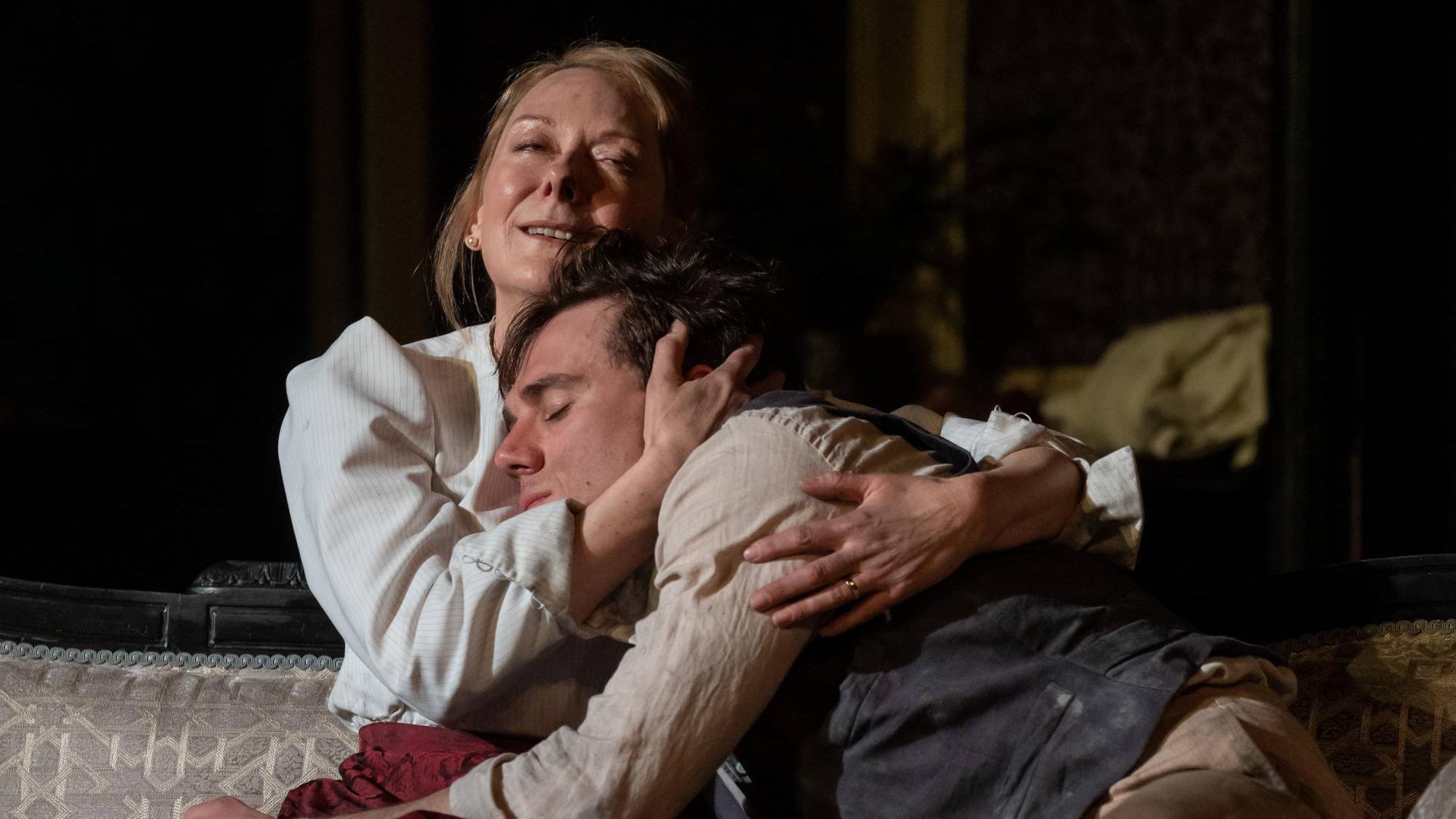
Cathy Belton and Calam Lynch in Ghosts at the Abbey Theatre. Picture: Patrick Redmond
- Abbey Theatre
- ★★★☆☆
“Deplorable”, “loathsome”, “an open drain”: such were the scandalised contemporary reactions to Henrik Ibsen’s 1880s play, and its frank treatment of sex, venereal disease, euthanasia and moral bankruptcy.
That shock factor is something we can only imagine now. And while we shouldn’t allow ourselves to smugly condescend to pearl-clutching Victorians (we have all too many of our own taboos and blindspots), that we’re not surprised by hypocrisy or patriarchal societal constraints makes the play for us a different proposition.
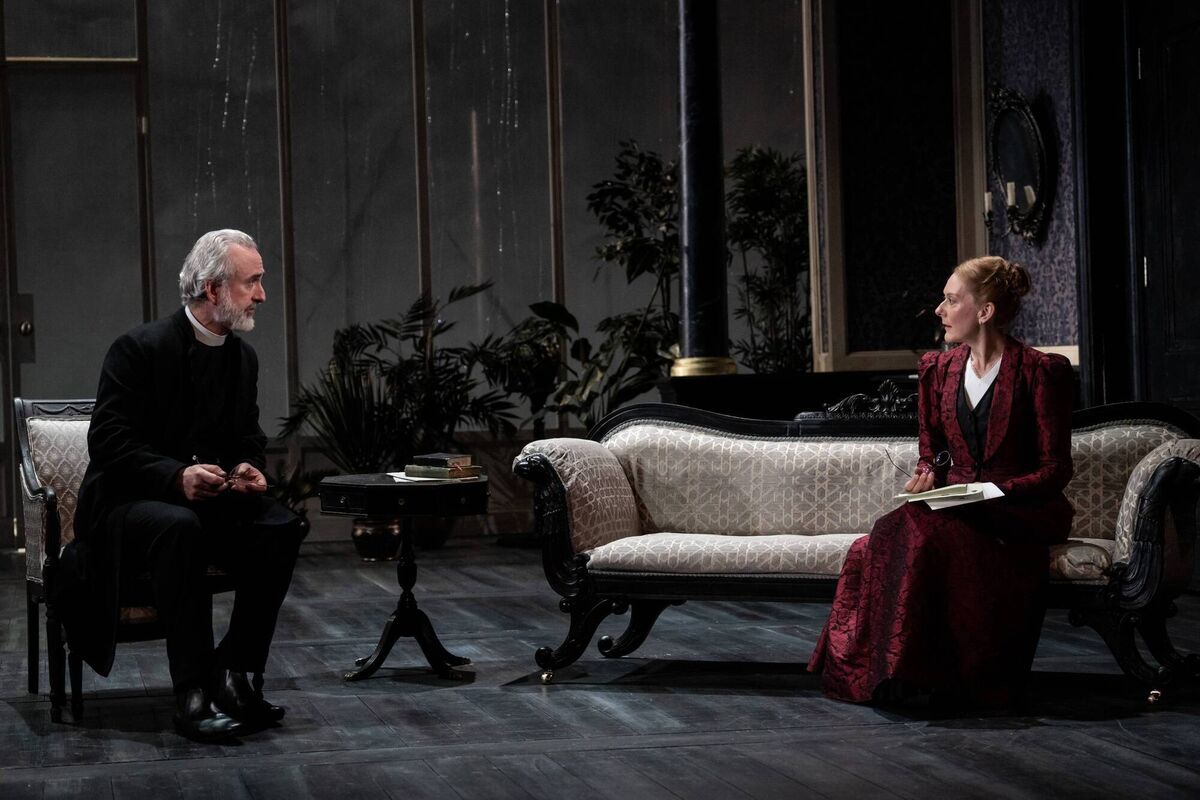
In Mark O’Rowe’s new version, for Landmark Productions and the Abbey Theatre, he avoids any temptation to overtly modernise, or seek easy resonances. Instead, he presents the historical context, relying on the actors to make the world live, and bring us imaginatively into it. Declan Conlon, in this approach, is an ideal candidate for Pastor Manders, to whom he manages to give a recognisably modern dimension. He exudes no genuine moral conviction, but rather a veneer of respectability that suggests inner conflict and doubt. He’s a man with a past, compromised, in no way the centre of righteous authority, even if he wants to be.
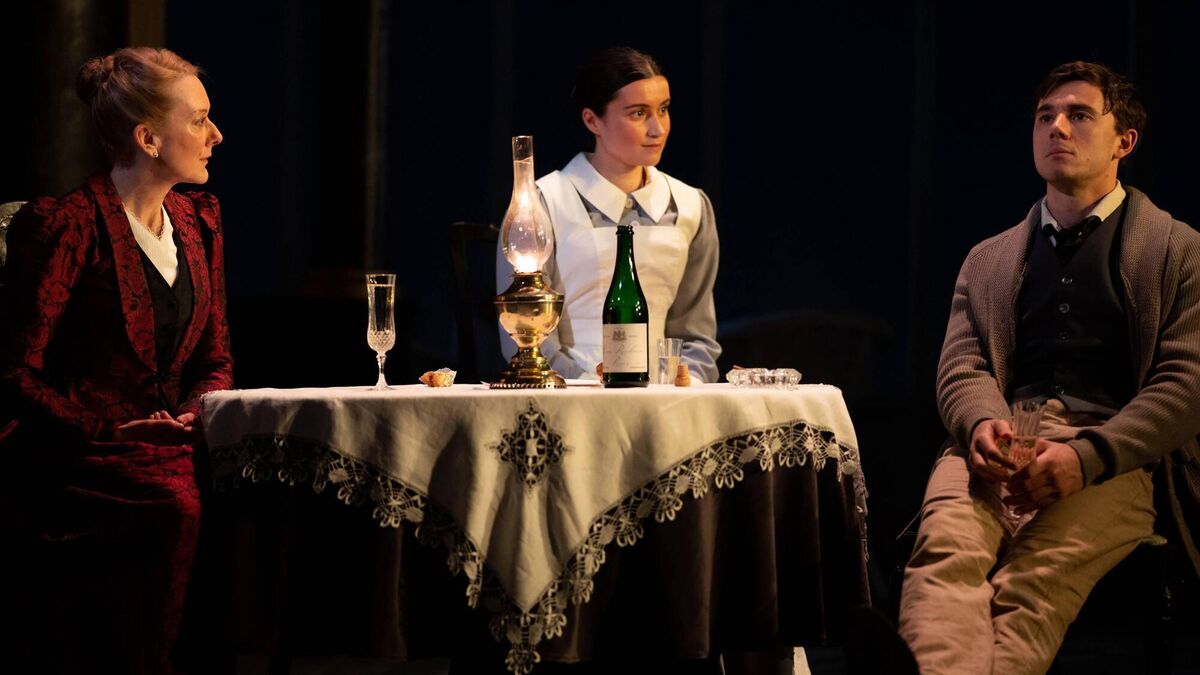
But the play belongs to Helena Alving, played here by a superb Cathy Belton. Ibsen wrote that “after Nora, I had to create Mrs Alving”. The former fled the family home in A Doll’s House; Mrs Alving is the woman who stayed – stayed for 19 years with her late husband, an odious, adulterous drunk. She was once guided to choose respectability by Manders, but when we meet her, she’s armed with iconoclastic views, reading the wrong sorts of books, and rejecting the “stupid ideas that one generation passes on to the next”.
She’s not shy telling Manders all this. But she’s nonetheless decided that her bid for symbolic freedom should involve the pastor. She’s using Mr Alving’s money and name to establish an orphanage with his help. But shirking the ghosts of the past is not that easy in Ibsen’s harsh world, where the sins of the father are visited upon the son, in this case Oswald (Calam Lynch), an artist returned from Paris and doomed by inherited syphilis.
That secret, and others that darkly bind the Alvings, and the servant girl Regina (a bright Simone Collins) and her father Engstrand (vividly played by Lorcan Cranitch), are revealed over the course of a day with all the heavily ironic inevitability of Greek tragedy. AT times, key moments are clearly foreshadowed, reducing their impact. There is a pleasing unity to Ibsen’s structure, it’s true, but it veers close to clunky plotting at the same time. It’s a paradox O’Rowe can’t always overcome, though his understated dialogue for the most part reins in the melodrama.
This is a handsome production. Francis O’Connor’s elegant conservatory risks almost being too spacious and thus dissipating the tension. But the incessant streaks of rain, and the shadows of nearby ships’ masts, like looming crucifixes beyond the windows, create a sense of enclosure, of society’s intrusion. The thin window mullions between the tall glass panes, meanwhile, become almost like iron bars. The bourgeois home here is no refuge, but a prison. The sense of time passing is artfully conveyed by Sinead McKenna’s shifting light, from grey and overcast, to a final bright dawn that proves heart-wrenchingly false for Helena and Oswald.
- Until May 13