Brian Bourke, 87: 'As an artist you need that ferocious independence'
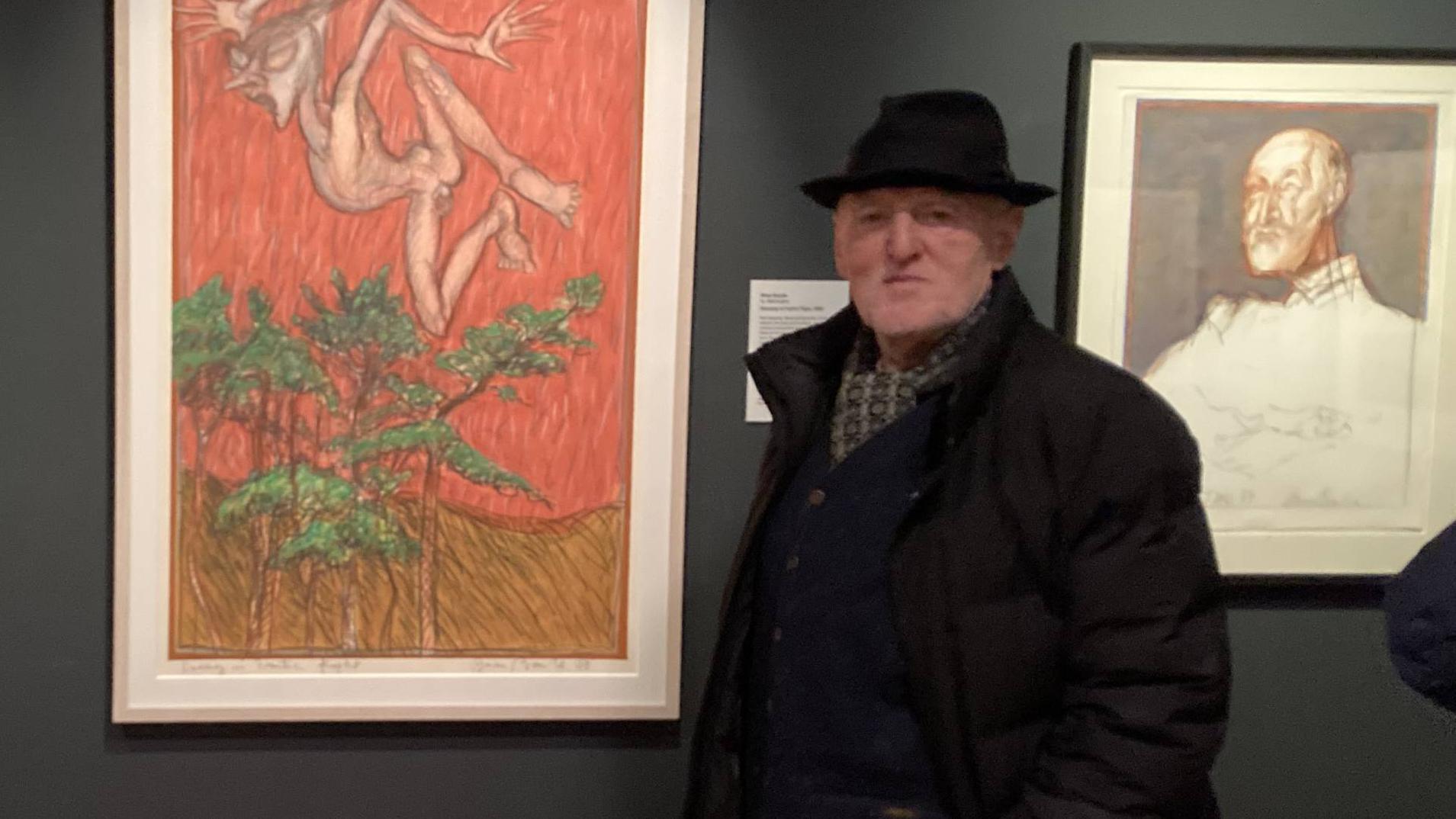
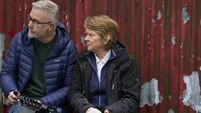
Brian Bourke at the National Gallery.
At 87, the artist Brian Bourke still has a work ethic that belies the non-conformist nature of his calling. “If the weather was a bit better,” he says. “I’d be out in the landscape. As it is, I’m in the studio every day. I have work left over from years ago that I’m looking at again. I’d like to think I’m advancing all the time, but I do find – in spite of myself – that I circle back to the same ideas.”
Bourke is celebrated as a painter and sculptor, but it is his works in pastels that are currently on show, alongside those by Edgar Degas, Jean-Francois Millet and Rosalba Carriera, at an exhibition called Pastel Revealed at the National Gallery of Ireland.
“I like to mix up my media,” he says. “I might base pastels or paintings on old drawings I’d find in the studio. You have to be careful not to destroy one medium by using another on top of it, of course. Pastels, ink and pencil are fine together, as long as you use good quality paper.”
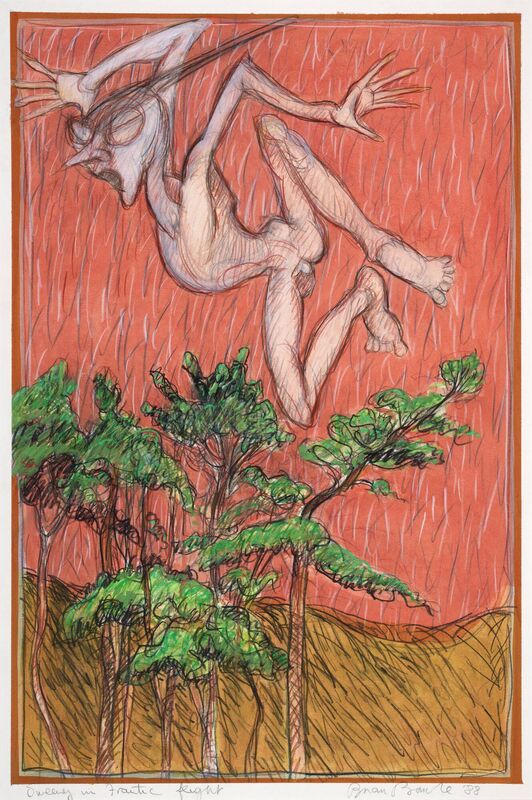
Bourke has produced some extraordinary – and decidedly unflattering - self-portraits, as well as portraits of family and friends, such as the late Tony O’Malley. But he may well be best known for his imaginings of mythological and literary figures, such as Mad Sweeney and Don Quixote. His interest in Sweeney was piqued by his reading of Flann O’Brien’s absurdist novel, At Swim-Two-Birds, which features a translation of the Middle Irish romance Buile Suibhne, an account of the king who went mad and thought he was a bird.
“When you read a book like At-Swim-Two-Birds, you see the world as a more magical place,” says Bourke. “Coincidentally, I took out an old drawing of Sweeney just now. Sweeney was always in flight, and that’s why I didn’t paint him in oils. He was constantly moving, and the images worked better in pencil and pastel.”
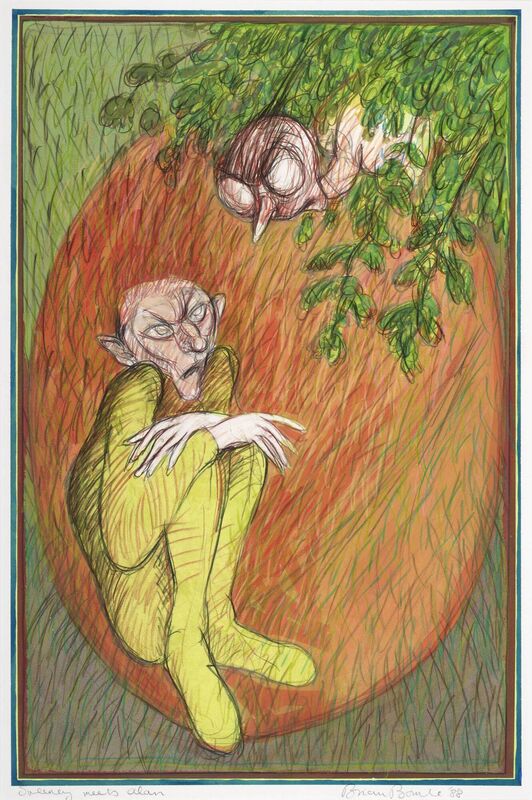
His interest in Sweeney is such that he once rented a cottage in St Mullin’s in Co Carlow, the place where the bird-king is reputed to have died. “St Mullin was real,” he says. “He built a little church that’s mentioned in At Swim-Two-Birds, and it’s still there. That’s where Sweeney is supposed to have been speared to death by a jealous farmer whose wife was feeding him.”
Asked if he sees much of himself in the peripatetic Sweeney, Bourke remarks on how, “over the years, some subjects have pursued me. Sweeney is one. Don Quixote is another. They’ve both brought me great joy. But I’d be flattering myself if I thought I saw myself in these characters.”
Bourke is from Dublin originally. “Dublin has great elements to it,” he says. “And it still follows me around. My family were not native Dubliners. Not many people are, they come from all over. In my case, they came from Mayo and Connemara. The shawlies you’d see about Dublin when I was young, they came in from the west.”
He studied at the National College of Art and Design in Dublin, and then at St Martin’s School of Art in London, staying on for a spell thereafter. “I did all sorts of jobs,” he says, “but I was always drawing. I’d have a sketchpad to hand, and I kept scratching away at it. It was a habit from childhood, just like some people pick their nose. I’d sketch in cafés and working men’s tea rooms, just collecting images.
“When I came back to Dublin, I started working alongside other artists like James McKenna and Michael Kane and a few more. We hadn’t a brass farthing between the lot of us. I had a lot of arguments with James McKenna, which I always won, because it’s true; there is no God.”
Leaving Dublin again, Bourke moved to Kilkenny and Clare, and then on to Galway, where he’s long settled with his wife, the artist Jay Murphy. The West of Ireland has always attracted artists; another exile was the late Camille Souter, who settled on Achill Island, Co Mayo. Bourke was a great admirer of her work.
“I knew Camille well,” he says. “My daughter married her son. Camille always worked off her own bat. She was such a perfectionist, she would not show anything unless it was her best, and she’d often destroy work. In Camille’s case, you’d always have to respect the integrity of her choices.”
Bourke shows regularly at the Taylor Galleries in Dublin. His last solo exhibition was Infinite Jest, in May 2022. “I have a show at the Taylor every few years,” he says. “Next March, Michael Kane and I will be there with a joint exhibition. We don’t see that much of each other, Michael and I, but we’re had sort of parallel lives.”
Bourke is a member of Aosdana, and is understandably proud of Brian Bourke: Five Decades, a book on his oeuvre produced by Lilliput Press in 2010 that includes essays by Séamus Heaney and Frank McGuinness, amongst others. Otherwise, he seems indifferent to critical accolades.
“The danger of being lionised,” he says,” is that you can end up making work that panders to your public instead of making the real work, the work you do for yourself. As an artist – whether you’re a painter, a poet or a dancer – you need that ferocious independence if your work is to be any good. Other people’s opinions shouldn’t matter a damn.”
- Pastel Revealed runs at the National Gallery of Ireland until June 5 Further information: nationalgallery.ie