Horror over Tuam and a love of nature inspired Majella Kelly’s late love affair with poetry

How Majella Kelly found peace in poetry with her debut collection, writes Ellie O’Byrne
Horror over Tuam and a love of nature inspired Majella Kelly’s late love affair with poetry

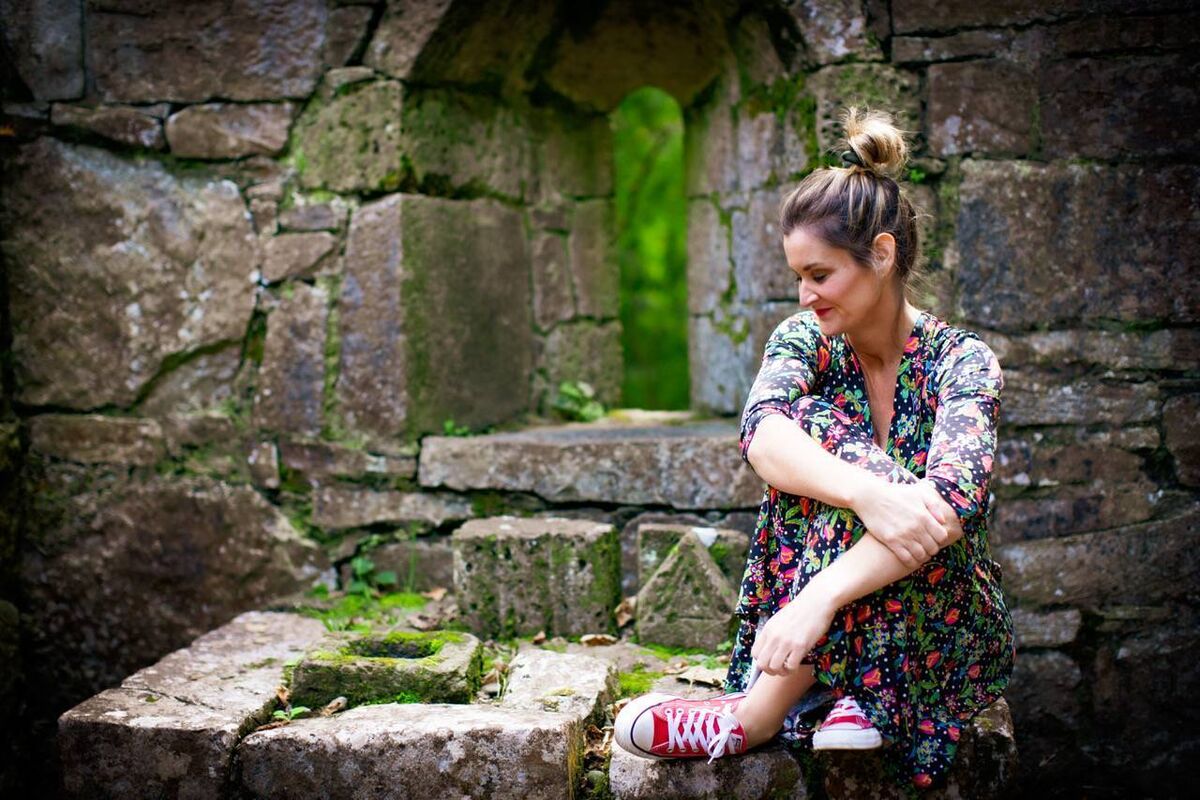
Majella Kelly: 'I see God in Nature - but if I go into a church, I feel angry'. Pic: Ethan Leon

Poet and teacher Majella Kelly’s break-up with the Catholic Church was more of a slow souring over time, a serious of painful realisations, than a dramatic show-down.
“I was quite a good Catholic at one time, would you believe?” she asks with a laugh. In fact, when Majella went to college to do European studies in UCC in the late 80s, she was a regular mass-goer.

“Myself and a couple of friends even used to call into the Poor Clares and give them petitions before our exams,” she says. “I went to Lough Derg; you know, that pilgrimage where you don’t eat and don’t sleep for three days? I did that.

“It’s bonkers, isn’t it? But it’s amazing what you do when you are actually included in the group and seen as valued.”

But more than a decade later, following the breakdown of her marriage, as a young divorcee raising her son alone, it came to the time when she felt ready to say: “It’s not me, it’s you” to the Church. She had already stopped going to Mass, but her son had had his communion and confirmation, and had even been an altar boy.

“I was a virgin when I was in college: I was still doing things right in the eyes of the Church,” she says. “As soon as I started doing things wrong, their view of me changed. I thought: ‘I’m not really welcome here anymore, and you know what, I don’t want to be part of this because I don’t agree with so much of it.’

“It wasn’t dramatic. It was a gradual thing. I remember being in Cork at my goddaughter’s christening and someone mentioned that divorced people are not allowed to get communion, and I think I’d already gone up to get it — I remember going: ‘Really?’. That might have been a moment where I went: ‘OK’. I feel like I was very quietly pushed out and then turned around and went: ‘Hey, feck you’.”

Majella’s position as a single mother, raising a son with the assistance of her parents while working two jobs, made her particularly prone to dwelling on a series of painful revelations relating to religious orders in her town. She comes from Tuam, Co Galway.

'THEY DIDN'T DO ANYTHING WRONG'

When news stories began to come out regarding the discovery of the remains of babies and children found in a former septic tank at Tuam’s mother and baby home, where the Bon Secours sisters had taken in unwed mothers between the 1920s and the 1960s, she found herself heavily affected by the stories, by the idea that in a different era, she probably would have been considered no different to the women who found themselves in the home.

“Definitely it’s because I was a single parent as well,” she says. “I wasn’t put behind high walls, but at another time I could have been. So it resonated very deeply with me.

“I really identified with the women who were put into these homes. They didn’t do anything wrong, and their children — who were called illegitimate and bastards — they didn’t do anything wrong. I was very angry, and I actually don’t get angry about a lot of things: I’m usually really even-tempered and easy-going. It just infuriated me. That bubbled up in the poems, definitely.”

Coinciding with the series of successively more disturbing reports from Tuam’s former mother and baby home, Majella, at the age of 40, had begun writing poetry: she did a creative writing course in what was then GMIT, attended workshops and readings, and quickly began to make a splash with her poems, which come laden with rich, sensual imagery from the natural world.

By 2018, she was doing an MA in creative writing in Oxford University, and in 2019 she won the Strokestown International Poetry Prize.

Majella Kelly: 'when everything was not rosy in the garden, things started churning'.

Although she says it’s not a story of overnight success, it did mark a dramatic shift in Majella’s life: she has taught in St Coleman’s College secondary school in Claremorris Co Mayo for 25 years, and had been juggling this with a photography business she founded with artist Lola Donoghue.

Her late-blooming love affair with poetry was, she says, “like a companion for me. There was something missing, and it filled a gap. I was a single parent and my son was 10 or 11 when I started writing. I’d been on my own for a long time because I’d been separated since he was a baby. All my energy was going on him, and as he began to get more independent, I think I was looking to fill a gap and explore my feelings.

“You know the way poets are always full of angst and stuff? I was never that person,” she says. “I had a fairly normal, happy childhood and there was nothing driving me to put stuff on the page, but then when not everything was rosy in the garden, things started churning, and I think they found a channel in the poetry.”

'YOU DON'T HAVE TO UNDERSTAND'

Now Majella is anticipating the publication of her first book of poems, The Speculations of Country People, in early April.

The poems in the collection have, as subject matter, the Tuam mother and baby home, but also ruminations on rural living and the natural world, frequently from what seems more like an animist than a pagan perspective: ‘Virginia Creeper’ observes the Mother and Baby home from the perspective of a wall-climbing plant; in ‘There Go I’, a female hare observes that none of her leverets are illegitimate, regardless of their paternity.

Memories of an idyllic early childhood on her grandparents’ farm, the sense in her work of revelling in the natural world, forms a contrast to the view of rural Ireland as a place governed by the kind of rigid religiosity and moral hypocrisy that gave rise to mother and baby homes.

“I hope the positivity is picked up in the book, because I have a very close connection to the land and to nature, and that’s kind of superseded that whole dogma and the heavy religious influence and brought me back to a bit of a pagan ideology,” she says.

“If I’m standing on a bridge watching a trout jumping up a river, to me, that’s proof there’s a God, looking at that trout impossibly trying to fight backwards up a river. I see God there — but if I go into a church, I just feel angry.”

As an English teacher, Majella is keenly aware that poetry can feel off-putting or inaccessible to some readers, because she encounters it with her students.

“I’ve taught poetry for years, and I hear the groan at least once a week when I say: ‘We’re doing poetry today’,” she says with a smile. “I know the general reaction to poetry is negative. So what I would like would be if some people come to my book who have never read poetry before, if they can leave behind the whole ‘I don’t understand poetry’ thing. It doesn’t matter: you don’t have to understand.

“If you like one line, or get one feeling from it, or have one thought that takes you someplace else, then that’s OK. Often with my students, I ask them to just let the poem wash over them, not to analyse it or ask what the poet meant or anything like that.

“So if I bring some people to poetry who have never been interested in it, that would be brilliant.”

  • ‘The Speculations of Country People’ is published by Penguin

x

More in this section

Scene & Heard

Newsletter

Music, film art, culture, books and more from Munster and beyond.......curated weekly by the Irish Examiner Arts Editor.

Cookie Policy Privacy Policy Brand Safety FAQ Help Contact Us Terms and Conditions

© Examiner Echo Group Limited