Dirty Laundry author Disha Bose on living in Ireland and how she made West Cork her home

One of the main characters in Disha Bose’s highly anticipated debut thriller moves from India to a small Cork town, just as the author did herself. Here, she writes about her own introduction to life in Ireland, and making West Cork home
Dirty Laundry author Disha Bose on living in Ireland and how she made West Cork her home

Disha Bose: has fallen in love with living in Ireland. Pic: Emma Jervis

Never, not in my wildest dreams, had I imagined living in Ireland. When I left India, I’d built romantic notions of sharing an aesthetically pleasing loft in Manhattan with a group of stylish best friends, or blending into the corporate crowd walking across Tower Bridge in long wool coats, but never had I pictured myself having grown so accustomed to Irish country living that I barely notice the smell of slurry anymore.
In my early 20s, while I was living ‘the dream’ in London, I met a lovely Irish man. Our first few encounters were at drunken gatherings, but when I was clear-headed in the mornings, I was convinced he had a gentle soul and good manners. Less than a year after we had met, we moved to Ireland together, and he insisted that I watch all the episodes of Father Ted in preparation.

Our stop was Dublin, where we spent the first year of our life together in Ireland, while I completed a master’s in creative writing at University College Dublin. I was working on a manuscript, and struggling to cope with the massive change in my life.

There were moments, in the damp room we were renting for an exorbitant price, that I wasn’t sure about this decision, of having followed this man to a country where it seemed I couldn’t afford to comfortably live.

But I was falling in love, too. With Bray, and Dún Laoghaire, taking the DART, Spice boxes, the buskers on Grafton St, weekends in West Cork, the newly discovered slow pace of life. So we got married.

We moved to Waterford, in search of more space, and we found it. Now, we had a large house and garden, just a short drive from the beautiful Woodstown Beach. It still felt new to me, how I could wake up to a bright warm day and end up being caught in the rain, lashed by a cruel wind, by the afternoon. 

Four years after I’d moved to Ireland, after I’d been introduced to the concept of a Tayto sandwich, we had our daughter.

THROWING OUT THE RULES

We thought we were so prepared. We’d decorated the nursery, filled a bookcase with board books, attended the prenatal class, and bought a star projector and baby monitor and a puree machine. Our daughter arrived five days early and with a mind of her own.

We might as well have thrown all those parenting books out the window, because she refused to follow the rules. In fact, those books had failed to provide an important footnote: that babies rarely ever follow the rules.

My parents, who were thankfully with us for the first two months, soon returned to India, and my husband’s family were all the way up in West Cork.

We were new to Waterford, with no friends or family, with just the public health nurse and the GP as our support system.

We were convinced we were doing it all wrong, because she refused to sleep, wanted to nurse all day, and if we ever put her on the ground, she screamed the house down. She hated the buggy, despised the car, refused to be bathed, and wanted to listen to the same song on repeat all day long.

With my husband at work, and my budding freelance writing career put to the side, I was stuck pacing the house with a dissatisfied infant in my arms, wishing I could leave, just return to India, to my family. But I wouldn’t make it without my husband, I knew that, too.

Then, just when things were starting to look up — our daughter was more settled, she was beginning to crawl, was sleeping better, enjoyed the outdoors and meeting new people — the pandemic hit. We were thrown into one lockdown after the other; separated from all our family again, prohibited from even driving to the beach, which was outside the permitted travel radius. 

The parent-toddler groups that I could have been attending, which would have given us the opportunity to make friends, were not an option anymore. It was a period of extreme isolation and self-doubt as new parents, of having to withhold from our child the wonders of this world she was only beginning to discover and explore. Like every other millennial parent, we resisted giving into screen time, hadn’t introduced her to the joys of a sugar-high, and we were fast running out of ideas to keep her entertained.

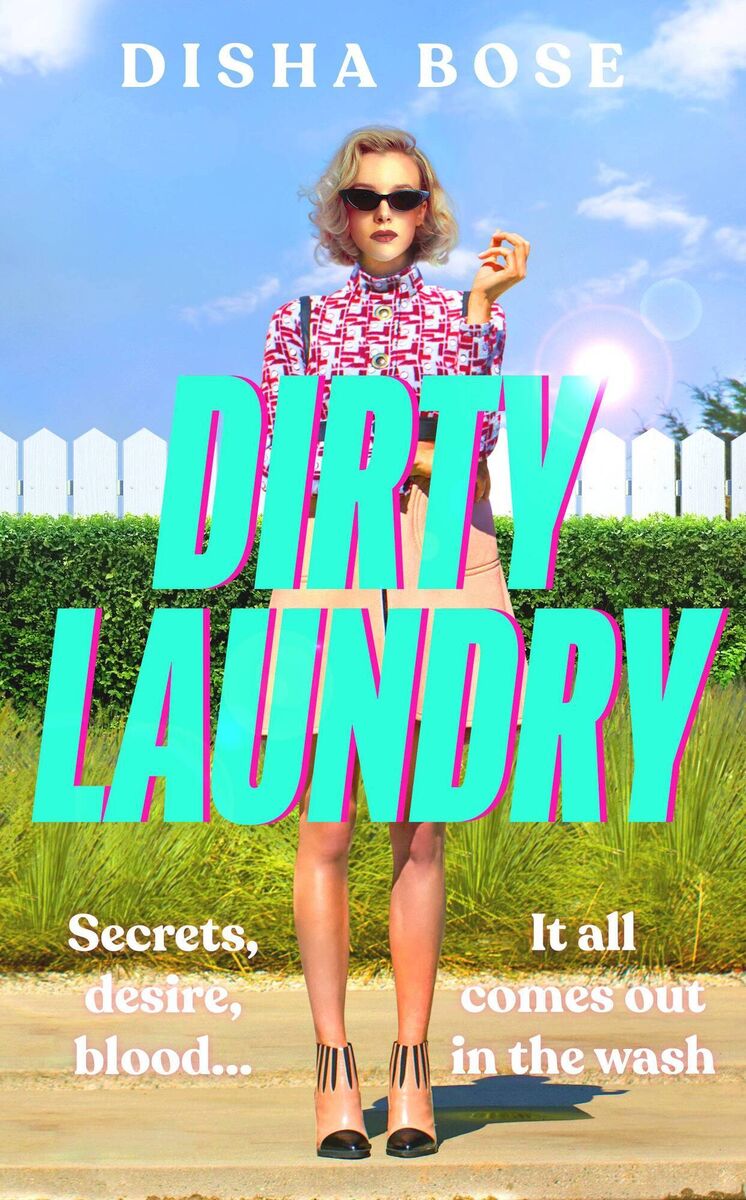
The cover of Disha Bose's Dirty Laundry.

LIFE IN CORK

But we were the lucky ones. We emerged from the pandemic unscathed. Having survived those two most difficult years of my life has rewarded me with a child who is healthy, happy, and kind. And now I have a shared history with everyone else in Ireland: we have lived through the pandemic together, and witnessed the enduring humanity and humour of the Irish people in the face of a global disaster.

We left Waterford soon after the lockdowns were lifted, and moved to Cork to be closer to my husband’s family. Among all the things those years taught us, what has been paramount is the value of family.

We live in a small town just outside Cork City, and I cannot imagine my life anywhere else.

I wave to the farmer every day, who drives his tractor past our house, leaving a muddy trail in his wake. Some days, I wake up and miss the warmth of India, the scent of fresh coconuts in the kitchen, but then my daughter comes in and demands Weetabix for breakfast and I’m glad that this is home.

  • Dirty Laundry is published by Penguin

x

More in this section

Scene & Heard

Newsletter

Music, film art, culture, books and more from Munster and beyond.......curated weekly by the Irish Examiner Arts Editor.

Cookie Policy Privacy Policy Brand Safety FAQ Help Contact Us Terms and Conditions

© Examiner Echo Group Limited