Culture That Made Me: Desmond Morris on Picasso, Brando and a pet chimpanzee
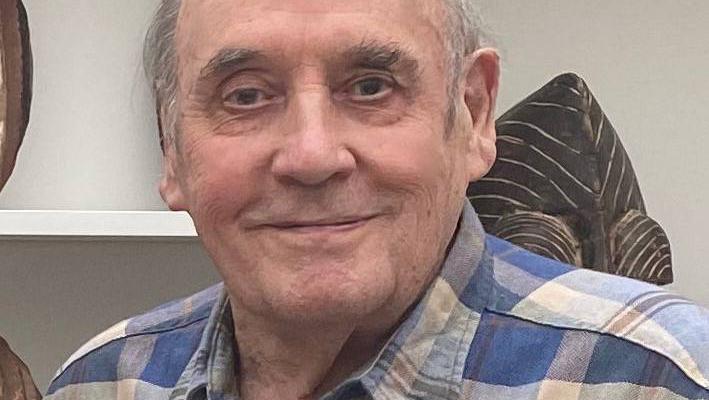
Desmond Morris: The painter behind 'The Naked Ape'.
Zoologist and artist Desmond Morris, 95, grew up in Swindon, England. In 1950, he shared an art exhibition at the National Gallery, London, with Joan Miró. He has presented hundreds of wildlife programmes on British television. In 1967, he published The Naked Ape, his seminal study of human behaviour, which has sold over 20 million copies. In 2019, a year after his wife passed away, he moved to Co Kildare to live. Dún Laoghaire Institute of Visual Art, which is run by his granddaughter Tilly Morris, is his gift to Ireland. See: www.divadunlaoghaire.com
Voltaire’s Candide: or The Optimist is one of my favourite books. I read it in university and I was completely bowled over by it. I was fascinated by the story, which may or may not be true, that he shut himself in a room and wrote it in three days. That is the myth surrounding it. I believed it then. I thought in future when I'm writing something, I'm going to shut myself away and do it quickly. When I came to write The Naked Ape, the book that changed my life, I wrote it in four weeks. If you write fast, it keeps the language understandable.
I was conscripted into the army after World War Two. My boss was at school with Dylan Thomas. Dylan came to stay with him so I was able to spend time with Dylan Thomas. He could hardly say a sentence without it being beautiful. I spent a lot of time just sitting and listening to him. I was very young. He recognised that I was interested in words. He was very kind and helpful. He made a number of suggestions which lasted a lifetime.
My boss was a very short man. When we were having lunch, Dylan Thomas said, “I'm going to compose a poem to our host.” He stuck his fork into a potato and held it up so it looked like a microphone and he said, “Our midget, who art in heaven. Miniature be thy name…” He went right through the Lord's Prayer, changing it to suit a short man, and ended up, “Forever and ever, Tom Thumb.” He did it spontaneously. It just flowed out of him. He was such a great wordsmith.
James Joyce was very important to me. In sixth form, you had to read a passage from the Bible in front of the school assembly. One day, the headmaster said, “Look, we've had rather a lot of Bible readings. They're getting repetitive so you can find a passage from somewhere else.” So I got up in front of the school and read a passage from Finnigan's Wake. I have never seen such an ocean of astonished faces. It's very difficult to read, but I managed it.
At school, I become a rebel, not a destructive rebel, but a creative rebel. I looked for anti-establishment things. I was trained as a schoolboy to become a pilot. Luckily for me, the war stopped before it reached me, only just. The older boys were all shot down in their Spitfires. As a schoolboy, I thought the adult world had gone mad because when I grew up I had to kill people. That's what adults did, so I became a rebel and my rebellion took the form of rebellion in all the arts. I became devoted to surrealism, to modern poets and writers, and jazz.
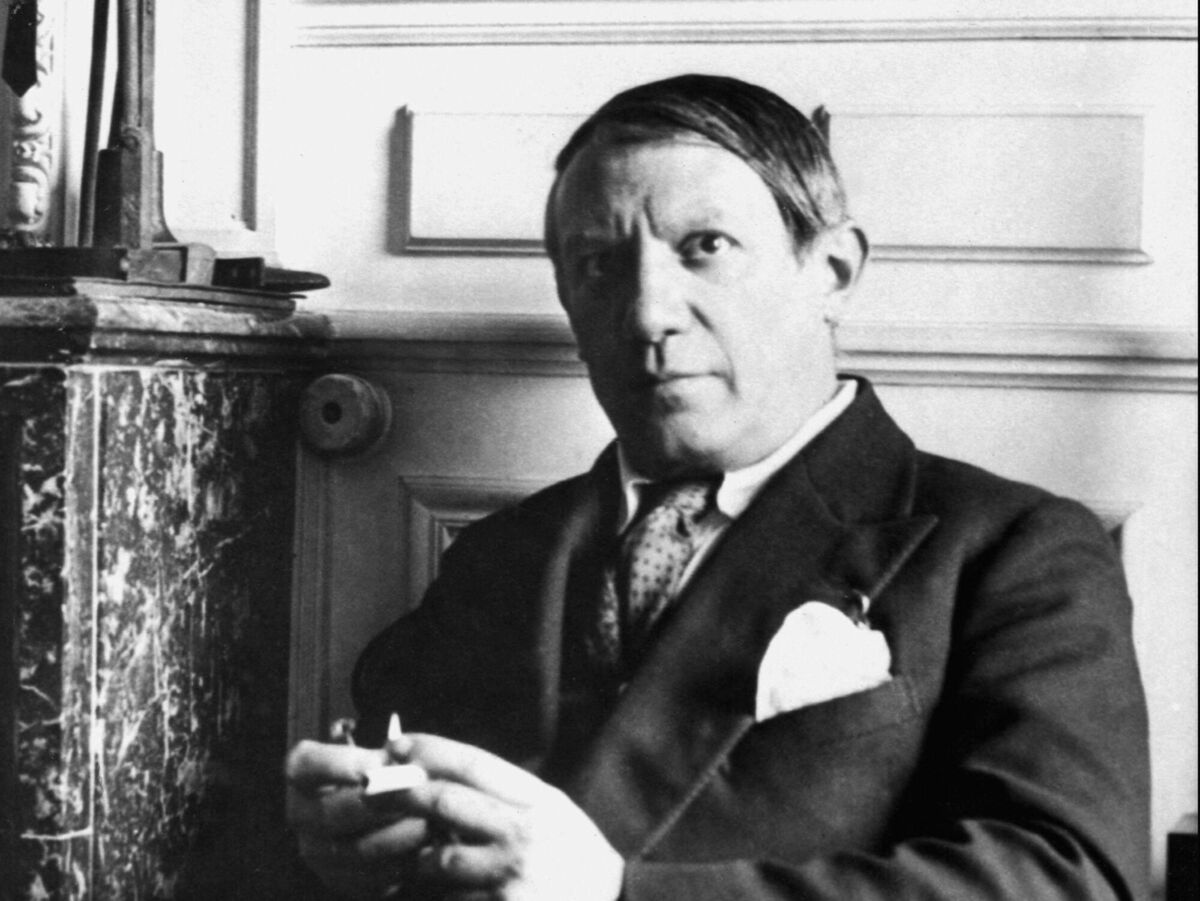
In 1945, I went to London’s Victoria & Albert Museum for a big exhibition of Picasso’s work. It was the first time we'd seen Picasso as a solo artist in London. Before the war, he joined in with the surrealists. This was all the work he did during the war. It was violent. It was incredible. It blew me away. I stood in front of it and thought: how on earth can anyone produce such powerful work? This is a man who has taken art by the scruff of the neck and turned it into something incredibly powerful. He was on exhibition with Matisse, who was a wonderful colourist, but I found his work overpowered by Picasso.
I had a chimpanzee called Congo. I did experiments with him in which I got him to paint pictures. Picasso was given one of these paintings and he loved it. He said, “I understand. The chimpanzee is trying to make shapes and patterns.” It wasn't random. He couldn't make images, but he could make lovely abstract patterns.
A journalist went to see him and said, “What do you think about this chimpanzee painting?” Picasso jumped on him and bit him. It was Picasso's way of saying, “The chimp and I are in the same business.” When Salvador Dalí looked at one of Congo's paintings, he said, “The hand of the chimpanzee is crazy human. The hand of Jackson Pollock is totally animal.”
What I loved about Joan Miró’s painting was that it was completely wild. He himself was not. There is no such thing as an artistic personality. Some artists like Francis Bacon and Salvador Dalí live lives which most of us would think were crazy, but artists like Miró and Henry Moore lived very quiet family lives. Outside the studios, both very down to earth, people with no artistic temperament at all, but once they got in their studio they took off.
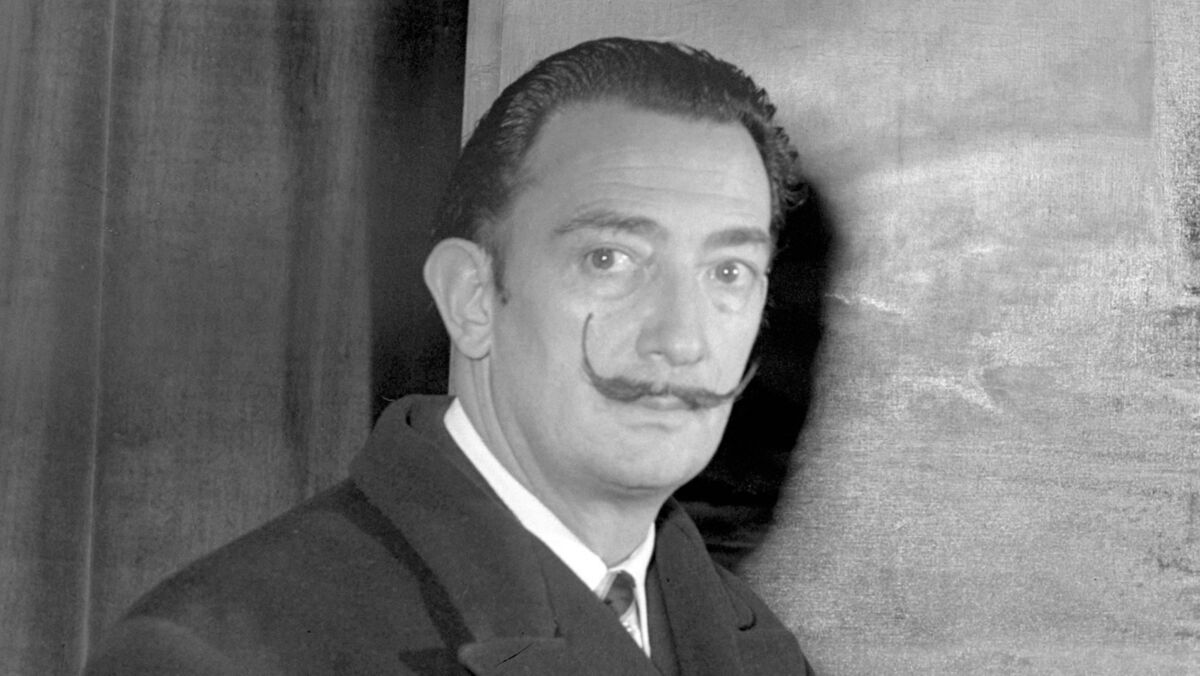
When he got in his studio, Salvador Dalí sat down and he did the work. If you look at his work, the technique is astounding. He must have sat at that easel for hours and hours. That's the Dalí you didn't see. All you saw was Dalí the buffoon, doing silly things in public, which was the way he enjoyed spending his life, making people think he was crazy. Actually he painted like an old master.
Marlon Brando took terrible risks. His portrayals on screen nearly always had some element of shock. I was huge fan. I was unpacking once after a filming trip in Africa. My head was still a bit woozy. The phone went. The voice said: “Marlon Brando here.” My immediate reaction was now which of my friends does silly voices? Maybe it's David Attenborough. He said, “I wanna come and talk to you about the banality of evil. I want to make a documentary film about the human condition. Let's dine in London.”
To cut a long story short, I'm in my apartment in London. The doorbell goes, and it's one of those apartments where you have a screen to see who's at the front door. I looked up at the screen, and there was the Godfather. I couldn't believe it. We had a wonderful dinner together. He lived up to expectations. He was the most wonderful man to talk to. His great problem, he said: “Why are people so violent? I play these violent men. I keep asking myself why is humanity so violent?”