Book Review: Death and other failings stalk a perfectionist’s pages in The Heart and The Arrow
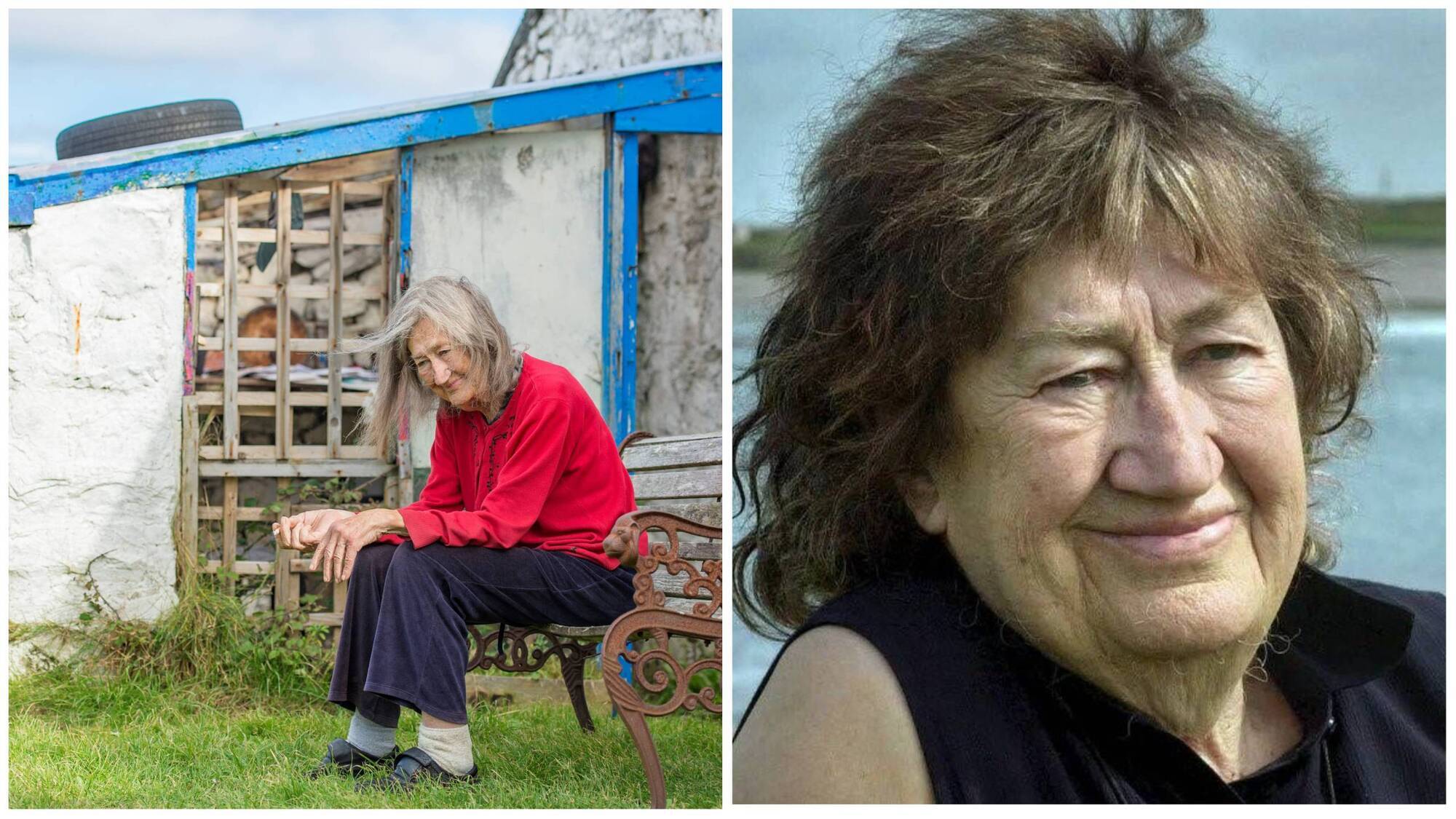
Bardwell drew on her own life and the people in it for her writing.
- The Heart and The Arrow
- Leland Bardwell
- Doire Press, €16
Try from €1.50 / week
SUBSCRIBE
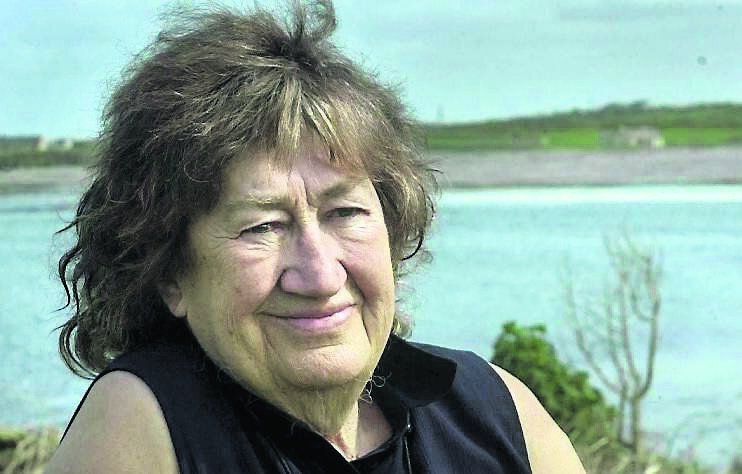
Bardwell drew on her own life and the people in it for her writing.
Death stalks the pages of this posthumous collection but despite such darkness, there are moments of levity and clear, precise use of language from a writer who strove for perfection.
But Leland Bardwell (1922-2016), despite her dedication to her craft, may have felt that her artistic life was not a success. At least, that is what her son deduces from a story entitled ‘The Final Dinner Party’.
In his introduction to the collection, John McLachlan, citing the story, writes that it’s impossible not to identify the protagonist with his mother, living on the edge of the Atlantic (Bardwell moved to Sligo for the latter part of her life).
Bardwell drew on her own life and the people in it for her writing. The protagonist of the story, who is 80, wonders why she gives “limping dinner parties”. The “final” one sees her repeat a trip along a well-worn road in her car to a place where she considers suicide — but she turns back to her “pointless life”.
It is not Bardwell’s suicidal ideation that shocks McLachlan as she had “told everyone of this anyway”. Rather, it’s the feeling of failure that the protagonist expresses that takes McLachlan by surprise.
He quotes the unhappy narrator: “Course I’m not all right. I never was alright. I missed the boat in my profession; or just missed the boat. Or ‘they’ never gave me the acknowledgement of my talent that I deserved.”

There is a lot of physical movement in the story ‘Moving’. And the reason for the restlessness of the narrator is her desire to get away from the memory of a fire 20 years ago in which her child died. “Did I kill him?” she asks, haunted by what was an accident. She is tortured by the fact that she failed to save the five-year-old, despite her efforts.
The narrator lived for a while in a caravan near the Cliffs of Moher. “I didn’t have the nerve to jump.” She moves on, along the west coast, but she can’t move on mentally from her turmoil and deep grief. She considers herself to be “pointlessly alive. Afraid to die”. The writing is spare and it lends itself to a sense of futility, a starkness that never fails to assail the protagonist, day after day.
‘Notes from the Joy’ refers to a prisoner’s incarceration in Mountjoy — and how he landed there. The story is very much an apologia, but from the point of view of a self-confessed killer who is utterly delusional.
He might have gotten away with his crime if he hadn’t spilled the beans to a relative, prompted by alcohol. The first person narrator justifies murdering his girlfriend who, he claims, was determined to trap him by becoming pregnant by him. He regrets his good looks.
“Yes! My beauty. That was my downfall. Women and men tumbled at my feet like puppies.”
This vain creature prefers women as they’re “easier to control”. He sees them as handy for bed and board and for “screwing the few quid off when I was short”. But that’s not so easy now “with the bloody women’s lib”. Charming.
In ‘Barbecue’, set at a party in Australia, the male protagonist is planning to zone in on a young woman but fails to do so. He wanted to be “sensually alive” but ends up alone, and you’re glad because there’s something unsavoury about him.
This accomplished collection includes a novella, ‘All Those Men’, which opens with a troubled old man who feels hated. He stumbles from room to room “trying to stamp the loneliness out of himself, wanting to hurl himself from a window”.
Death is never far away in Bardwell’s stories. Her sense of failure, as detected by her son, is unwarranted. But self-recrimination is the lot of a perfectionist writer.

Try unlimited access from only €1.50 a week
Already a subscriber? Sign in
Newsletter
Music, film art, culture, books and more from Munster and beyond.......curated weekly by the Irish Examiner Arts Editor.
Newsletter
Music, film art, culture, books and more from Munster and beyond.......curated weekly by the Irish Examiner Arts Editor.
© Examiner Echo Group Limited