Putting soul in our roots: Star in the making, Fehdah on making music and taking risks
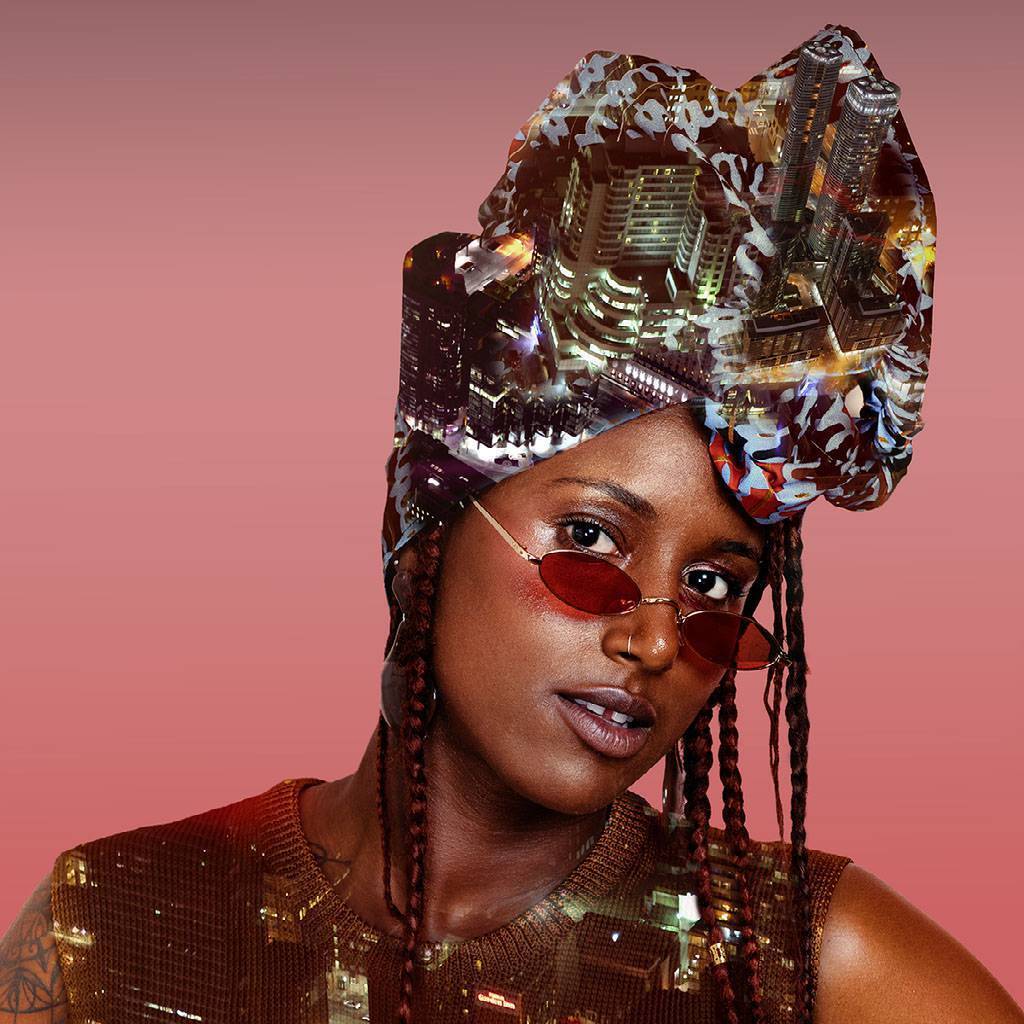
Fehdah was raised in Maynooth, where she moved when she was three with her Irish mother and African father. Picture: Earth Music Agency
It’s not every physics lecturer that takes to the festival circuit to perform when the academic term finishes up, but Emma Garnett, better known as the musician Fehdah, is not your average science teacher.
Fehdah was raised in Maynooth, where she moved when she was three with her Irish mother and African father, living there until she was nine, when they relocated to Africa to spend time with her father’s family.
“When my mum told us we were moving to west Africa we were devastated. We did not want to leave. When we got there it took about a year for us to adjust. There was a lot of crying and not understanding how things worked but after that year I realised, in Africa, we were kind of rich. We had a driver, we went to the international school. I had never been around wealthy people, we just lived in a suburb. We weren’t poor but Maynooth didn’t have families with each kid with their own driver, and housekeeper, and a swimming pool out the back. I’ve never seen that kind of wealth.
“Now we weren’t that wealthy and even if we were I don’t think my mum could have engaged with it because she has such a working-class mindset. I was embarrassed because she used to clean with our cleaner and my friends’ mums would be so glamorous just sitting around chilling with their nails done. Now I have so much respect for my mum. At the time I was like, why can’t you be like everyone else’s mum?” she laughs. “It was very interesting because my mum kept us humble.”
Next the family moved to Sierra Leone to get to know her cousins.
“That was really important and it was also the first time living with my dad on our own because my mum was working up the country and he was really strict, proper African-dad style, study every day for two hours in your room. I would just close the door and put on Dido or something,” she laughs.
After five years, the family returned to their home in Maynooth.
“When I finally came back to Ireland, I said I’m not moving again now. I was ready to settle down and I did… for 15 more years,” she laughs.
Until she moved again. As Fehdah’s unique blend of multi-instrumentalism, African musical influences and Irish R’n’B has taken off, she has relocated to Rotterdam, Holland.
“I wanted to be in a place that was easier to do the things I love to do — making music, gigging, and also just living. As wonderful as Ireland is and as amazing as Irish people are to be around, the country is not really set up for artists at all. There’s a lot of talented people and a lot of people who appreciate good quality music but you can’t have a good livelihood, a high quality of life, because you’re spending so much just to live there. Unfortunately it didn’t seem viable to me and I can see a lot of people are following in that suit. We’re losing a lot of great artists as a result. I wanted to stay in Ireland, I was a homebird and I wanted my life and family but I had to go. It’s very sad because I love Ireland so much but it didn’t seem viable to me particularly if you have a job like musician.”

She and her sister, singer/actress Loah, have both pursued creative careers, despite the fact they both have more reliable qualifications, Fehdah as a physics teacher and Loah as a qualified pharmacist. I wonder how her parents feel about them choosing such precarious industries?
“My parents were renegades themselves,” she laughs. “My dad is an environmentalist who studied in Russia in the 70s and comes from quite a poor background so it was up to him, he had to make his life work. He was taking all these risks, he started his own NGO and you don’t go into that as a lucrative career choice, but he did it and he was able to support us and raise us. My mum moved to Kenya in the 80s to teach. My parents were raised in such a way that once they were adults it was up to them, nobody was going to tell them what to do, but because they worked so hard they were able to raise us into a different class, we were raised middle class, and then they were like, our kids should do all these things we didn’t do when it’s actually their risk-taking that enabled them to have the lives they do now.”
She laughs at the irony. Her mum, who grew up in Crumlin, now has a PhD in anthropology and is a lecturer and her dad works globally as an environmental consultant.
“Your parents are supposed to tell you what to do and you’re supposed to ignore them,” she laughs. “My mum now is just happy we’re good at managing risk, deciding which risks to take and we can support ourselves in ways that make us happy. All your parents can do is raise you to be sensible and know yourself and you have to make decisions for yourself, the ones that will be best for you.”
Besides, she says, she finds the scientific part of her brain useful in her musical creative process.
“It’s really helpful to be able to think practically and with a problem-solving mindset. You can’t use problem-solving to bring out or come up with creativity — you have to just live and be good at reflecting on your emotions — but when it comes to sitting down and writing, that’s when the problem-solving comes out because you could take something in an infinite number of directions and that’s where you need to figure out what story am I trying to tell and what’s the best way of telling it?”

She is currently shopping her debut album around and also working with the Museum of Literature Ireland on their Ulysses 2.2 project, writing a musical response to chapter 11 in Ulysses.
“It was a bit terrifying,” she says, “because it’s James Joyce but when I started reading the chapter and the text itself, I was like, James Joyce didn’t give a f*ck! He was just doing exactly what he wanted to do. He didn’t care how many people he confused. If I’m going to do something in his honour it has to have that energy as well, where you just try to be as authentic as you can and that should be enough. I ended up with something I was really happy with as a result. It was freeing to not have to stay within the confines of ‘Fehdah music’, because I make lots of different music but they don’t always fit into the sound that I have established for myself.”
She has even included a sean-nós song: “I’m very into sean-nós singing so that track is a nice bridge between what I do myself and what this project is about.”
And what about her identity as a black Irish woman?
“If I’m honest, I have to say my experience in Ireland with racism is very minimal. I was so proud of being Irish; nobody could shake my ownership of who I was. I was like, I am f*cking Irish. I am Irish. Listen to me. There’s nothing anybody could say to me that would make me feel less Irish. No matter how many times they asked me where I was originally from, I’d just keep saying: Maynooth. And my mum being from Crumlin was like, Emma, there’s bigger problems in Ireland. You’re from a very nice neighbourhood and community.
“There was always someone who would stick up for me if someone was being nasty. That’s how Irish people work, you know, very tribal, when you’re in you’re in, and anyone who comes for you from the outside will have to deal with your friends to get to you. And that’s a nice feeling, to feel like you belong.”
- Fehdah performs at Live at St Lukes tonight as part of Guinness Cork Jazz with Yenkee. guinnesscorkjazz.com

Subscribe to access all of the Irish Examiner.
Try unlimited access from only €1.50 a week
Already a subscriber? Sign in