Stephen Brandes: Tall tales of Trotsky's visit to Co Tipperary 
Just because it might not have happened hasn't stopped the Kinsale-based artist from supposing the exiled revolutionary did really disembark in Cobh and make his way to Kilsheelan
Stephen Brandes: Tall tales of Trotsky's visit to Co Tipperary 

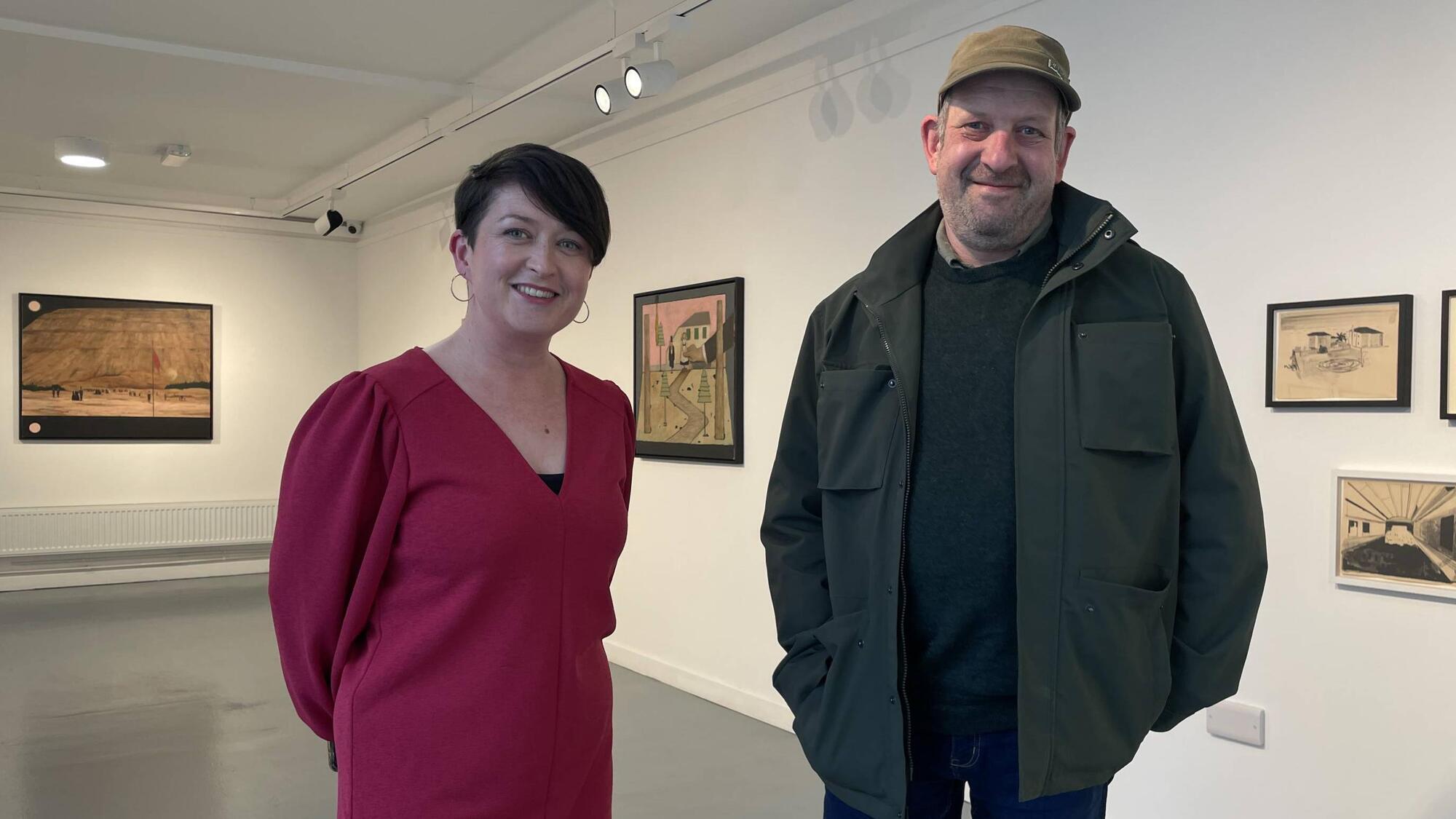
Director of the South Tipperary Arts Centre, Helena Tobin, with artist Stephen Brandes. Picture: Eimear King 
Did the Russian-Ukrainian revolutionary Leon Trotsky ever visit Ireland? That’s the question pondered by artist Stephen Brandes in his
new exhibition, The Trotskys in Kilsheelan and Other Histories of Unreliable Origin, at South Tipperary Arts Centre in Clonmel.

In 1940, Trotsky was murdered with an ice-pick in Mexico City, where, exiled from the Soviet Union, he found refuge after a long period of displacement around Europe.

In those years, Trotsky spent time in France and Norway, but efforts were also made to secure him asylum in Ireland as early as 1930, when the labour leader William O’Brien appealed on his behalf to the conservative Free State government of WT Cosgrave.

“Unsurprisingly,” says Brandes, “they got nowhere.”

A further appeal was made to Éamon de Valera when he was elected Taoiseach in 1932, but again, Trotsky was not considered worthy of a residency visa.

Despite these setbacks, Brandes thinks it “feasible” that Trotsky and his wife Natalya Sedova could have landed in Cobh, Co Cork en route to Mexico in 1936. In Brandes’ narrative, the oil tanker on which the Trotskys are travelling is forced into port by the threat of storms on the eastern Atlantic.

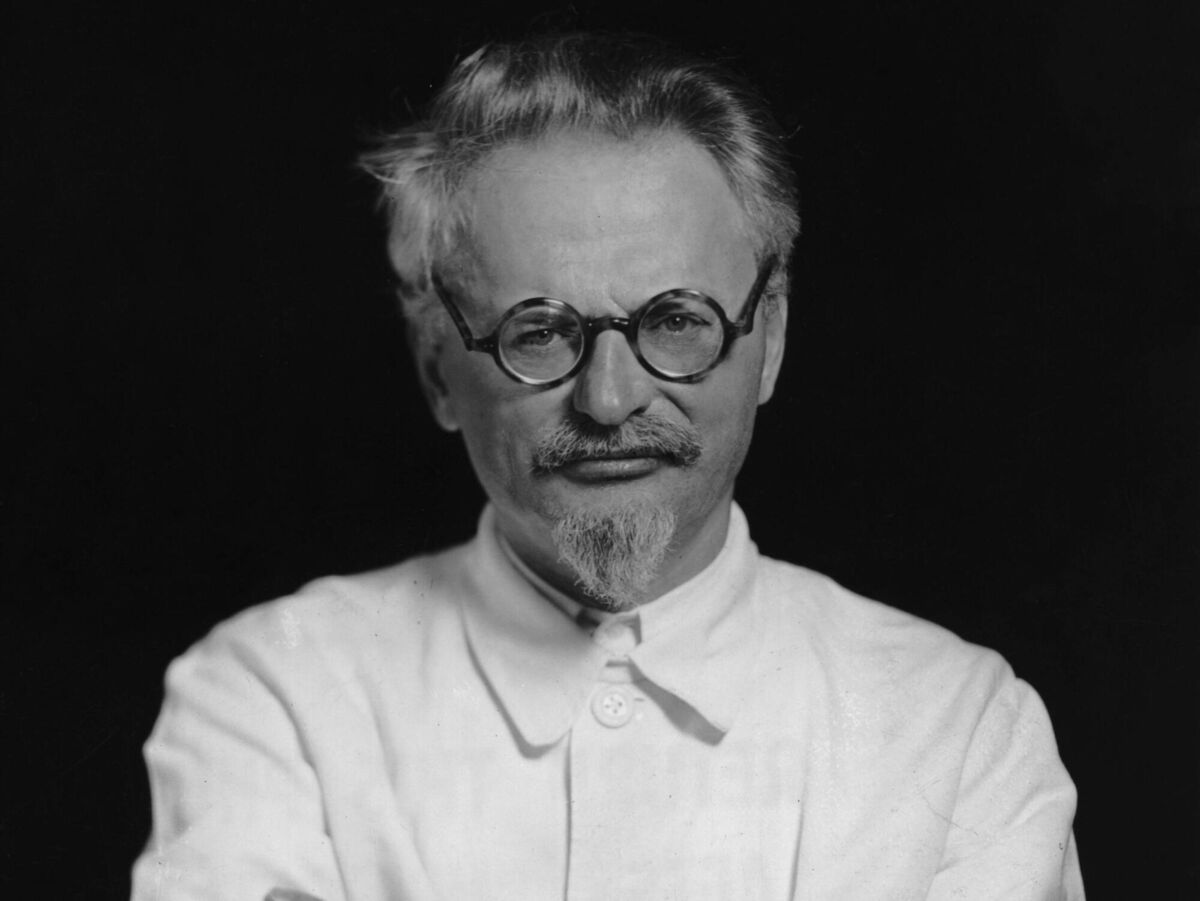
Leon Trotsky. Picture: Hulton Archive/Getty Images

“It’s all very clandestine,” he says, “but William O’Brien hears of their arrival and travels to Cobh to welcome them to Ireland.”

O’Brien invites the Trotskys to Clonmel, where he, Jim Larkin and James Connolly had founded the Irish Labour Party in 1912. 

“He plans for Trotsky to give an inspirational speech in Clonmel, but then thinks better of it, as it’d all be too much in the spotlight. So he decides they should travel on instead to the village of Kilsheelan. 

"Along the way, they stop at a farmhouse to visit some friends of O’Brien’s. Trotsky goes off to the loo, and discovers some rabbits in an outhouse. In that moment, something in him changes.”

Brandes’ exhibition comprises a series of small paintings, drawings and a single work in video, drawn from Pathé news footage and augmented by photographs of his own.

“The Trotsky narrative came out of nowhere. The gallery at Clonmel approached me to do a project, and it could have been about anything, really. But I’d been making video collages, and I’d used Trotsky as a figure in some of these works. 

"So then I asked myself, what if Trotsky had visited Clonmel, or Kilsheelan? And once I’d said that, I felt I had to back it up.

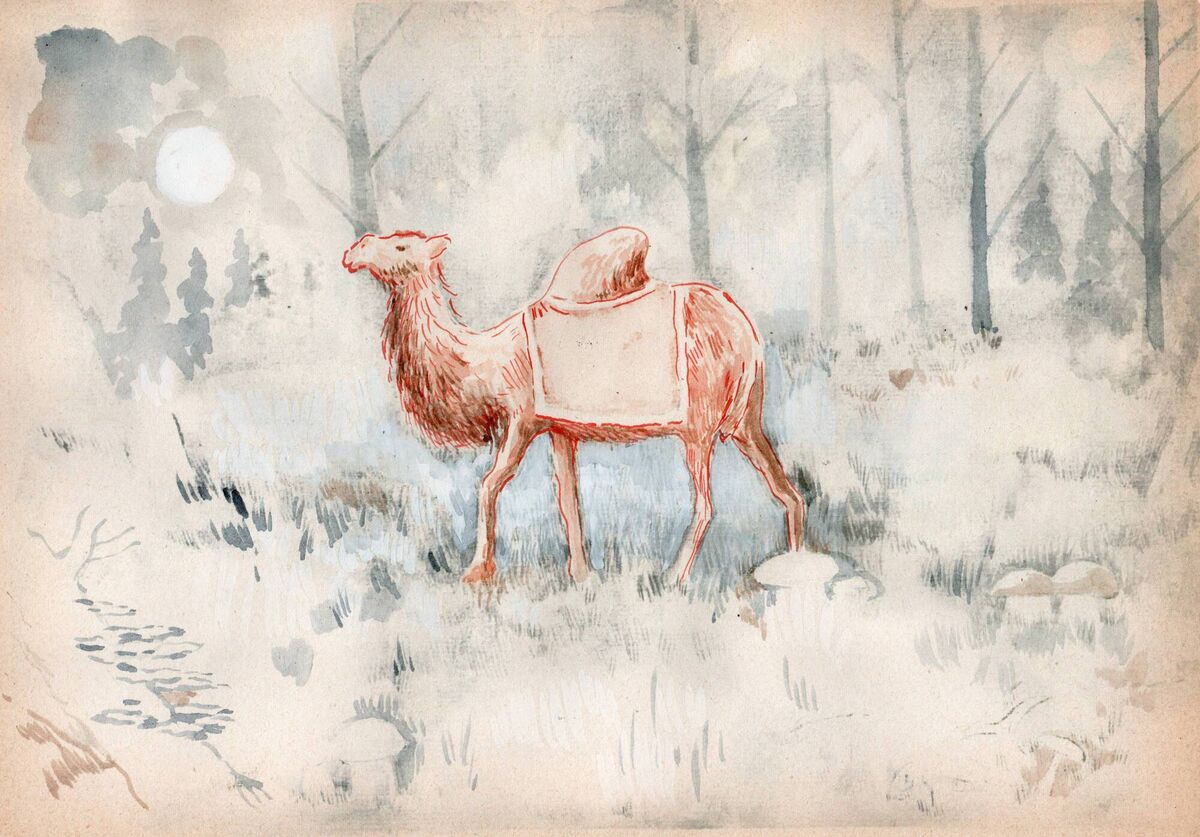
The Lost Camel, by Stephen Brandes.

“The narrative is complicated by the fact that, when Trotsky gets to Kilsheelan, he’s fed a skinful of poitín.”

Brandes has form when it comes to making unreliable narratives the basis of his exhibitions. 

Previous shows have included The Perpendicular Memoirs of Albert Sitzfleishch and La Place des Grands Abysses, while his most recent, at the Model in Sligo, was called ‘Schmerzbau: It’s not all just misery’.

Alongside his solo career, Brandes, a graduate of the National College of Art and Design now domiciled in Kinsale, Co Cork, is involved with Mick O’Shea and Irene Murphy in the Domestic Godless, an initiative that explores food as a medium of artistic expression.

Together, they have cooked - and served up for public consumption – dishes such as Carpaccio of Giant African Land Snail and Chili-Chocolate Songbird Hearts.

They have even published what they describe as “arguably the most useless cookbook ever written”, entitled The Food, The Bad and The Ugly.

Now that The Trotskys in Kilsheelan exhibition is up and running, Brandes is devoting his time to a number of upcoming Domestic Godless projects, including their contribution to the James Joyce Ulysses 2.2 centenary programme.

“They’ve split the book up,” he says, “and given each chapter to different people, some of them theatre makers, and more of them visual artists, like us. 

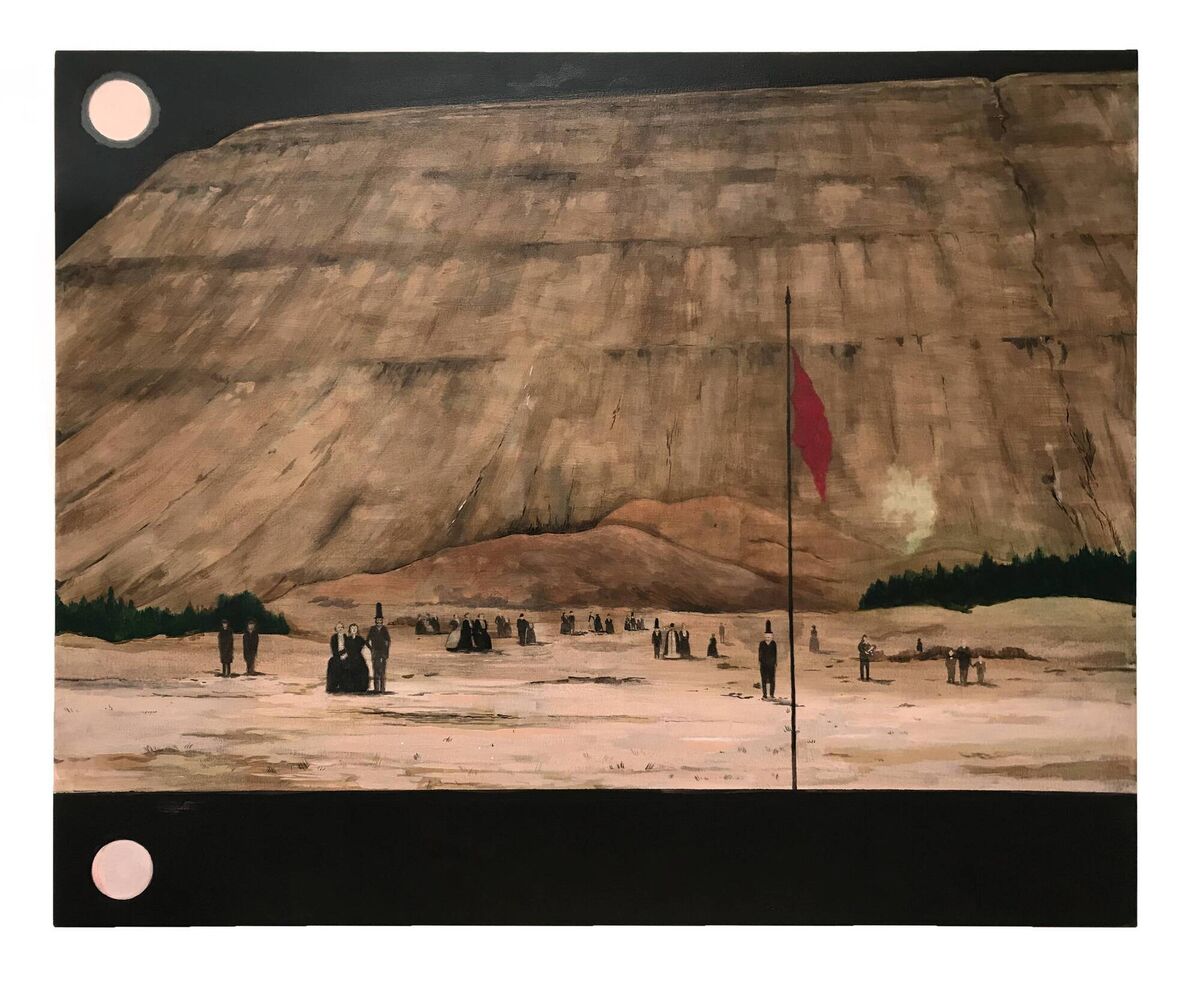
Winter, by Stephen Brandes.

"We’re working on Chapter 8, which describes Leopold Bloom walking through Dublin, trying to decide on where to eat. 

"There’s a lot of mention of food, so we created a meal for a set number of people, and recorded them eating. We’ll present that as a sound piece, along with a large photograph of the meal itself, at the Museum of Literature Ireland in Dublin in November.”

There is also the small matter of dismantling his recent show in Sligo to attend to. Included were some of the monumental paintings on vinyl for which he is perhaps best known.

The medium is one he turned to out of practicality; large scale canvases have often proved difficult to transport and store, while his works on vinyl
can simply be rolled up and put away in his studio.

But the exhibition also featured a large architectural structure, six metres by four, that he constructed over four months at the National Sculpture Factory in Cork and then transported to the Model by truck. He seems sanguine about its fate.

“I spent a couple of grand on the timber, but someone can have it as firewood if they want.”

x

More in this section

Scene & Heard

Newsletter

Music, film art, culture, books and more from Munster and beyond.......curated weekly by the Irish Examiner Arts Editor.

Cookie Policy Privacy Policy Brand Safety FAQ Help Contact Us Terms and Conditions

© Examiner Echo Group Limited