Wildlife Photographer of the Year 2022: Ten incredible pictures
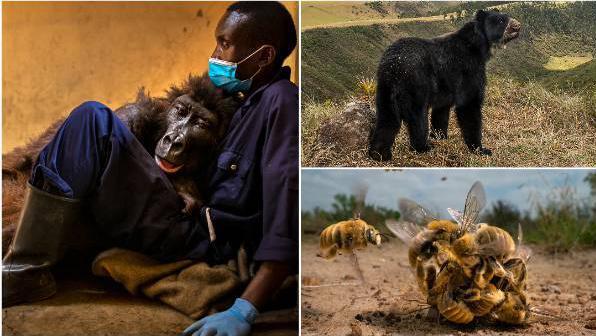
Pictures from the Wildlife Photographer of the Year at the Natural History Museum.
The 2022 prizewinners from the Wildlife Photographer of the Year at the Natural History Museum in London were announced on the night of Tuesday, October 11. As ever, the judges had a tough task selecting the winners from the hundreds of photographs in the exhibition, and the museum itself is well worth a visit to see the rest of the pictures if you're anywhere near London over the next few months.
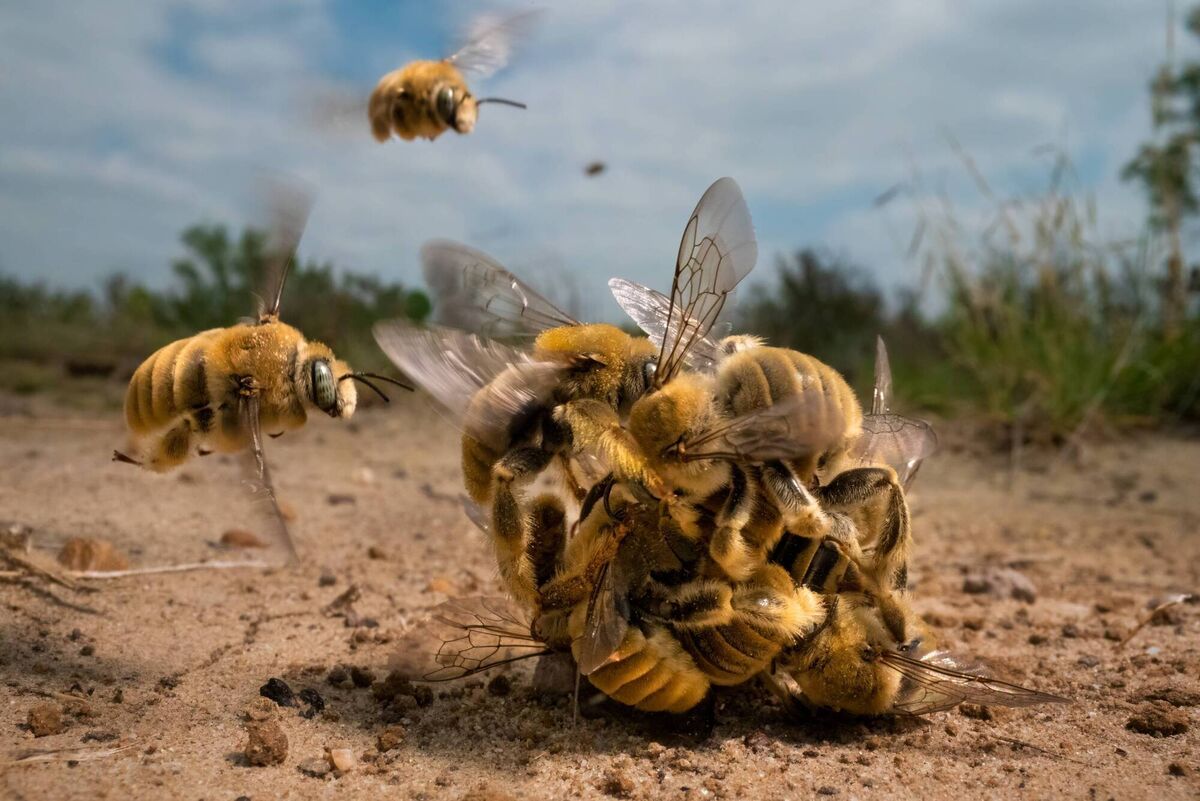
In a picture that won the overall Wildlife Photographer of the Year, Karine Aigner gets close to the action as a group of bees compete to mate.
Using a macro lens, Karine captured the flurry of activity as a buzzing ball of cactus bees spun over the hot sand. After a few minutes, the pair at its centre – a male clinging to the only female in the scrum – flew away to mate.
The world’s bees are under threat from habitat loss, pesticides and climate change. With 70% of bee species nesting underground, it is increasingly important that areas of natural soil are left undisturbed.
South Texas, USA
Sony α7R III + Laowa 24mm f14 2x macro probe lens; 1/1000 sec; ISO 6400; Profoto strobe + wireless trigger Wildlife Photographer of the Year.
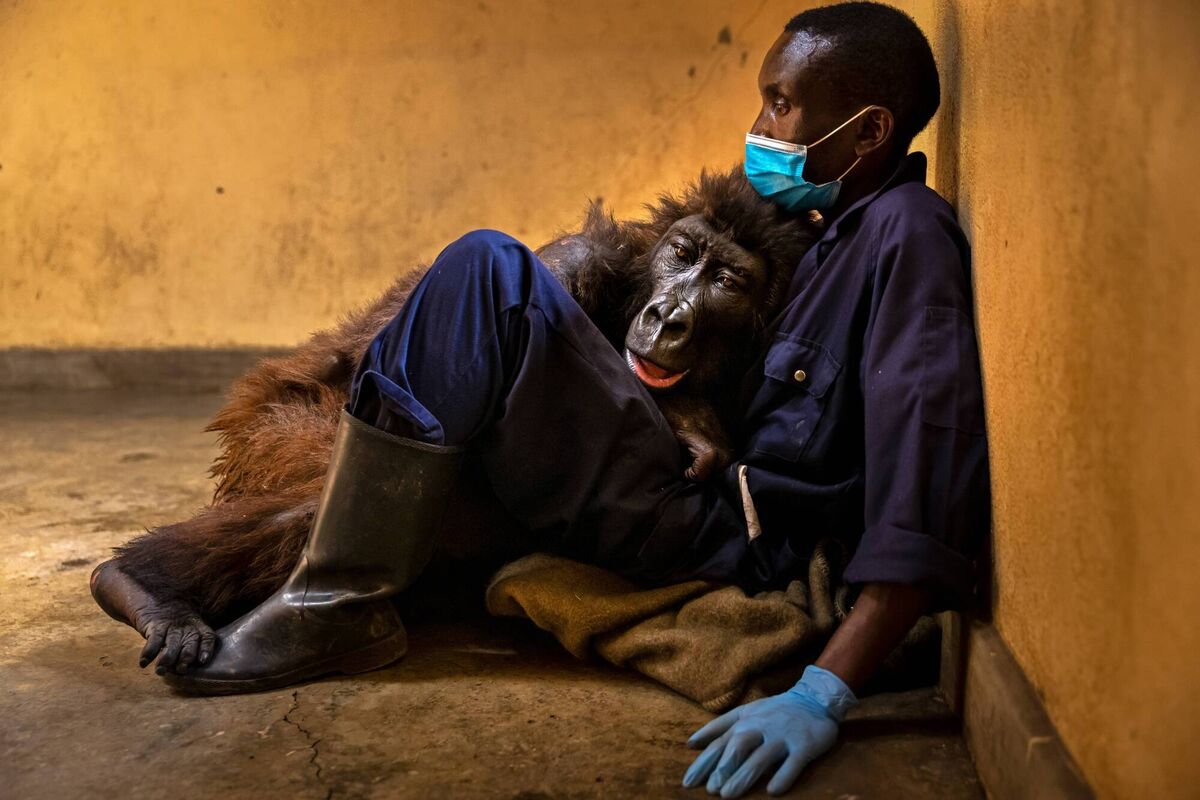
Brent Stirton shares the closing chapter of the story of a much-loved mountain gorilla. Brent photographed Ndakasi’s rescue as a two-month-old after her troop was brutally killed by a powerful charcoal mafia as a threat to park rangers.
Here he memorialised her passing as she lay in the arms of her rescuer and caregiver of 13 years, ranger Andre Bauma.
As a result of unrelenting conservation efforts focusing on the daily protection of individual gorillas, mountain gorilla numbers have quadrupled to over 1,000 in the last 40 years.
Senkwekwe Center, Virunga National Park, Democratic Republic of the Congo
Canon EOS R5 + 24–70mm 2.8 lens; 1/160 sec at f2.8; ISO 3200
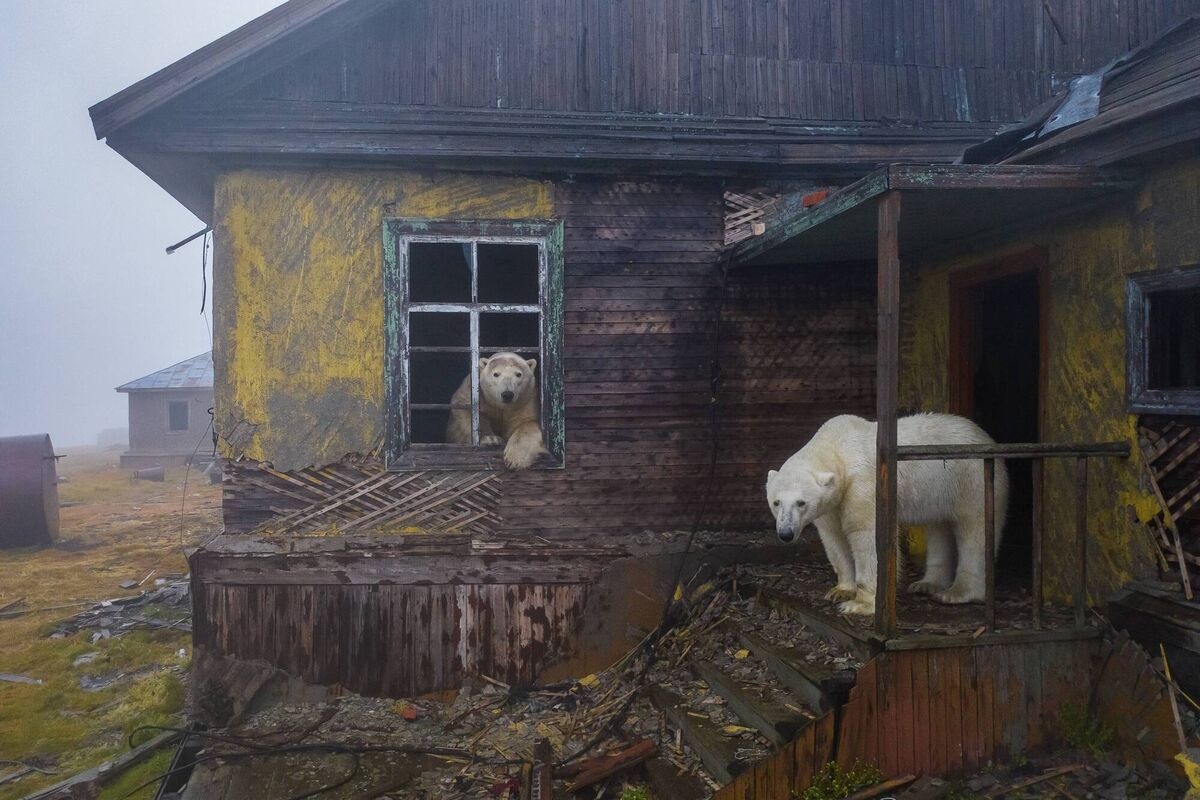
Dmitry Kokh presents this haunting scene of polar bears shrouded in fog at the long-deserted settlement on Kolyuchin. On a yacht, seeking shelter from a storm, Dmitry spotted the polar bears roaming among the buildings of the long-deserted settlement. As they explored every window and door, Dmitry used a low-noise drone to take a picture that conjures up a post-apocalyptic future.
In the Chukchi Sea region, the normally solitary bears usually migrate further north in the summer, following the retreating sea ice they depend on for hunting seals, their main food. If loose pack ice stays near the coast of this rocky island, bears sometimes investigate.
Kolyuchin Island, Chukotka, Russia DJI Mavic 2 Pro + Hasselblad L1D-20c + 28mm f2.8 lens; 1/160 sec at f2.8; ISO 640
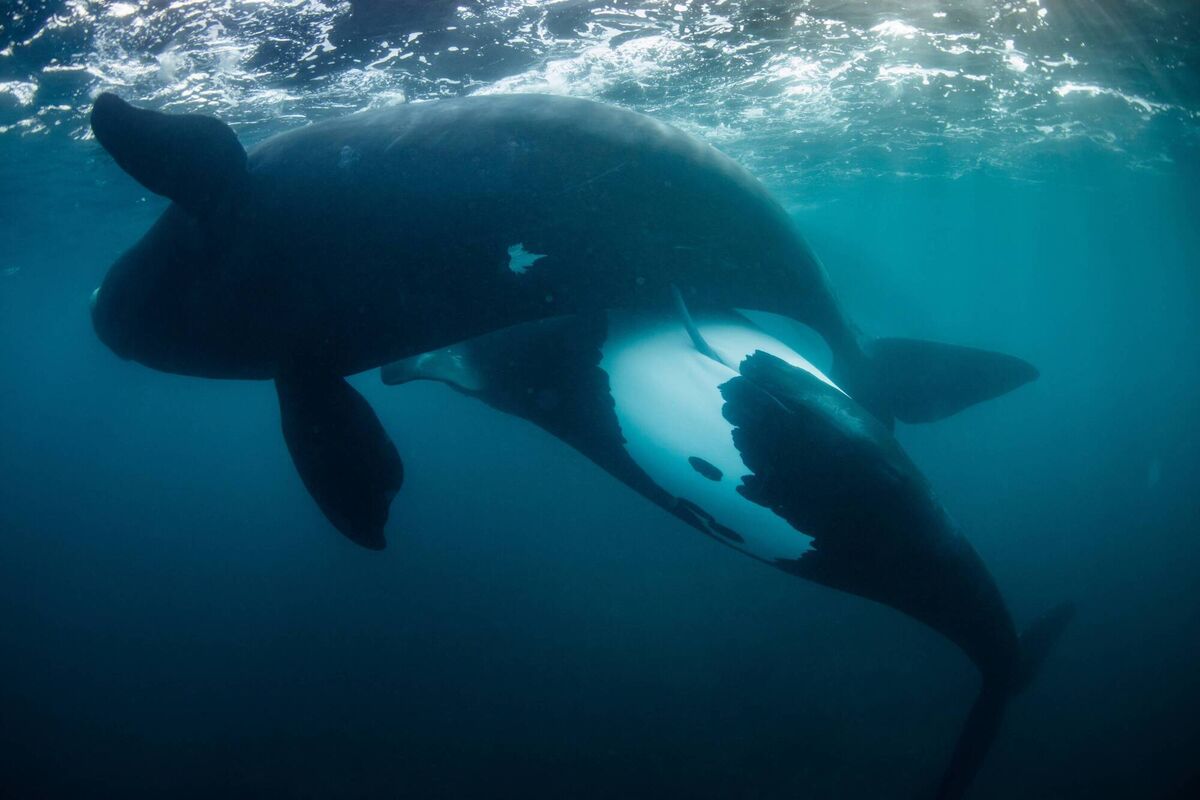
Richard Robinson captures a hopeful moment for a population of whales that has survived against all odds.
Hindered by poor visibility, Richard used a polecam to photograph the whales gradually moving towards his boat. Pushing his camera to its limits in the dark water, he was relieved to find the image pin-sharp and the moment of copulation crystallised in time.
When ready to mate, the female southern right whale rolls onto its back, requiring the male to reach its penis across the female’s body. Known by the Māori as tohorā, the New Zealand population was hunted to near extinction in the 1800s, so every new calf offers new hope.
Deas Head, Auckland Islands, New Zealand
Canon EOS 5DS R + 8–15mm f4 lens at 15mm; 1/640 sec at f4; ISO 1600; Aquatica housing
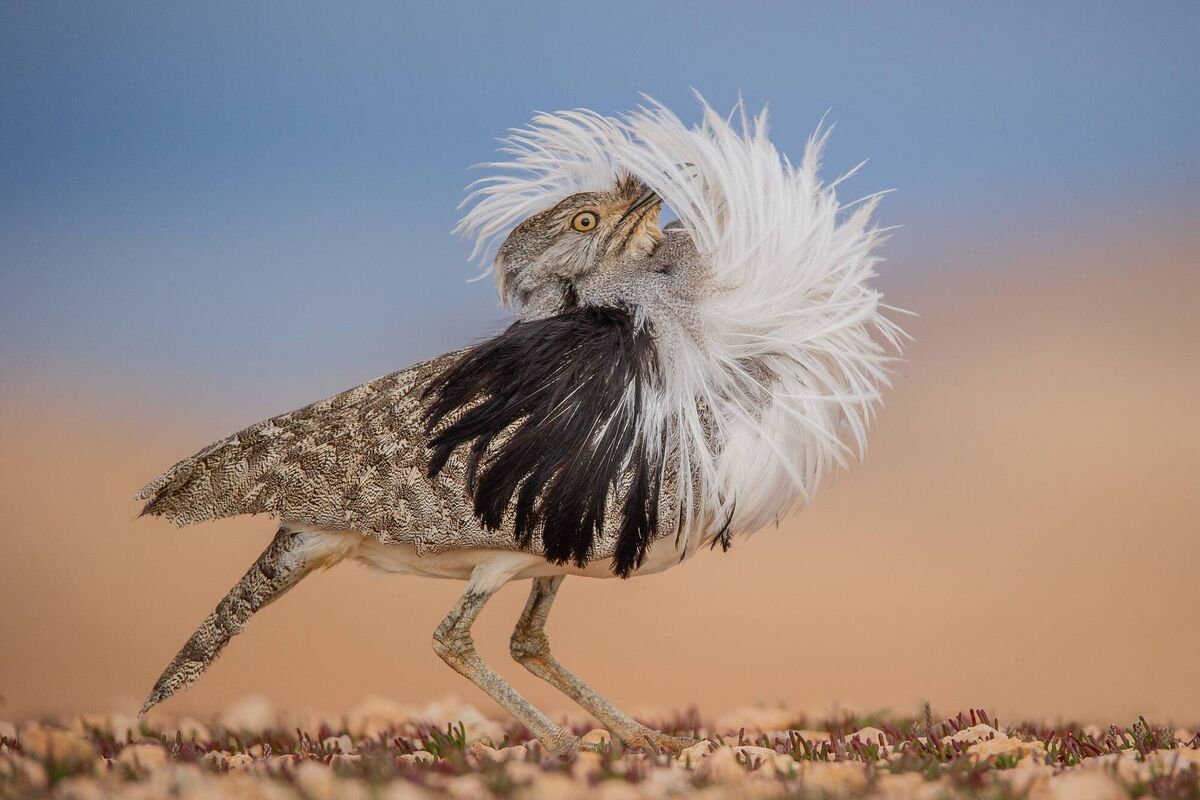
José Juan Hernández Martinez witnesses the dizzying courtship display of a Canary Islands houbara.
José arrived at the houbara’s courtship site at night. By the light of the moon, he dug himself a low hide. From this vantage point he caught the bird’s full puffed-out profile as it took a brief rest from its frenzied performance.
A Canary Islands houbara male returns annually to its courtship site to perform impressive displays. Raising the plumes from the front of its neck and throwing its head back, it will race forward before circling back, resting just seconds before starting again.
La Oliva, Fuerteventura, Spain
Nikon D3S + Sigma 150–600mm f5–6.3 lens at 600mm; 1/1000 sec at f6.3; ISO 800; Manfrotto tripod + Benro head
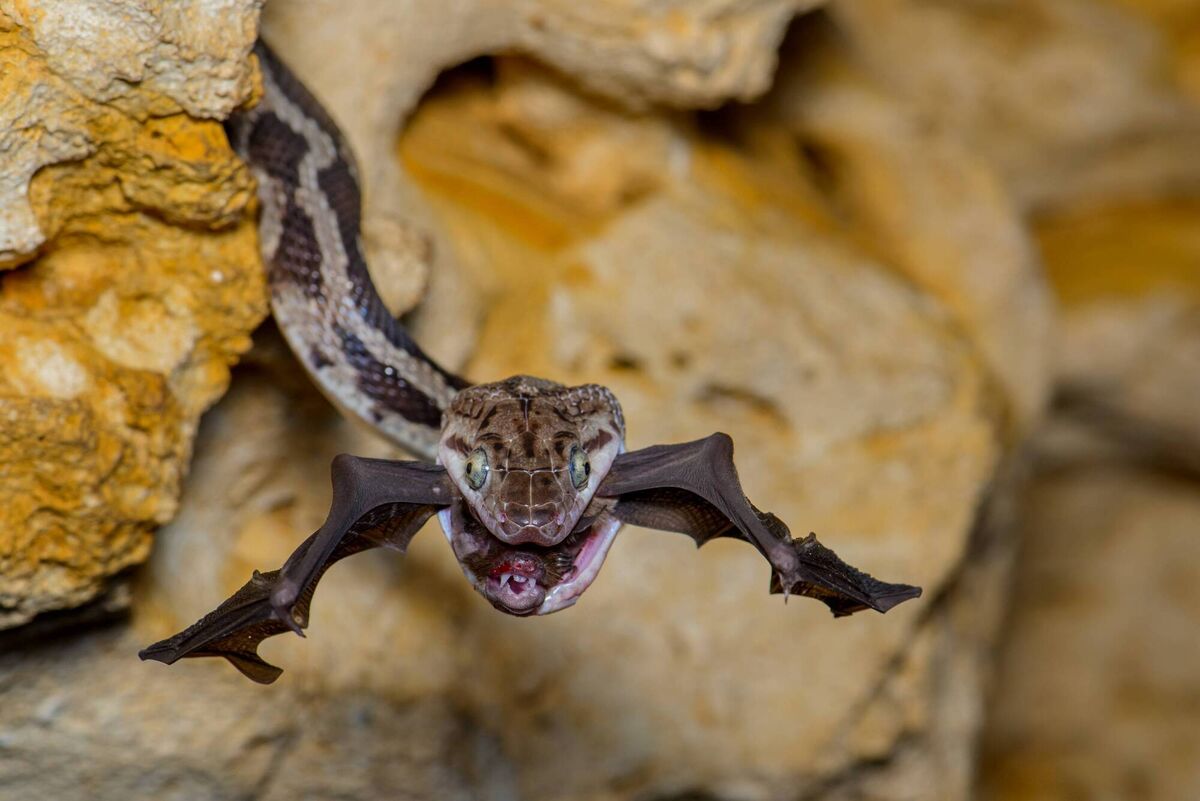
Fernando Constantino Martínez Belmar waits in darkness as a Yucatan rat snake snaps up a bat.
Using a red light to which both bats and snakes are less sensitive, Fernando kept an eye on this Yucatan rat snake poking out of a crack.
He had just seconds to get the shot as the rat snake retreated into its crevice with its bat prey.
Every evening at sundown in the Cave of the Hanging Snakes, thousands of bats leave for the night’s feeding. It is also when hungry rat snakes emerge, dangling from the roof to snatch their prey in mid-air.
Kantemo, Quintana Roo, Mexico
Nikon D800 + 105mm f2.8 lens; 1/200 at f9; ISO 125; Nikon SB-700 flash; red flashlight
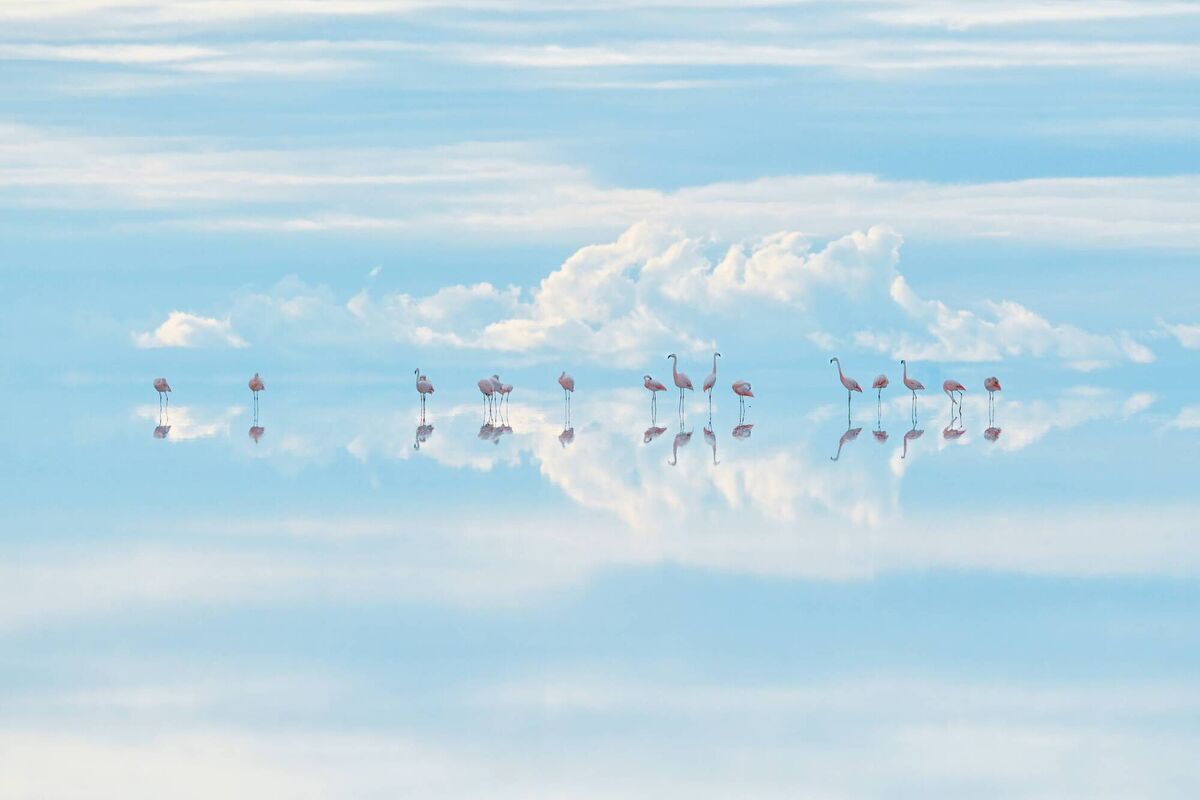
Junji Takasago powers through altitude sickness to produce a dream-like scene.
Junji crept towards the preening group of Chilean flamingos. Framing their choreography within the reflected clouds, he fought back his altitude sickness to capture this dream-like scene.
High in the Andes, Salar de Uyuni is the world’s largest salt pan. It is also one of Bolivia’s largest lithium mines, which threatens the future of these flamingos. Lithium is used in batteries for phones and laptops. Together we can help decrease demand by recycling old electronics.
Salar de Uyuni, Daniel Campos Province, Bolivia
Nikon Z7 + 80–400mm f4–5.6 lens at 400mm; 1/3200 sec at f10 (+0.7 e/v); ISO 800
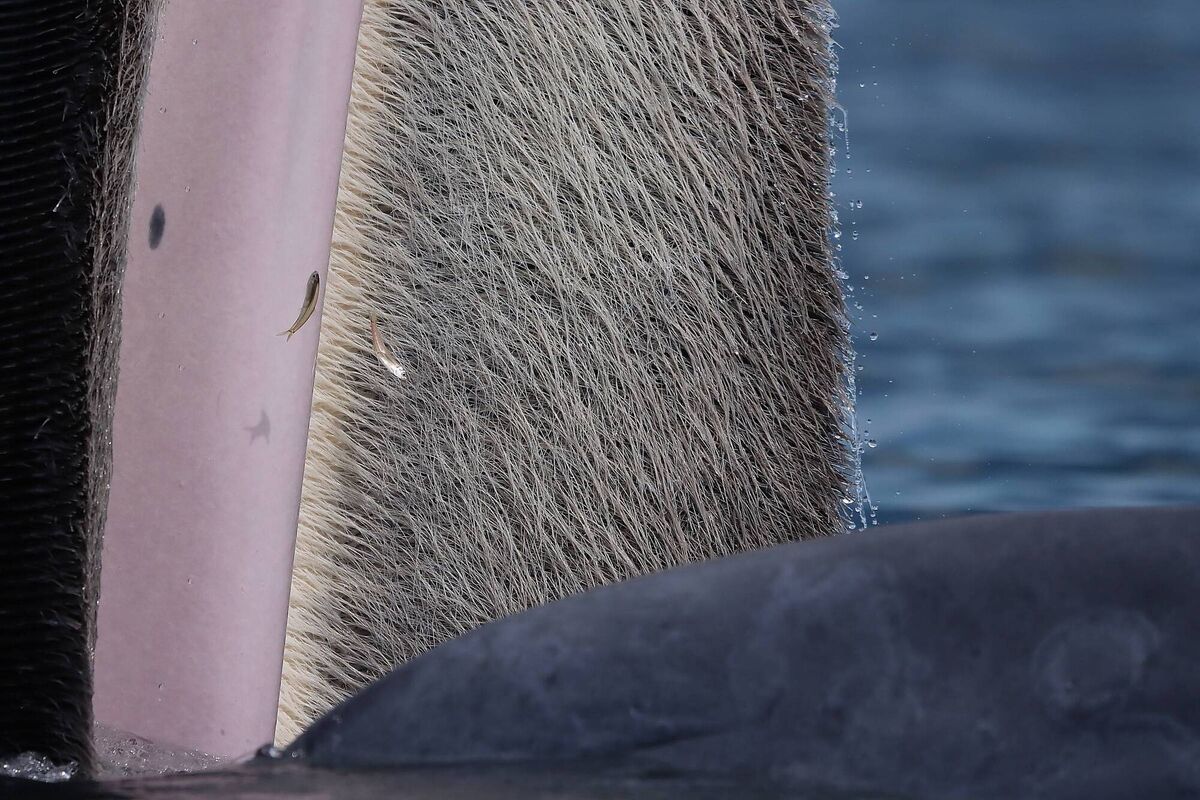
Katanyou Wuttichaitanakorn is intrigued by the contrasting colours and textures of a Bryde’s whale, which surfaces close by.
Following government tourism guidelines, the tour boat Katanyou was travelling on turned off its engine as the whale appeared close by.
This meant that Katanyou had to steady his hands to capture this close-up composition as the boat rocked in the swell. The picture also won the Young Wildlife Photographer of the Year title for Katanyou.
Bryde’s whales have up to 370 pairs of grey-coloured plates of baleen growing inside their upper jaws. The plates are made of keratin, a protein that also forms human hair and nails, and are used to filter small prey from the ocean.
Upper Gulf of Thailand, Phetchaburi, Thailand
Canon EOS 90D + Sigma 150–600mm f5–6.3 lens; 1/6400 sec at f6.3 (-1 e/v); ISO 640
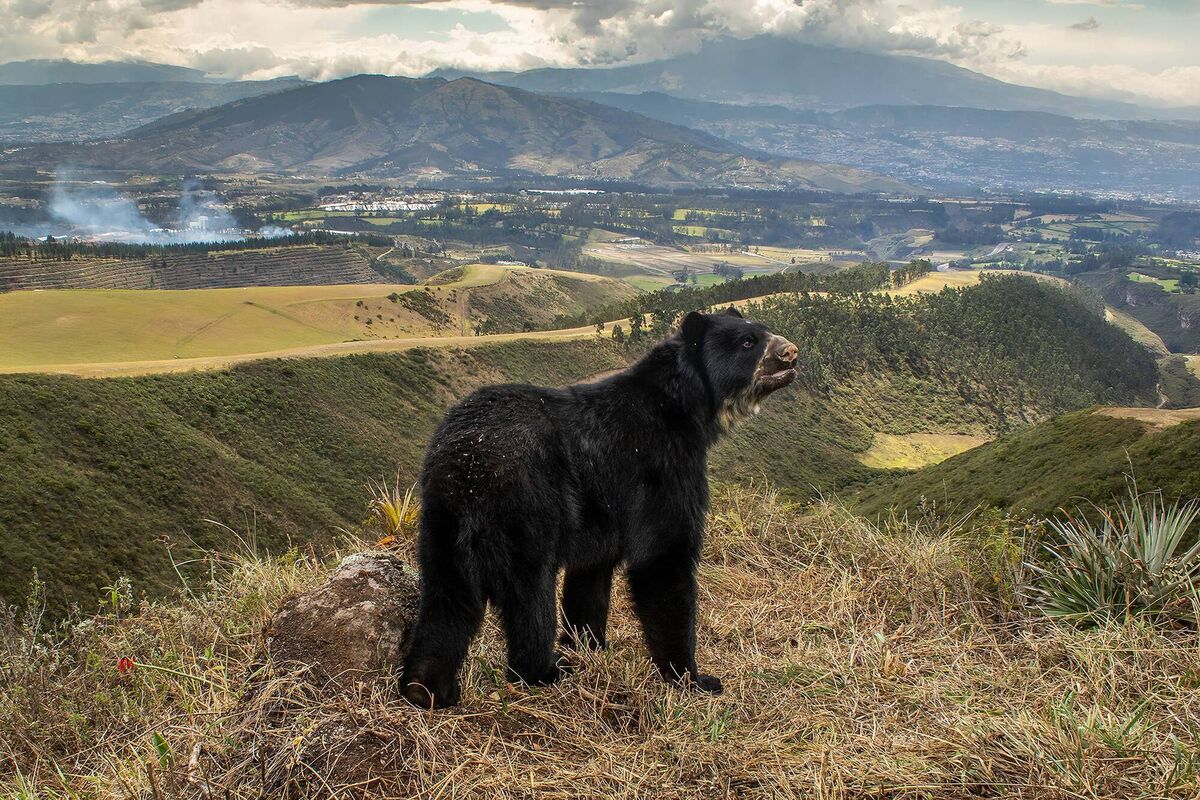
Daniel Mideros takes a poignant portrait of a disappearing habitat and its inhabitant.
Daniel set up camera traps along a wildlife corridor used to reach high-altitude plateaus. He positioned the cameras to show the disappearing natural landscape with the bear framed at the heart of the image.
These bears, found from western Venezuela to Bolivia, have suffered massive declines as the result of habitat fragmentation and loss. Around the world, as humans continue to build and farm, space for wildlife is increasingly squeezed out.
Peñas Blancas, Quito, Ecuador
Canon 7D Mark II + 18–55mm f3.5 lens; 1/160 sec at f14; ISO 400; 2x Nikon SB-28 flashes; Camtraptions camera-trap system
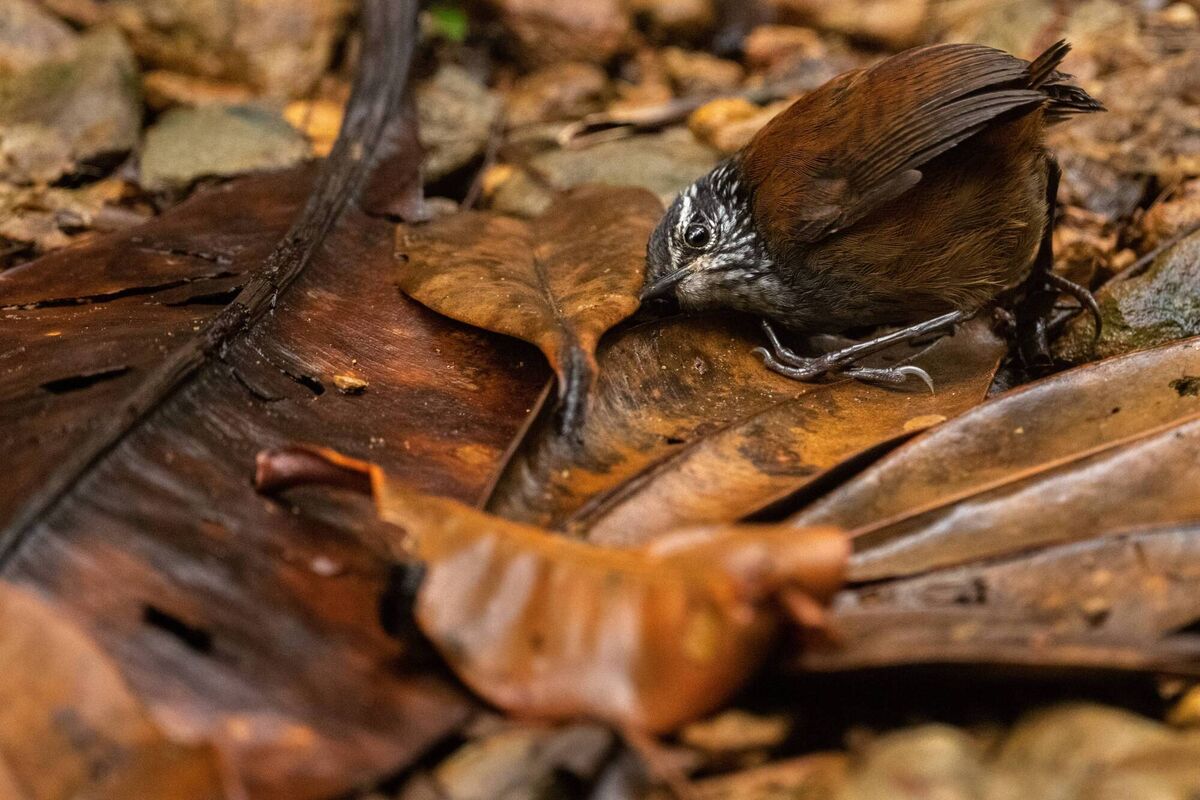
Nick Kanakis gains a glimpse into the secret life of wrens.
Nick spotted the young grey-breasted wood wren foraging. Knowing it would disappear into the forest if approached, he found a clear patch of leaf litter and waited. Sure enough, the little bird hopped into the frame, pressing its ear to the ground to listen for small insects.
This prey-detecting technique is used by other birds, including the Eurasian blackbird. Grey-breasted wood wrens are ground-dwelling birds, often heard but not seen. They broadcast loud, melodious songs and rasping calls while hidden in the undergrowth.
Tatamá National Park, Risaralda, Colombia
Nikon D850 + 500mm f5.6 lens; 1/160 sec at f5.6; ISO 5000 Wildlife Photographer of the Year