Book Review: The reality of world banking
'The main question I wanted to explore writing this book was: how did HSBC end up laundering money for Chapo and his henchmen?’
Book Review: The reality of world banking

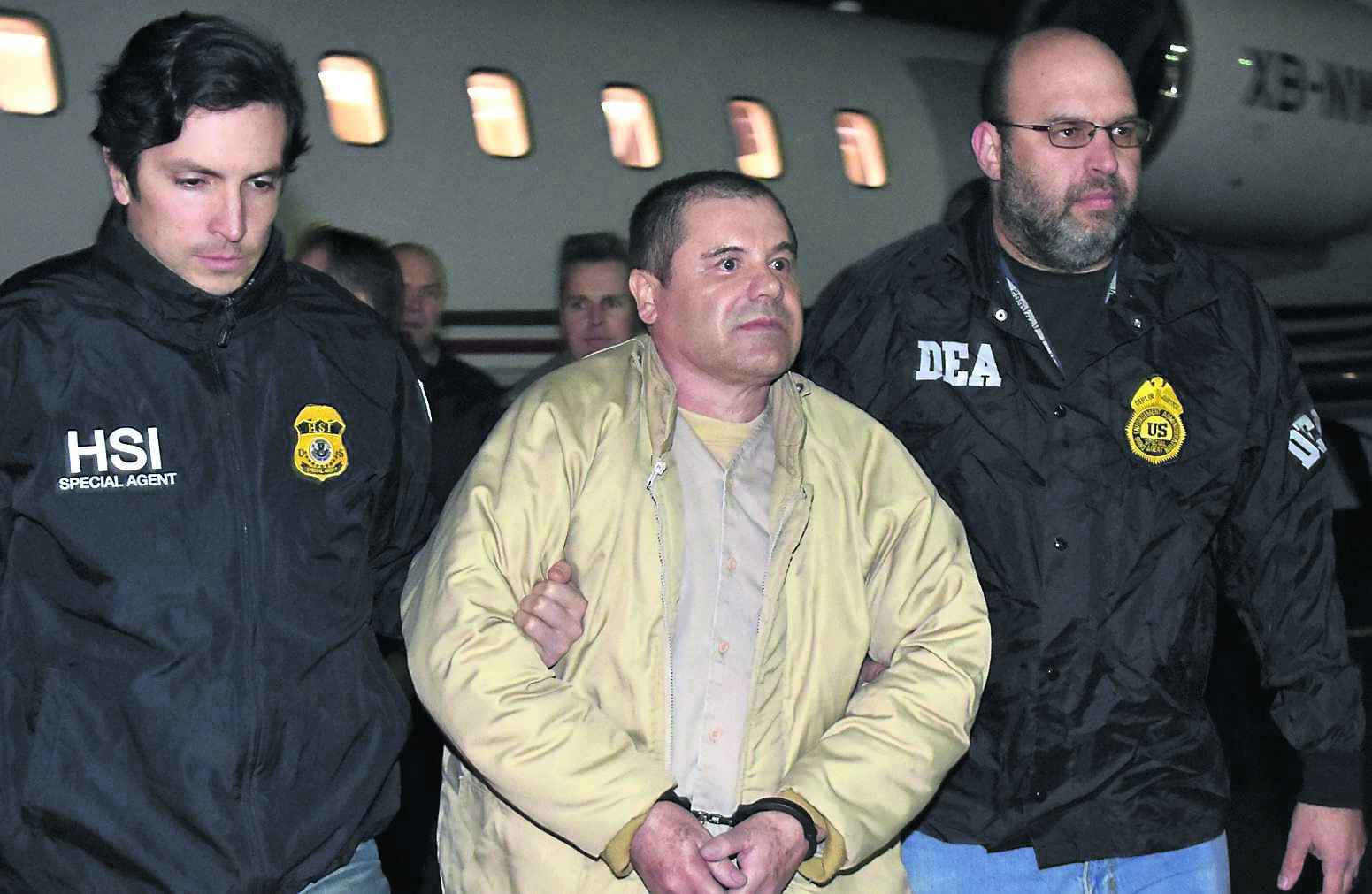
US law enforcement, authorities escort Mexican drug lord Joaquin “El Chapo” Guzman, centre, from a plane in Ronkonkoma, New York, in January, 2017. Picture: AP

  • Too Big to Jail
  • Christ Blackhurst
  • Macmillan, €19.99

In July 2019, Joaquín “El Chapo” Guzmán was sentenced by a US federal judge to life in prison for drug trafficking and money laundering.

The 62-year-old Mexican drug baron was a leading “capo” in the Sinaloa Cartel, the world’s biggest narco-trafficking organisation, which has an annual revenue turnover of $3bn per year from importing heroin, cocaine, crystal meth, and marijuana across the Mexican-US border.

HSBC, Britain’s most profitable multinational bank, played a vital role in legitimising this international narco-trafficking operation. By acting as a financial middleman, it gave a notorious and murderous criminal regime a veneer of corporate respectability.

In 2012, the US Justice Department proved that from 2003 to 2010, $881m was moved from the US, across the border, into HSBC bank accounts in Mexico controlled by “El Chapo” and other members of the Sinaloa Cartel.

Chris Blackhurst claims the sums of money HSBC accepted from the infamous drug syndicate was probably far higher than that conservative estimate suggests. In Too Big to Jail the British journalist and former editor of The Independent notes that in just 24 months, $7bn was paid into HSBC accounts in Mexico.

“The main question I wanted to explore writing this book was: ‘how did HSBC — who back in 2002 won Global Bank of the Year Award, and was described at the time as the best managed bank in the world — end up laundering money for Chapo and his henchmen?’,” Blackhurst explains from his home in West London.

Blackhurst begins by explaining how the operation worked from the foot solider level upwards. This part of the book reads like a scene straight out of Breaking Bad.

Typically, a member of the Sinaloa Cartel would walk into a local branch of a HSBC bank in Mexico carrying a portfolio of dirty dollars in exchange for a cashier’s cheque.

Bank tellers who asked too many questions were told their families might end up severely beaten, missing, or dead.

“I interviewed quite a few Mexican bank supervisors,” says Blackhurst. “It was astounding the details they revealed. The record deposit in one single visit was $933,000. Chapo’s men even had their own hand-made pouches to make the money fit.”

The cash was then quickly moved out of HSBC accounts into numerous fake businesses across Latin America, to make it look legally legitimate.

The relationship between HSBC and the Sinaloa cartel began in 2002 when HSBC bought Bital, Mexico’s fifth largest bank. Some sceptics within HSBC’s hierarchy in London during this time pointed to numerous risks the purchase might entail.

“They stressed that Mexico’s banking sector had a bad history with compliance,” says Blackhurst. “But the management in HSBC believed that Mexico was a key country, and if it could build its value there, HSBC could get access to all of Latin America.

“HSBC then took a decision that it wasn’t good enough to be the best run bank in the world, they had to become the biggest bank in the world.

“And to do that you can only grow two ways: organically, or through acquisition. HSBC didn’t have the patience to grow organically. So they went for acquisition instead.”

Blackhurst says all growth and no compliance led HSBC to engage in sloppy banking practices on a global level. Indeed, he points out, it was pretty obvious to the management of HSBC, thousands of miles away, in Canary Wharf in London, that HSBC in Mexico was effectively out of control from the early days.

“But HSBC were obsessively fixated on growth and buying up more financial assets across other Latin American countries during this time. The bank believed that by simply bringing Mexico into the HSBC [global] family, that in itself would be enough, and of course it wasn’t.”

Blackhurst also points out why the Sinaloa Cartel was attracted to HSBC. In essence it came down to one sweet deal: HSBC gave customers in Mexico the chance to hold their savings and cash deposits in US dollars. This was especially appealing to a criminal enterprise whose main trading partner was drug users in the US.

Mexican law also states that all bank accounts must be held in the country’s home currency.

But the Mexican peso is notoriously volatile and weak. No savvy business, after all, wants to run the risk of holding its profits and savings in a currency that could collapse overnight.

HSBC thus came up with a clever legal loophole to bypass those financial anxieties: offering offshore HSBC bank accounts to Mexican customers that were technically held in the Cayman Islands.

“These bank branches existed only on paper and on computer screens, [but they created] instant access to [dollar] accounts and the ability to transfer money,” Blackhurst explains.

The latter half of the book turns its attention to justice. As the

book’s title suggests, there wasn’t a great deal of it. HSBC got away scot-free.

The bank was hit with a fine of $1.9bn. Some of the money went directly to the US government, some of it then went to bodies that brought the prosecutions to be investigated.

“$100m of the fine went to the police department in Queens in New York, who played a significant role investigating the money laundering operation from the street level end in the US,” says Blackhurst.

“But this is almost like creating an invisible tax, where a bank is able to just pay its way out of wronging doing and other institutions benefit as a result.”

That fine was also small change for a bank of HSBC’s magnitude. In 2021, for instance, HSBC’s total revenue turnover was $49.6bn.

“For HSBC, this fine they were hit with was nothing,” says Blackhurst. “It all leads to the same conclusion: a crime was committed, and nobody was prosecuted.”

To date, no HSBC member of staff has faced criminal charges for enabling the Sinaloa Cartel to run its money laundering operating through the bank for several years.

HSBC’s headquarter in Mexico City; Blackhurst said: 'it was pretty obvious to the management of HSBC in Canary Wharf in London, that HSBC in Mexico was effectively out of control from the early days. But HSBC were obsessively fixated on growth and buying up more financial assets across other Latin American countries during this time.' Picture: AP

It came close, though. The anti-money laundering section of the US Justice Department was keen to prosecute HSBC for some time but in September 2012 George Osborne intervened.

The UK’s then Chancellor of the Exchequer sent a private two-page letter addressed to both the US Federal Reserve chairman, Ben Bernanke, and to the US Treasury Secretary, Tim Geithner.

Osborne emphasised the British bank’s global size, influence, and importance. He also claimed a prosecution against the bank and its senior management could provoke another global economic catastrophe.

Blackhurst says this desperate plea was grossly exaggerated to serve the interests of both the British government and HSBC.

Nevertheless, the Americans swallowed it, and a small slap on the wrist was issued to HSBC, instead of any formal criminal charges.

“Osborne’s intervention was absolutely pivotal,” says Blackhurst. “Until he intervened, the Americans were determined to go full steam ahead for [outright] prosecution against HSBC.

“Osborne, however, said he felt that this was discrimination against a non-American bank, which simply was not true.”

Blackhurst believes there are striking similarities between the HSBC money laundering scandal and the Great Recession of 2008.

In both cases, government intervention meant dishonest banking practice was neither reformed nor deemed worthy of punishment.

“In the UK, and a lot of Western countries, including Ireland, we really do not take white collar crime seriously enough,” says Blackhurst.

“It’s worth noting too that back in 2008, we were repeatedly told [by our governments] that we couldn’t allow any of these banks to go down. We now know that was absolute nonsense.

“In fact, Lehman Brothers did go down, and, as we saw, the whole edifice of western capitalism did not collapse afterwards.

“Also, is it really the case that if you prosecute, say, three, four, or five individuals, within a bank, that you would then have to effectively bring down the entire organisation?

“I don’t believe that would be the case, so we really need to move beyond this argument that is always presented by the powers that be in our global financial system in the western world- that we can’t do anything, and we really can’t move against these people.

“It’s a simple question of right and wrong,” Blackhurst concludes. “Wrong was committed. And nobody in HSBC has still been punished.

“Why? Because we keep saying: gigantic global banks, like HSBC, can’t be punished, because they are too big to jail.”

More in this section

Scene & Heard

Newsletter

Music, film art, culture, books and more from Munster and beyond.......curated weekly by the Irish Examiner Arts Editor.

Cookie Policy Privacy Policy Brand Safety FAQ Help Contact Us Terms and Conditions

© Examiner Echo Group Limited