Patrick Graham, artist: 'I’d lie down in the poppies, looking up at the sky'
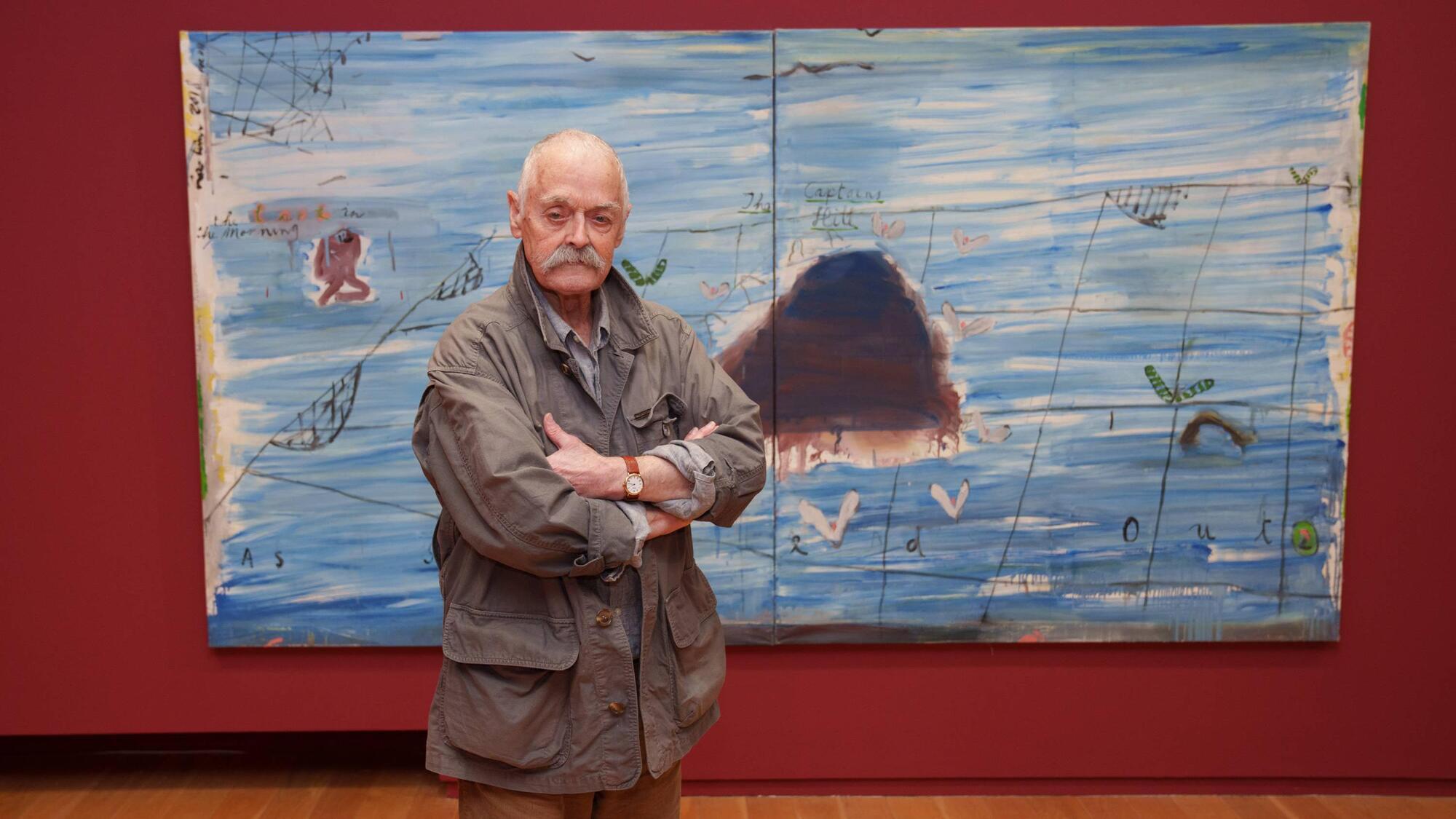
Patrick Graham, artist.
Patrick Graham’s status as one of Ireland’s most celebrated painters was confirmed by his recent retrospective, Transfiguration, at Dublin City Gallery: The Hugh Lane. For a long time, however, he was a divisive figure, one whose paintings confounded critics and the public alike. It took years of hard work and perseverance, and the support of a Hollywood legend, before he established himself as a major force in the art world.
As underlined by his pieces at the current group exhibition, Festival, at Hillsboro Fine Art Gallery in Dublin, much of what Graham paints is autobiographical. Born in Mullingar in 1943, he watched his family fracture as a child. His father decamped to England, seeking work, and seldom returned. Then his mother fell ill with TB, and he and his siblings were farmed out to different relatives. In his case, he was sent to live with his grandparents, the Montgomerys, who were well-known market gardeners.
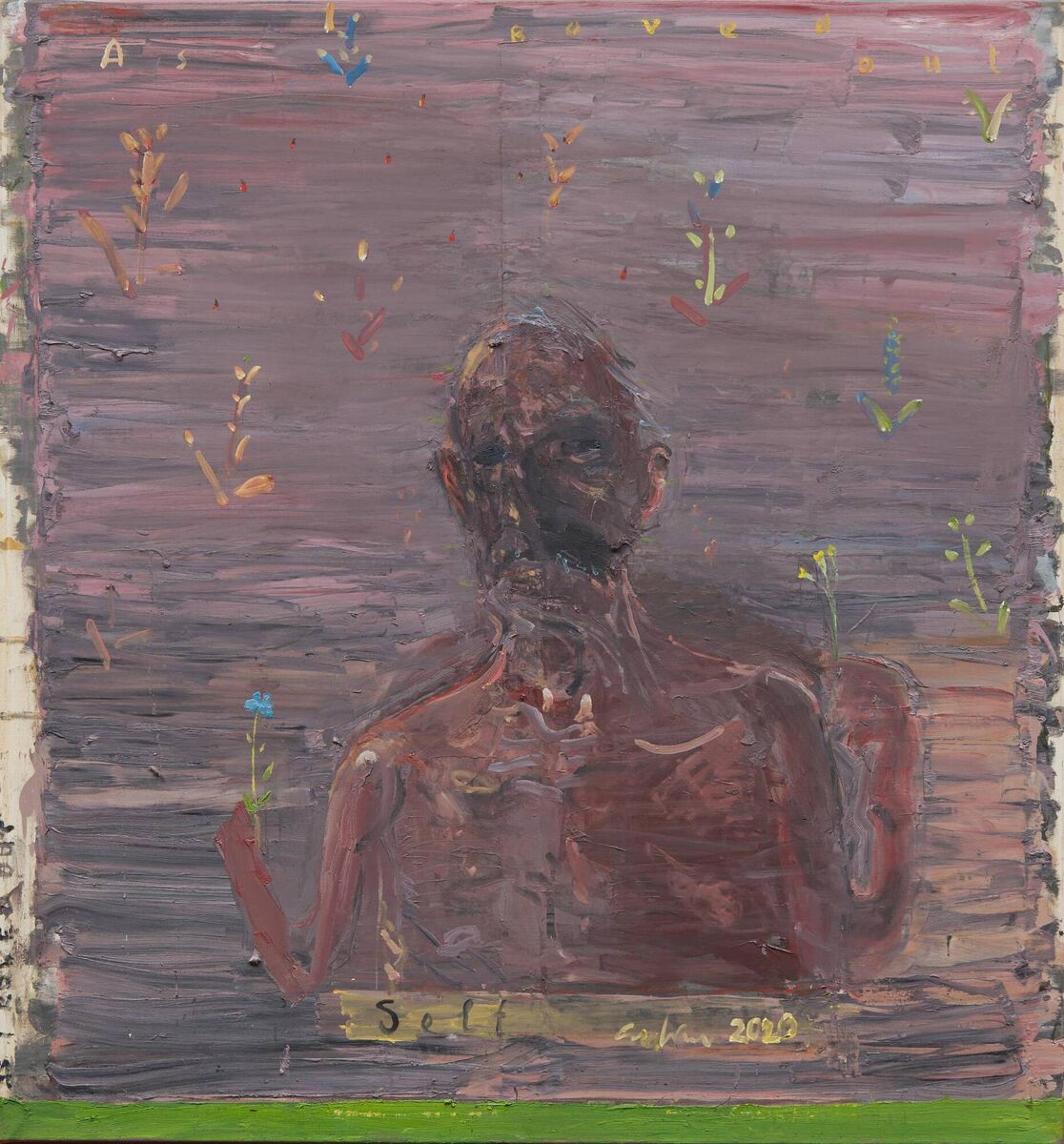
“I was there for a year at least, and maybe two,” he says. “I loved the plants. I used to hide myself in the trees, or in the fields of poppies. I’d lie down in the poppies, looking up at the sky shimmering overhead. I was on my own, but that was where I learned to trust nature.”
When he has painted himself since, he is often seen holding a flower, a simple connection to that time and place.
Graham always loved drawing. At secondary school, his talent was quickly recognised by the art teacher, Diarmuid Larkin. Graham finished first in the country in art in his Group Cert, but was still too young to go on to Third Level, so Larkin kept him on as his assistant for a year – teaching him how to stretch and size a canvas, how to mix paint, and how to compose an image - before helping him win a scholarship to the National College of Art and Design.
At NCAD, Graham was a star student. “I had facility,” is how he puts it. For all his natural talent, however, he was never satisfied with the work he was making. “There was this kind of thing, I could draw beautifully and so on. But it had nothing to do with art. If I drew a tree, it was a tree, and nothing beyond that.”
In 1963, he attended an exhibition of paintings by the German/Danish artist Emil Nolde at the Goethe Institute. Graham is well aware that Nolde has since been castigated as a Nazi supporter, but back then, he says, “I just saw the work. I had an awful reaction to it, it was that much of an assault. I discovered for the first time that something happened to my stomach. Not my head, not my eyes, but my stomach. There was this draw, I had to keep coming back to the exhibition, and every time I did, there was a little more to it. And I knew it was the truth, that art was something powerful and didn’t need to be gathered together in a neat package that everyone had to pretend to be nice about.”
The effect was not to inspire Graham to produce great art, however. Instead it unnerved him to the extent that he struggled to create at all. Around the same time, he discovered alcohol. He lost years to addiction, and spent several periods in mental hospitals before achieving sobriety through the support of the Rutledge Centre. He has always been open about his issues with his mental health. One solo exhibition, in 1974, was called Notes from a Mental Hospital and Other Love Stories.
“People were whispering about it anyway,” he says. “I had nothing to hide.”
He insists he only became anyway confident about painting in the early 1980s. At that time, he and his friend Brian Maguire had studios in Temple Bar, and Graham, newly sober, was eager to find a wider audience than the small pool of collectors in Dublin. “I went to London and found this guy named Geoff Evans, who ran the Pentonville Gallery. I persuaded him to come to Dublin to look at our work. And on the basis of that, he had Brian and me over to London to do a show. It was the first time really we’d shown outside of Ireland, and there was a fantastic reaction; Time Out magazine made it its Show of the Month.”
The following year, Graham was showing at a local gallery in Dublin. He got a call to say that the Hollywood actor Vincent Price had called in. Price was a keen sailor as well a major art collector, and was visiting Dublin on his yacht.
“They said I should go down to meet him, but I didn’t go. He bought three of my paintings. He asked that the frames be removed, and he rolled up the paintings and took them away with him.” Months later, Price wrote a letter to say how much he admired Graham’s work, advising him to secure a stall at an upcoming art fair in Los Angeles.
“He arranged for me to talk to the organisers, and the next thing, I got an invitation to participate. When we got there, it was mad. There were these huge trucks coming in, full of art, and teams of people setting up their stalls, while we just had a van, and we set things up ourselves. But we got on great. We met people from all over the world, and then I got picked by a local gallery, Jack Rutberg Fine Arts, and I’ve been showing there ever since.”
Graham works at one painting at a time, knowing each canvas is finished “when I’m exhausted by it.” It’s a solitary pursuit, but one that suits his nature. “There days, with television and the internet, there’s images flooding at you all the time. What’s left is your own small voice, and you need to make that as powerful as you can.”
Those moments in his grandparents’ poppy fields still resonate. “The best thing you can do,” he says, “is to go somewhere quiet and dream.”
- Patrick Graham’s work is showing in the group exhibition, Festival at Hillsboro Fine Art, Dublin until August 13. Further information: hillsborofineart.com