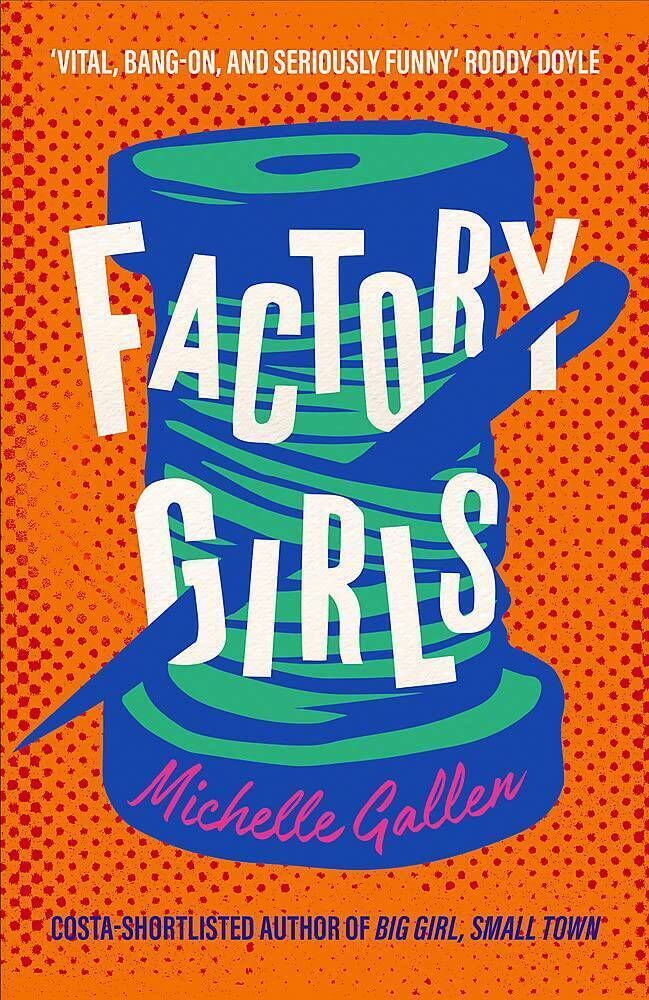
First Thoughts: Factory Girls a comedy countdown for the A-team

Michelle Gallen Northern Irish author
- Factory Girls
- Michelle Gallen
- John Murray, £16.99
This brash and lively novel is a black comedy of great skill and wit. It is set in a small town in Northern Ireland in 1994, and the factory girls of the title are Maeve and her friends, Caroline and Aoife.
We view the ways of the town and the realities of the political situation through Maeve’s observant eyes.
A countdown immediately begins towards this defining day, and is maintained throughout.
This is an invigorating read. It is raucous, in your face, sexually frank and (often hilariously) politically incorrect. It revels in its irreverence, delights in being casually outspoken.
At its best, it’s intoxicating, defiant, bitter laughter in the dark, knowing comedy at its blackest pitch.
There’s a rage fuelling this cynical humour. There’s a controlled articulate defiance.
Gallen describes the town in a knowing and detailed way. Life here can be dull and prosaic, but is also seething with danger, violence and death.
The resulting discontent is inevitable but these fiery, battlng characters don’t surrender to it.
They are always ready to verbally react, and humour and wisdom tend to flavour their quips.
Still, these aspirational young characters are looking for ways of escape.
The three of them want a better future elsewhere, and all are focused on the A levels to achieve it.
These hopes become emotional necessities, and this is crucial for their mental health.
The novel grows in tension as we get ever closer to results day —anxiety levels threaten to spiral.
In the meantime there is the day to day grind at the factory. Gallen is assured on the nuances of factory life — the hierarchies, the bullying, the constant pressure to provide quality work at top speed.
She appraises the politics — the alliances and the enmities. The three girls are “stunned by how hard and fast” the work is. It only serves to reinforce their obsession with the A levels.
Finally results day arrives, and the news is not as expected. This looked like being the end of the novel, but we realise there is unfinished business as 60 pages remain.
Gallen handles the contrasting academic fortunes with subtlety and sensitivity. In this extremely long chapter, a lot is revealed — but maybe not in the emphatic, definitive way we expected.
The anticipated closure doesn’t quite materialise. Instead we start a new countdown towards the girls’ escape from the town.
Ultimately we do get a dramatic and realistic ending. Political realities have their sadistic say.
For Maeve, things end on a characteristically defiant and nihilistic note. It feels both inevitable and true.
The irreverence of the ending is very much in keeping with the spirit of this brave novel — and Gallen dangles the tantalising prospect of a sequel. The book begins with the friends getting jobs in the local factory while they anxiously await the results of their A level exams.