Ted Kessler on the Franks, Sultans, and the decline of the music press

Ted Kessler, former editor of Q magazine.
Ted Kessler was visiting Cork recently when was surprised to see a poster advertising a gig by the Frank and Walters. It brought back memories of the time he interviewed the Franks as a young writer eager to claim a toehold in the London music press. He was surprised to discover the iconic Leeside band remained a going concern.
“I couldn’t believe they were still playing. Who else was it [from Cork]? A House?,” he says. Is he perhaps thinking of the Sultans of Ping – the other stars of the “Corkchester” scene the NME tried to make happen circa 1993?
“The Sultans of Ping!,” he says. “I interviewed the Sultans of Ping around Where’s Me Jumper? I did that for Lime Lizard [a long defunct music monthly]. I liked them. I saw them play. Thought they were excellent. The singer, Niall, he was very funny. They had a great novelty hit. They did a pretty good interview.
"And with the Frank and Walters, the first three EPs were excellent. Fashion Crisis Hits New York, that’s a great song. Good band.”
Neither the Sultans nor the Franks feature in the former Q Magazine editor’s funny, heartwarming, occasionally heart-breaking memoir Paper Cuts: How I Destroyed The British Music Press and Other Misadventures. But there are plenty of other rock star cameos. Paul Weller challenges him to a fight after an unkind review (of Weller’s Britpop masterpiece, Stanley Road). The Happy Mondays abandon Kessler in Cuba. Radiohead get the hump after a cover spread with the NME doesn’t go as planned.
These anecdotes are as bizarre and hilarious as you would expect. Kessler also locates the seam of melancholy in many of the stars with whom he rubbed shoulders. He recalls Julian Casablancas of The Strokes falling out of love with rock‘n'roll the instant the band’s wildest dreams come true. Later, there’s a bizarre back-and-forth with Kevin Roland of Dexy’s Midnight Runners, who felt Kessler was the perfect writer to tell his story – until he suddenly decided that actually, he wasn’t.
But, as the title spells out, the book is also about the decline of the British music press. In the 1990s, the London music media could launch a band simply by putting them on the cover (as Melody Maker did with Suede – yet to release a single when heralded best new band in Britain).
Kessler, who is the older brother of Interpol guitarist Daniel Kessler, was at the sharp end of that downfall. He was the editor of middle-of-the-road music monthly Q when it unravelled during the pandemic. His account of those final weeks and months is wrenching, though going on two years later, he seems happy to have moved on to the next phase of his life.
“I felt great relief because it was very difficult,” he says. “It was during lockdown. It was extremely difficult to put out a music magazine where you have to get new stories, when you can’t leave your house. It wasn’t like Mojo or Uncut, where it was like, ‘let’s build up another story about something that has happened in the past’.”
He’s much happier with his new project, the New Cue – a subscription newsletter put out several times a week in conjunction with two other ex-Q staffers. “Sales, money, all that kind of thing… I was glad it ended. I felt much worse when I left NME (for whom he wrote up until the early 2000s]. I was not ready to leave NME. I felt cheated by that ending. With Q, that was the end of that. If it hadn’t been Covid or lockdown it would have been a different matter. At the time I was like, ‘Okay I can take the redundancy and write this book now’.”
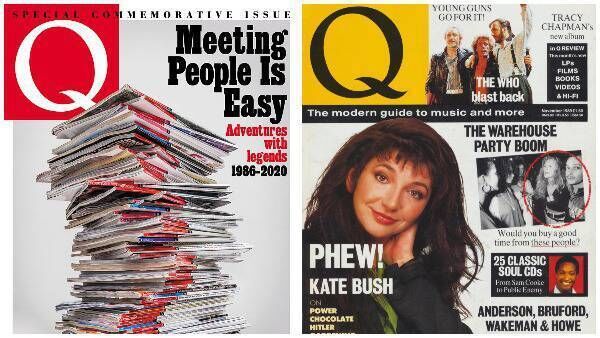
Q perhaps suffered for trying to be all things to all people. Where other UK monthlies such as the aforementioned Uncut and Mojo appeal to a specific demographic of music fans who are happy to read the same article about what Neil Young was up to in 1973 over and over, the remit with Q was to cover new music.
But of course, even before the pandemic, the outlook for the music press was less than rosy. With Melody Maker long-shuttered and the NME now existing only on the internet, British music journalism had slipped into the twilight.
These publications were not perfect – often they were crude and vicious. They could be hugely sexist towards female artists. But they fulfilled the essential function of mythologising in real time the musicians of the day. Would Blur v Oasis have caught fire without the NME fuelling the rivalry? Could anyone other than the music press have made Jarvis Cocker a star?
Today, these mavericks and eccentrics are absent from music. It isn’t as if they’re not out there. What’s missing is a functioning music press to put their names up in spotlights.
“Often, they’re not even that small. A band like The Courteeners who play big gigs. We don’t know anything about them,” he says. “We don’t know who those guys are. There are quite a lot of groups like that, at a certain level. You just don’t know about them.
"And there are small groups. Let’s say a band called Working Men’s Club. They have a singer called Syd, who’s a real character. And in the old days, he’d be in the Melody Maker now and then. He’d be in the NME. And that way, he’d build up a cult following. Now, you see him at gigs, at festivals. That’s it. What’s behind those songs? You do need to know what is behind people’s songs. What’s their motivation? What’s their backstory? What’s the drama? I personally miss that stuff. That’s what I grew up reading.”
Q was pretty sedate compared to Melody Maker or NME in their prime. Still, it did bare its claws occasionally. Kessler is slightly startled when I mentioned the pummelling Q gave to Kodaline’s debut album. “When I was reviews editor at Q, I changed the policy, ” he says.
There is a debate in music journalism as to whether it is ever acceptable to put the boot in. Kessler is on the side of those who feel it is better to be kind – and that the great hatchet jobs of yore have no place in modern music criticism.
“In the old days, you looked to reviewers to tell you what to think. You’d read that review and you’d go to the shop and buy a record. Now we have streaming. The job of a review is to provide a guide to what this is about. Or where it compares in the [catalogue] of an artist. It’s not your job to say this is good or bad.
“You’re not a judge. You’re not marking a paper. Whereas in the old days, you were letting people know if this was worth their hard-earned money. Now it’s more like saying, ‘I recommend this’. The function of reviewing has changed. If you tried to launch a review section that was full of people giving three out of tens, what would be the point? Often these artists don’t make any money, anyway. There’s no point slagging them off. If you don’t like something, ignore it.”
Kid gloves have likewise become standard when interviewing musicians. The days when a journalist would lob hand grenades at an artist are long over. Again, Kessler doesn’t necessarily see this as a tragedy.
“Interviews have changed. People won’t do interviews with you if you’re going to do that. The culture has changed. We don’t have that any more do we? We don’t need it. The press is not powerful. The medium is not the same. Why would they do interviews where they’re going to be badly challenged by someone? If you started challenging me about my book, I’d probably give you a few minutes. At the end I’d be like, why am I doing this?”
With our time almost up, we circle back around to the Frank and Walters and the Sultans. In Cork, there was a sense that the British music press was quick to turn on them and both bands were blown out of the water by Britpop. Kessler agrees that Britpop did ring a death knell - but the Franks and the Sultans were far from alone in losing out.
“It did it not just for Irish bands, but lots of groups who were underground. A lot of underground sounding groups… Oasis was the nuclear bomb for a lots of bands. I loved and still love Oasis. It did wreck alternative culture, any of those interesting threads.
"The Frank and Walters, Sultans of Ping. They blew it all up. Oasis didn’t leave any room for not having that massive ambition. If you didn’t want to be number one in the world , then you had no chance. It’s the blowback from Britpop that wrecked it. I’m sorry for the Sultans of Ping.”
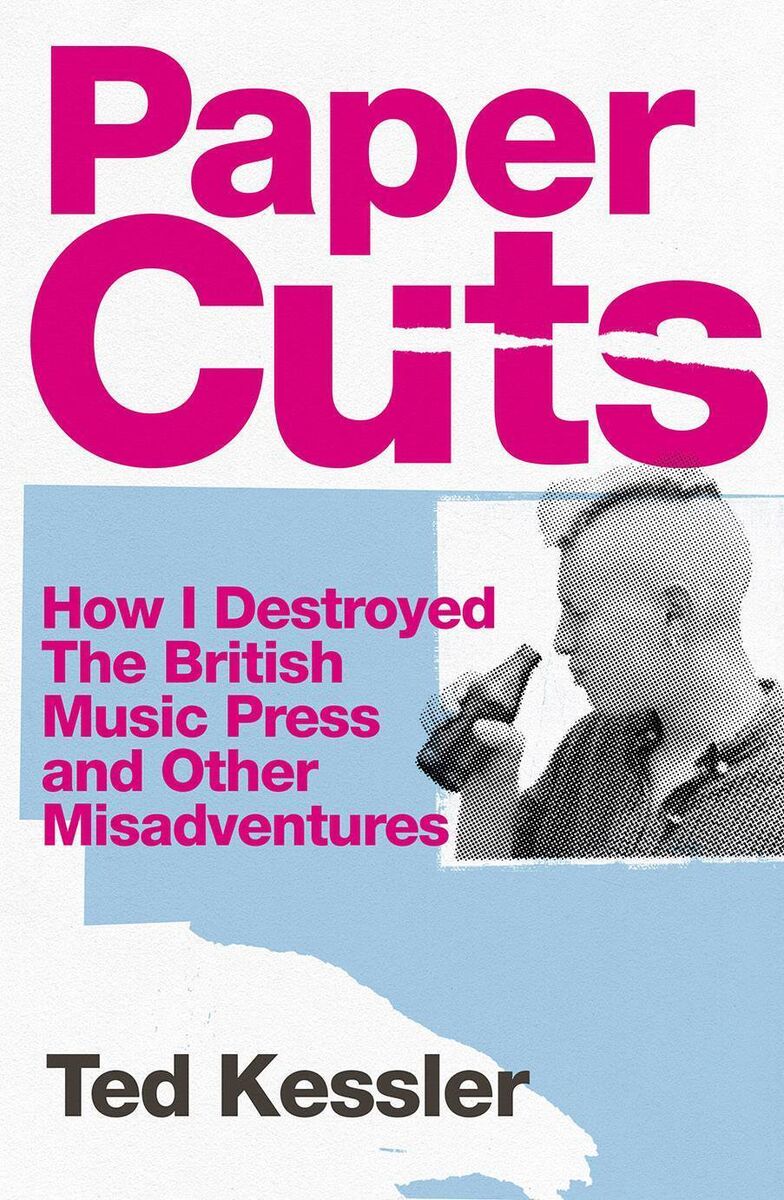
- Paper Cuts: How I Destroyed The British Music Press and Misadventures is out now